
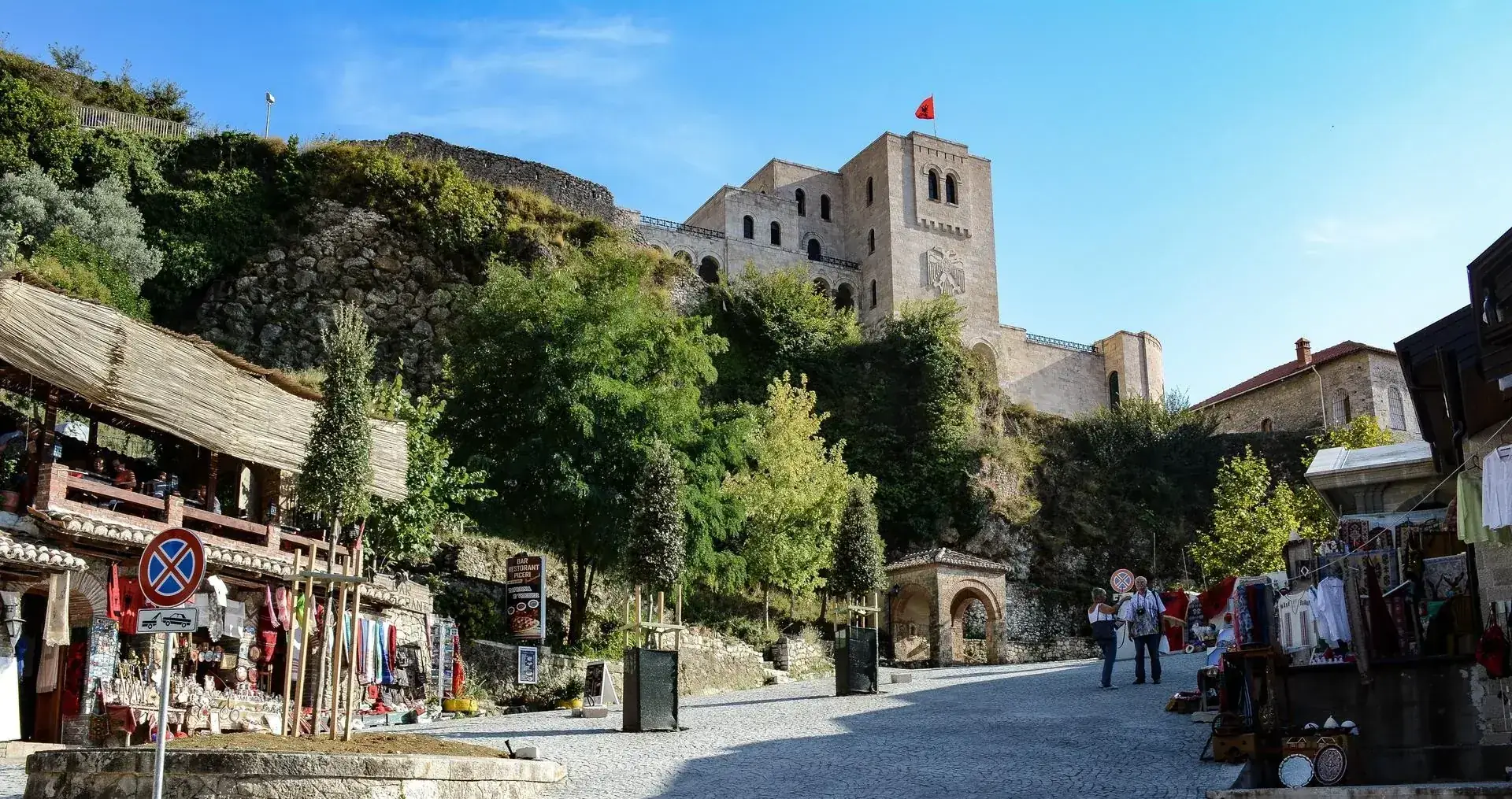
What to See in Kruja (Kruje), Albania
Eight centuries of history embedded in one hilltop city.
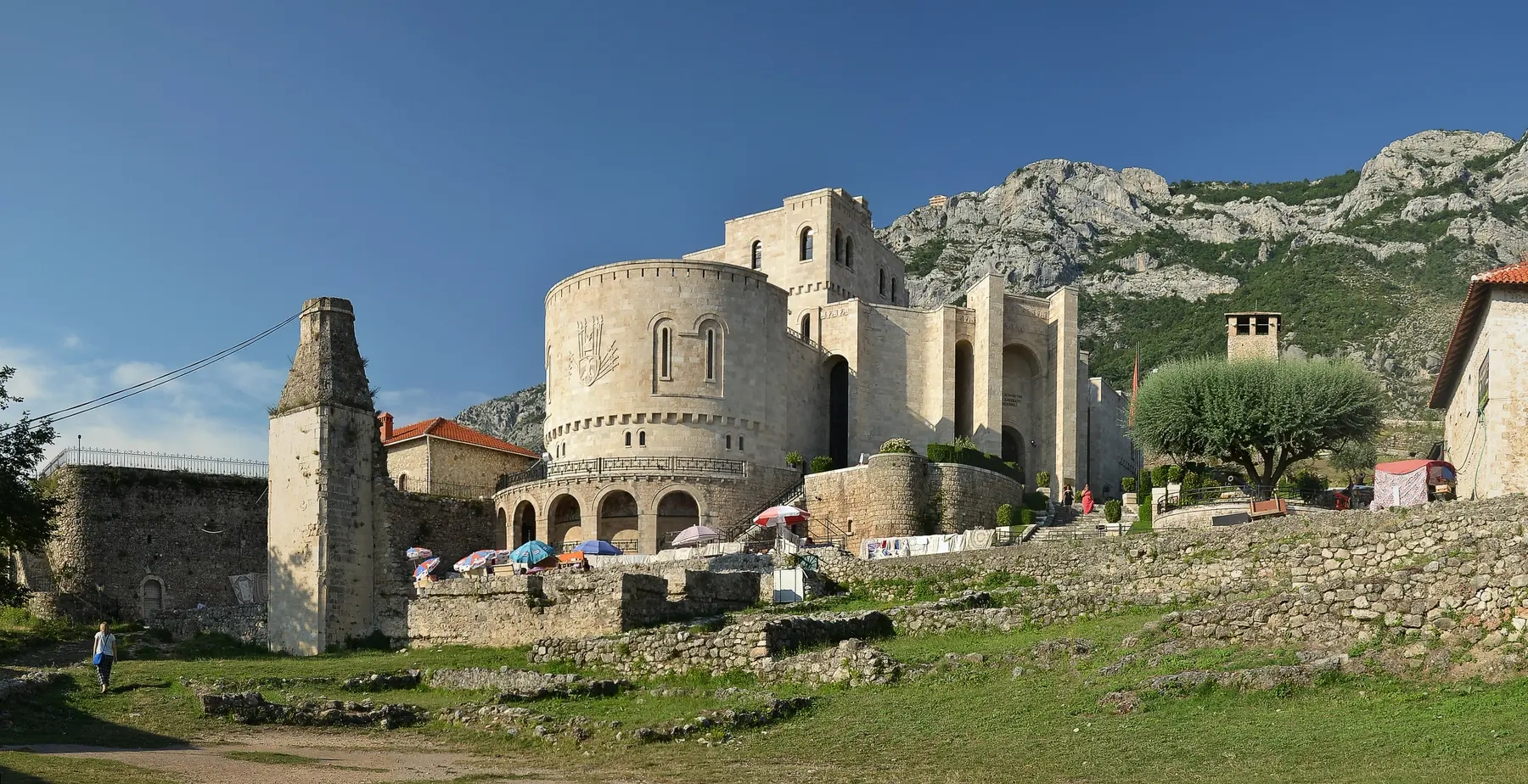
Kruje Castle
The fortress on the ridge above Kruja, held by Skanderbeg through three Ottoman sieges. Inside the walls are the Skanderbeg Museum, the Ethnographic Museum, the Dollma Teqe and a view over the whole Adriatic plain.
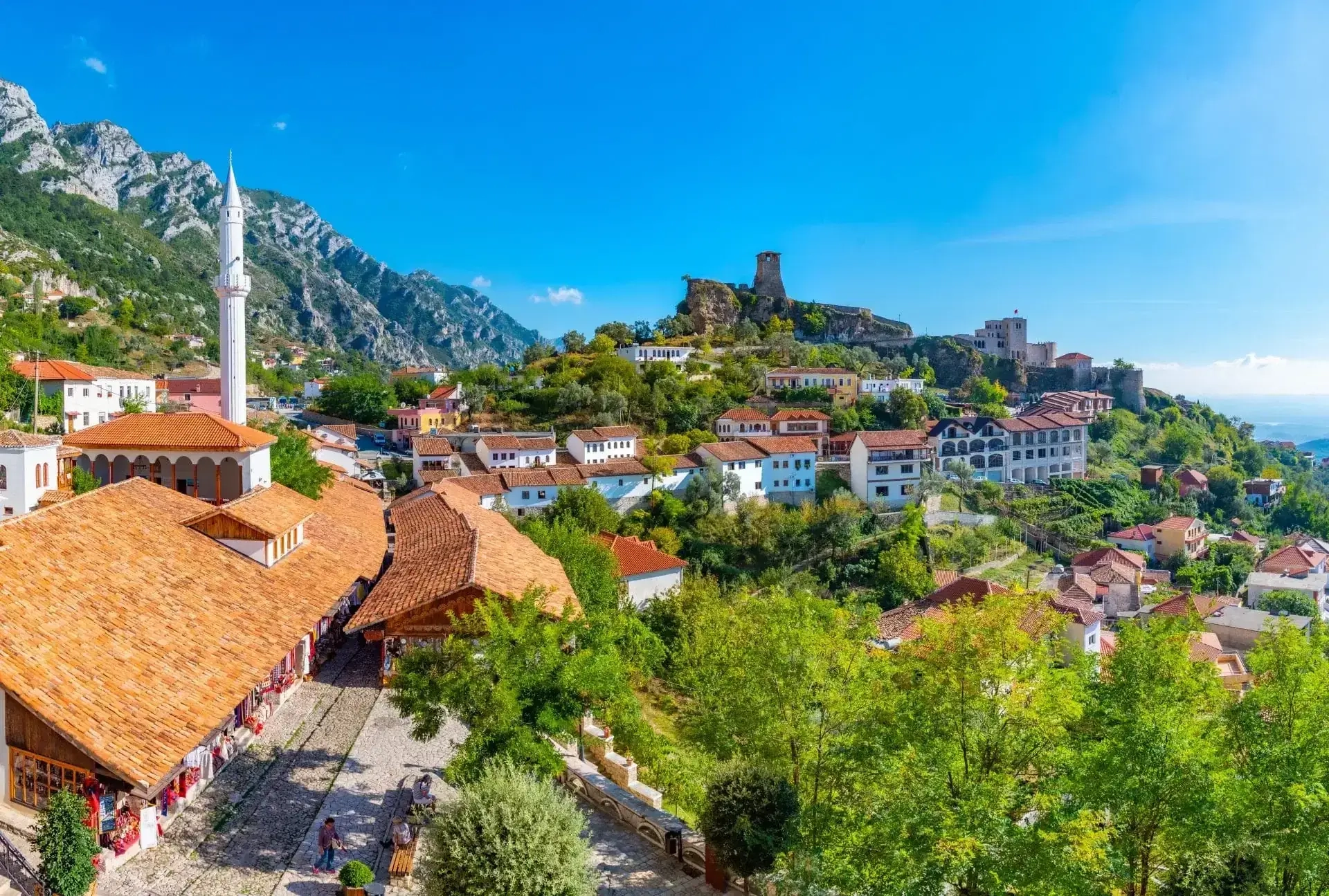
Kruje Old Bazaar
A single cobbled lane of wooden shopfronts running up to the castle gate. Trading here goes back to roughly the fifteenth century, and the street was rebuilt to its old plan in the 1960s. Alongside the souvenirs it still sells handwoven kilims, filigree silver, copper and antiques.
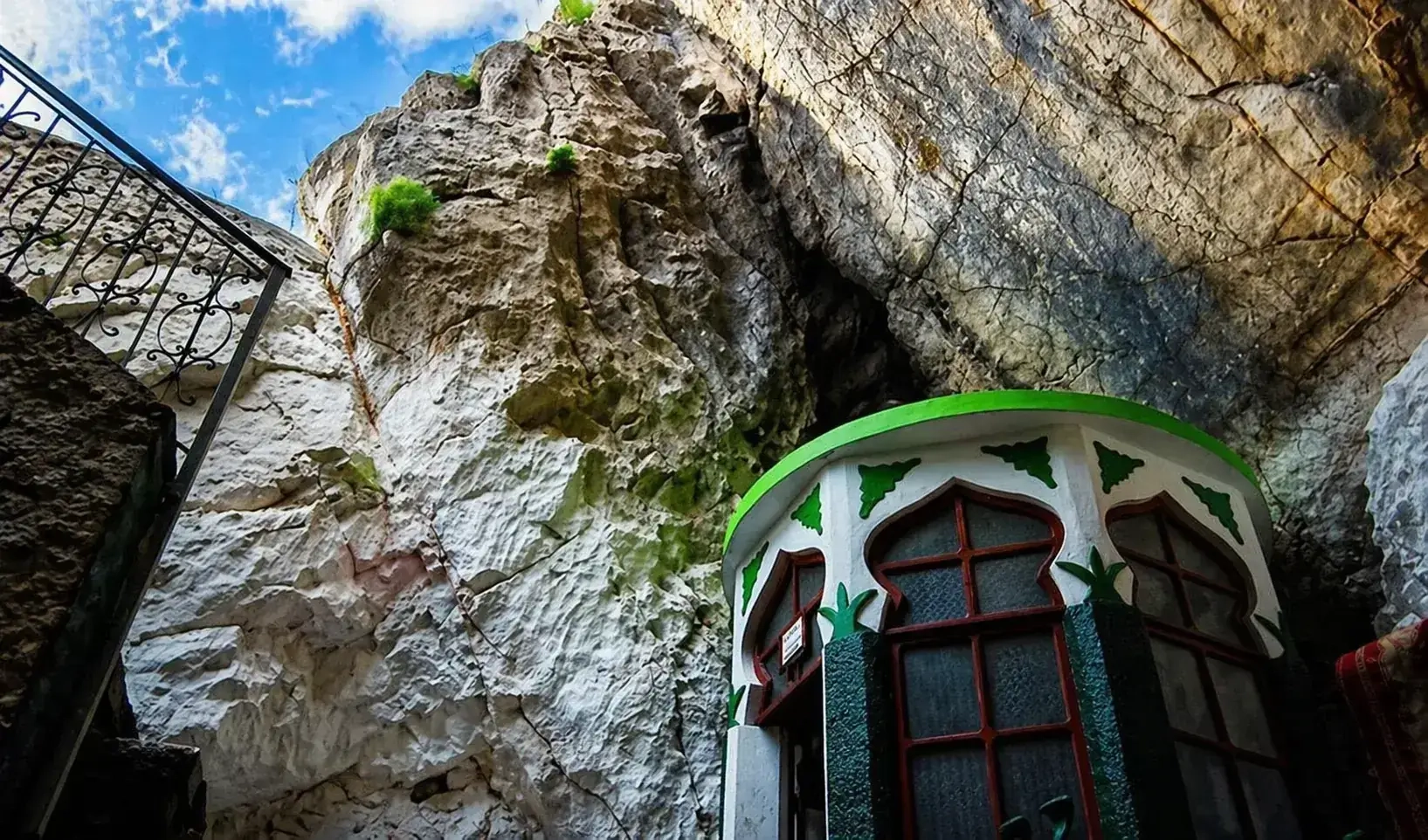
Kruje Mountain & Teqe of Sari Salltik
The Teqe of Sari Salltik is a cave shrine of the Bektashi order at 1,176 metres on Mount Kruja, 7 km above the town by road, and pilgrims have climbed to it for centuries. Steps lead down into a cave about 20 metres deep, where a spring runs from the rock and visitors fill bottles with its water. Outside, the ledges look west over Kruja and the plain, and on a clear day the view reaches the Adriatic.
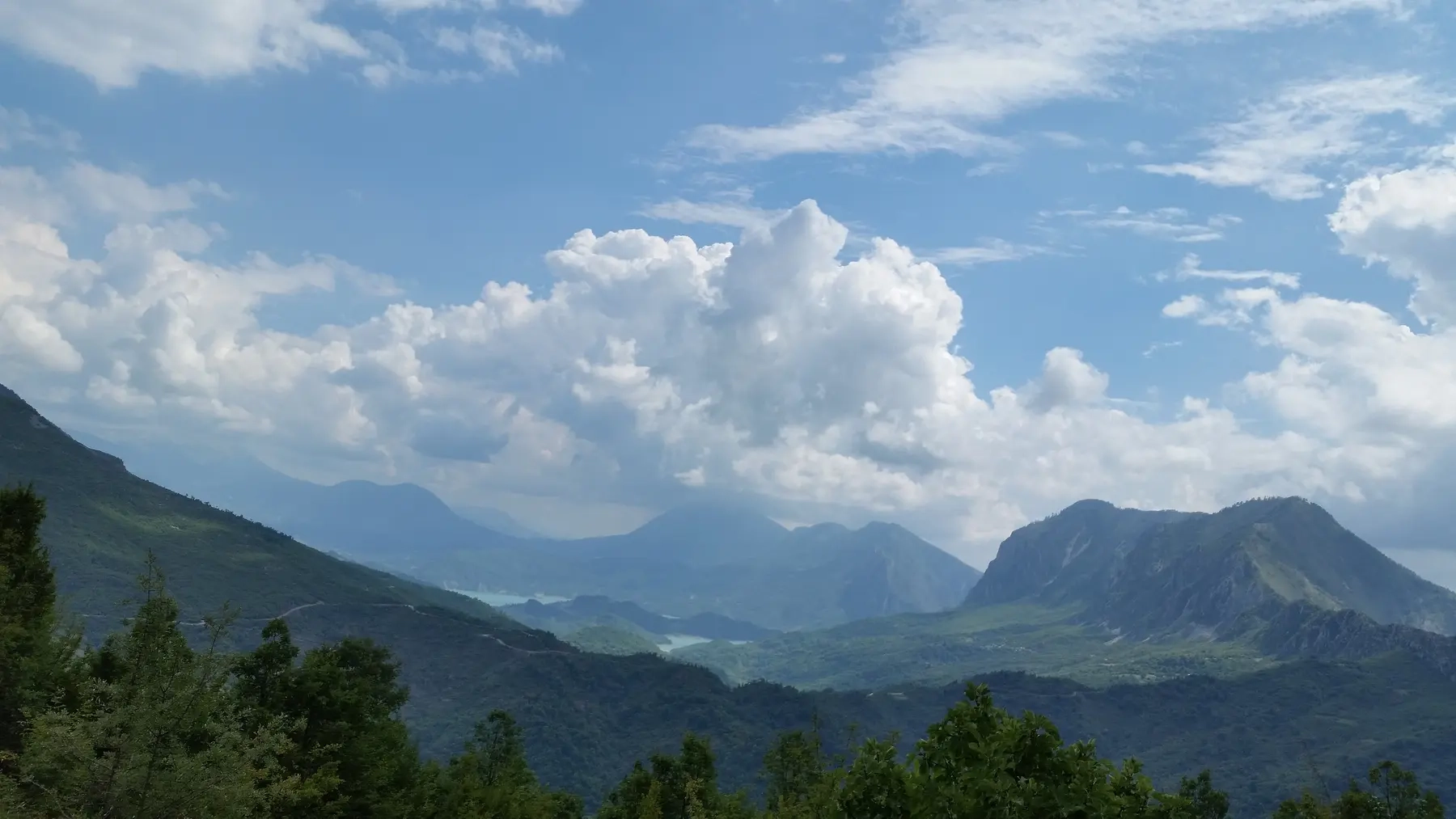
Qafshtama National Park
Qafshtama is the pass at about 1,250 metres on the road from Kruja to Burrel, about 20 km from town. The forest around it, mostly black pine with oak lower down, became a national park in 1996 and was enlarged to 6,864 hectares in 2022. Beside the road is Kroi i Nene Mbretereshes, the Queen Mother's Spring, named after the mother of King Zog; its water is bottled and sold across Albania as Qafshtama. On the way up you pass Shkembi i Vajes, the rock where Kruja remembers ninety girls who chose the drop over capture.
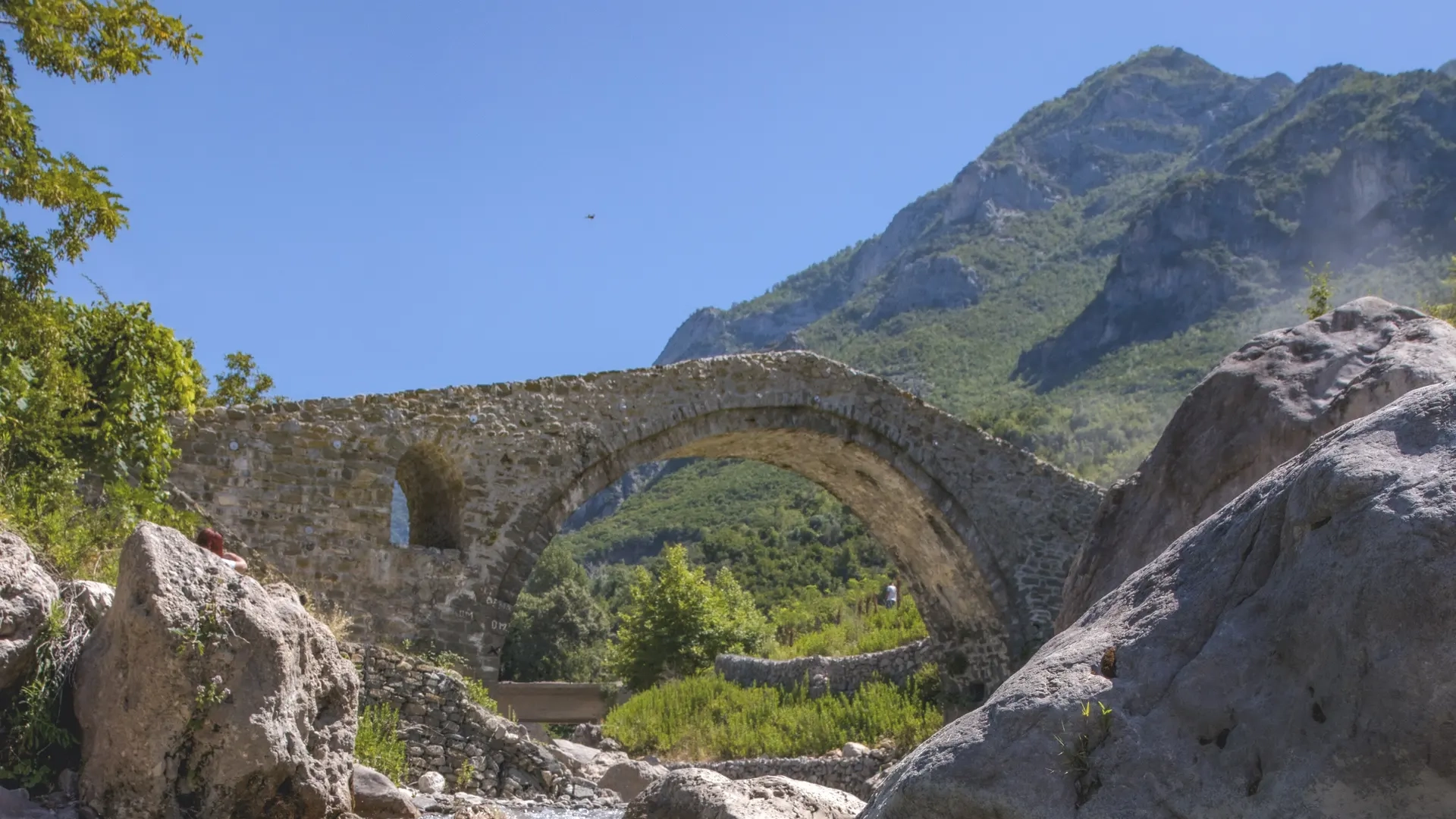
Zeza River Canyon & Ottoman Bridges
South of Kruja, the Zeza river runs through a limestone gorge between Mount Kruja and Mount Gamti. The old caravan route from Tirana to Kruja came this way, and two Ottoman stone bridges survive on it, both listed cultural monuments: the Bridge of Abdyl Agha (around 1810 to 1820) at the entrance to the gorge, and the 18th-century Bridge of Kurcaj at the far end. A 2 km stone path links them, past green pools and a hidden waterfall.
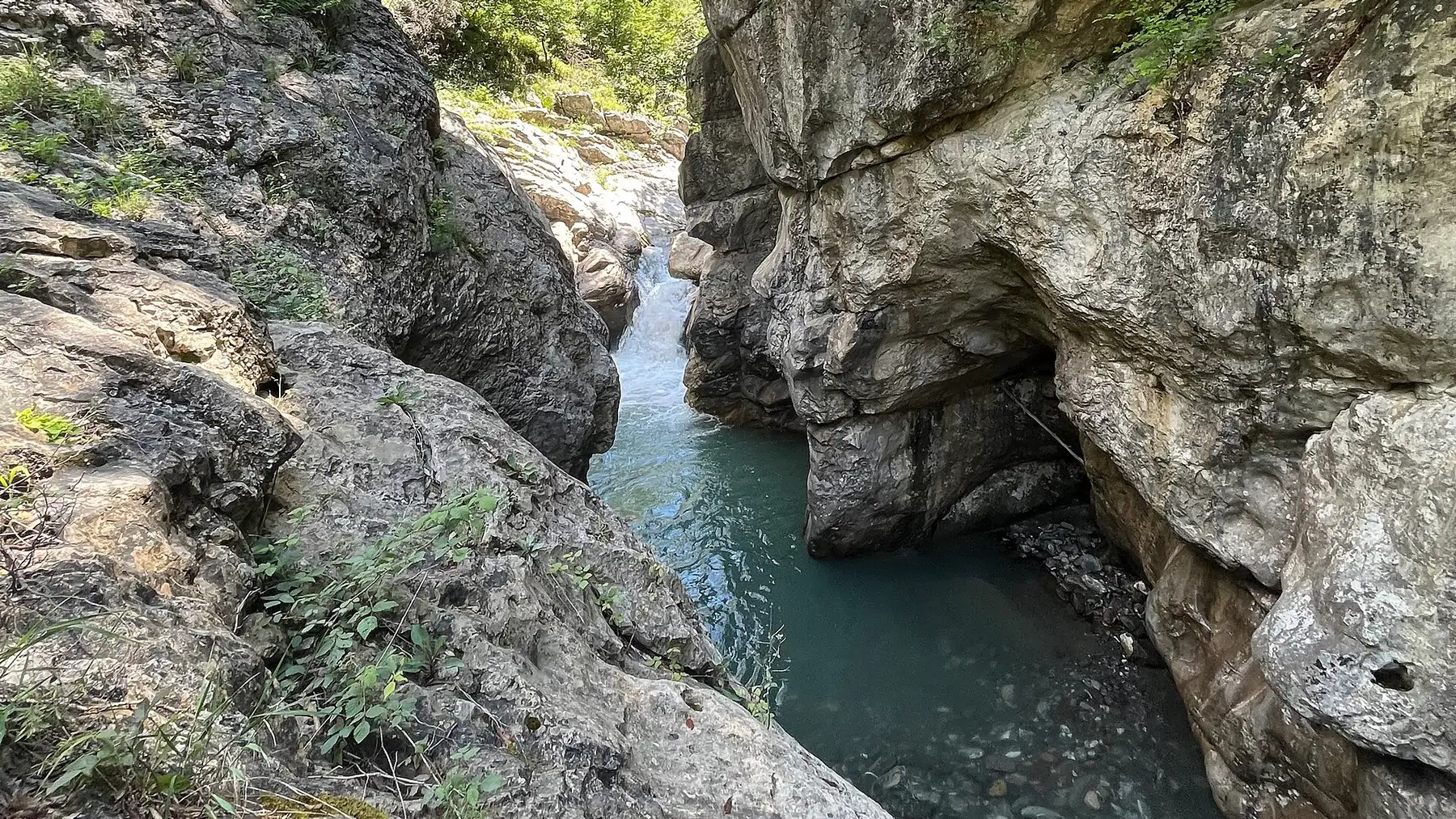
Droja River Canyon
Four kilometres north of Kruja, beside the road to Qafshtama, the Droja river has cut a deep limestone gorge between Mount Kruja and Mount Brret, and a 1.5 km stretch of it is protected as a natural monument. Inside, the walls narrow to a few metres in places, with waterfalls, deep green pools, an old path cut into the rock and a medieval stone bridge. The water stays cold all summer, and where the current is slow you can swim.
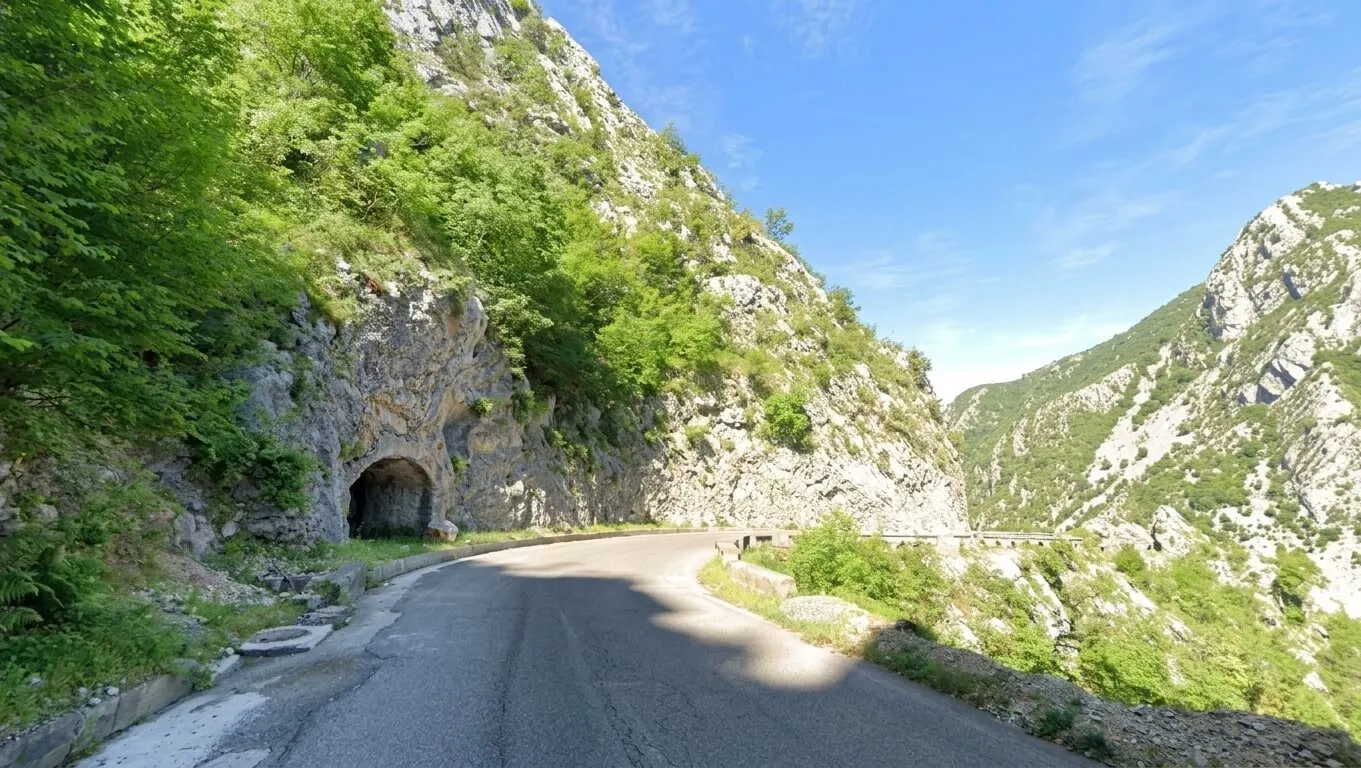
Communist Military Tunnels
On the mountain road north of Kruje, past Shkembi i Vajes, Cold War tunnels are cut into the limestone cliffs beside the road, and further up an abandoned military base still has its barracks, service roads and rusting fuel tanks. Nothing has been restored or signposted, which is why so few visitors ever see it.
Ballabaneci Plane Tree & Water Spring
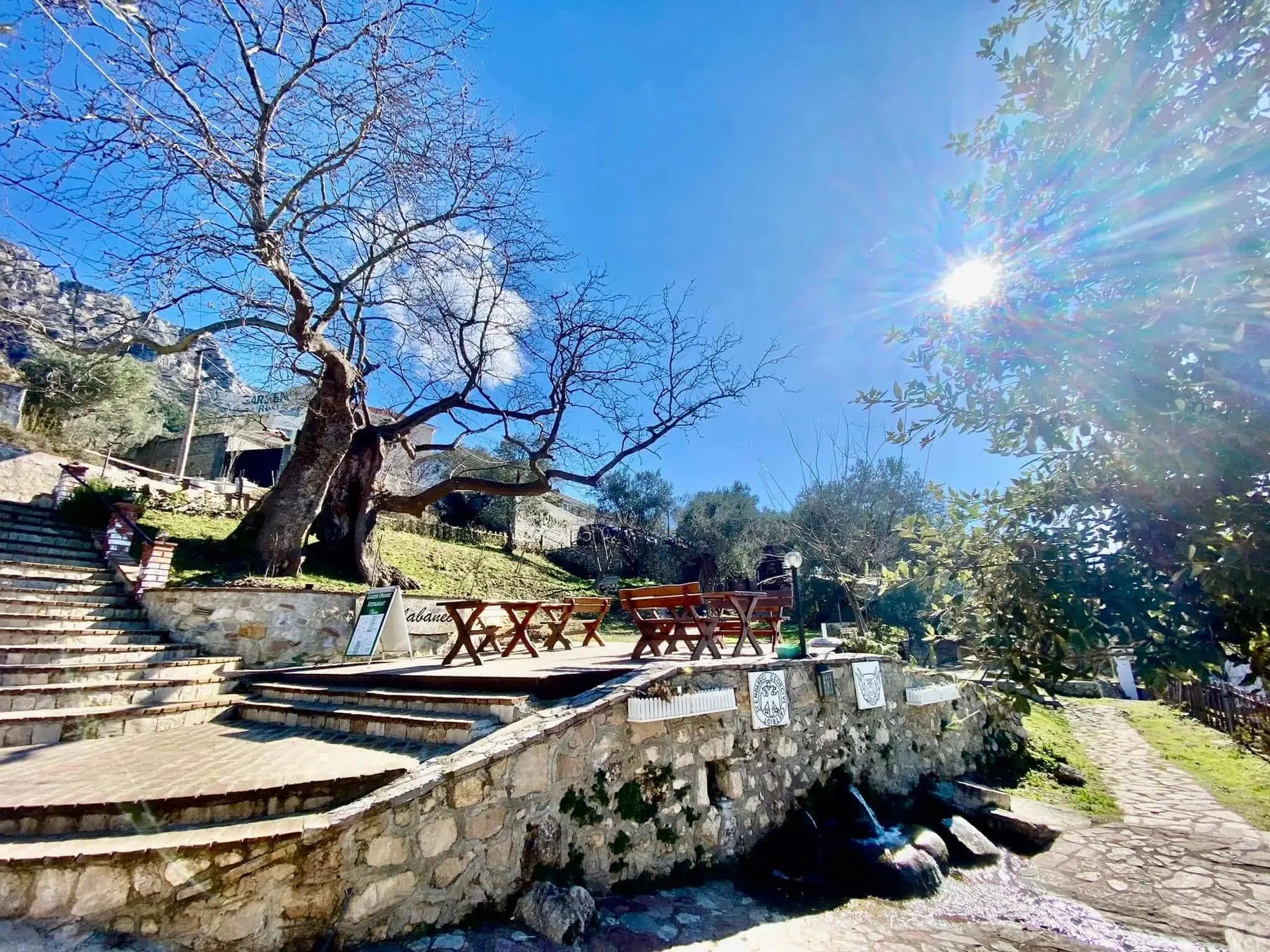
A kilometre northwest of the centre of Kruja, on the left of the road towards Gryka e Vajes, stands a plane tree that has been here for roughly 550 years. It sits at 450 metres above sea level and is registered as a natural monument, with its condition listed as partly damaged. The trunk measures 180 centimetres across and is largely hollow, the result of repeated fires: lightning took the branches first, and household waste tipped at its foot did the rest. For the last decade or so the tree has been pushing out new growth, and those young branches now stand five to six metres tall. Beside it is the spring, Kroi i Ballabanecit, which local families have taken into their own care. The name comes from Ballaban Pasha, who came to take the castle of Kruja and never managed to get near it. He got stuck here, at the tree, and in the Kruja dialect that is neci. The place has been Ballabanec ever since.
Shkembi i Vajes
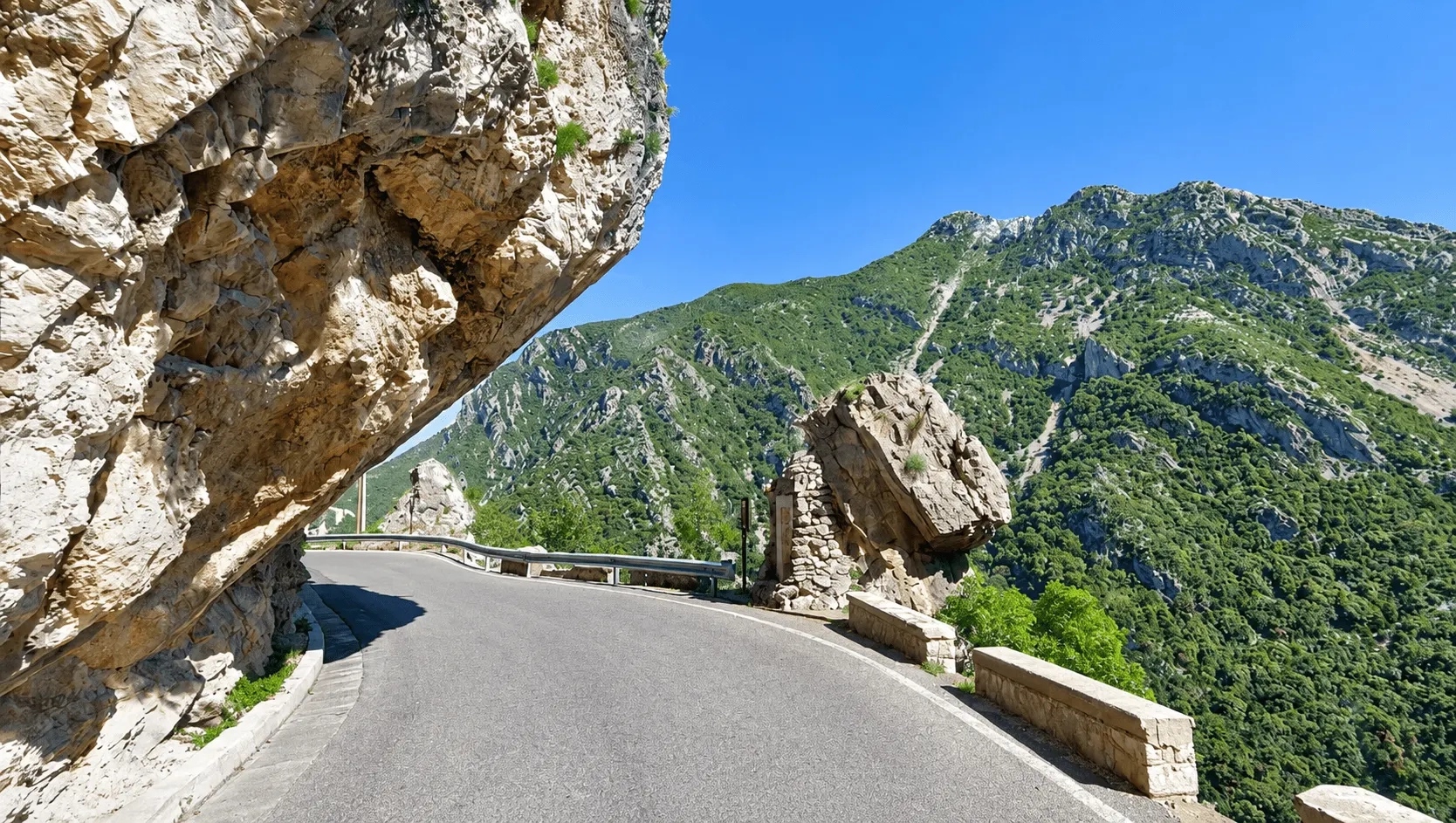
Five kilometres from the centre of Kruja, the road towards Gryka e Vajes runs along the top of a cliff. This is Shkembi i Vajes, and Kruja has carried its story for more than five centuries. As the town tells it, the Ottoman army had the castle surrounded when ninety young women of Kruja took each other by the hand and went over the edge rather than be taken. Word reached the castle, and black smoke was sent up from its walls in their honour. Their mothers came here to mourn, day after day, and it is that mourning the name remembers. A memorial plaque marks the spot today, naming the cliff the Rock of Weeping and calling the ninety free, pure and unbowed. Far below, the stream that runs through the gorge carries the same name, Perroi i Vajes.