
Updated August 19, 2026
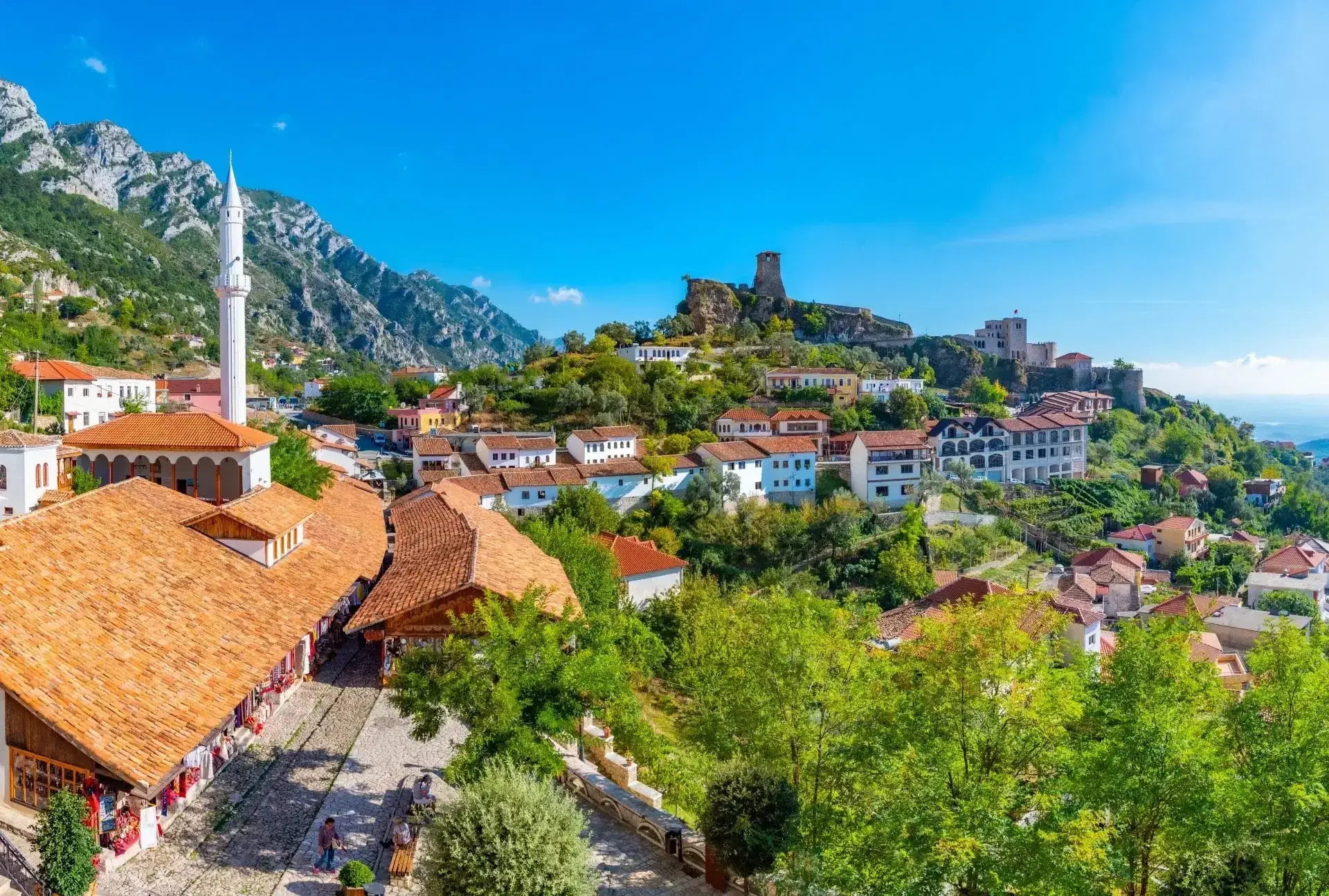
The enclosure is a mix of ruin, restoration, and hidden history. Exploring the grounds gives you a miniature timeline of Albania: from early Christian churches to Ottoman mosques, communist-era museums, and hidden secret passageways. You can easily walk between all of it in an hour or two.
| Inside the walls | What it is |
|---|---|
| The Skanderbeg Museum | Right in front of the mosque stands the museum dedicated to Gjergj Kastrioti Skanderbeg. Designed in 1982 by Pranvera Hoxha to blend into the castle, it houses the largest mosaic, sculpture, and wall painting in Albania, telling the hero's story from birth to death. |
| The Ethnographic Museum | Housed in a 250-year-old noble home of the wealthy Toptani family. Rather than showing peasant life, it offers a fascinating look at how the elite lived centuries ago. |
| The Dollma Teqe | A Bektashi place of worship built around 1700. It miraculously survived the 1967 communist destruction of religious sites. Inside grows an olive tree believed to have been planted by Skanderbeg himself on his wedding day. |
| The Hammam Ruins | Built shortly after the Ottoman conquest, this thermal bath was inspired by Roman traditions. It featured warm, hot, and cold rooms, serving as a place to both wash with olive-oil soap and socialize. |
| Fatih Mosque | Built on top of an earlier church following the Ottoman conquest. Today, only its minaret and ruins remain, as the main structure was destroyed by the communist party in the 1970s. |
| The Clock Tower & Saint George's Church | The ruined church was built before the Ottomans arrived. The prominent clock tower you see today actually began its life as the church's bell tower before being converted into an Ottoman watchtower. |
| The Secret Entrance | A hidden passageway that the Ottomans could never find during their sieges. Today it is a great spot for taking photos. |
Want the story rather than the plaques?
The museum labels tell you what an object is. They do not tell you which stretch of wall is original and which was rebuilt in the 1980s, why the bazaar survived where it did, or what the 1967 fire took. That is the part a local guide is for.
Practical details: fees and opening hours
The castle grounds and the Old Bazaar are free to walk, and the two museums inside charge separately, in cash, in lek. Full fees, opening times and the best hour to arrive are in the Kruje Castle entrance fee and opening hours guide.
Kruje Castle: common questions
Why is Kruje Castle famous?
Because it held. Under Skanderbeg the fortress withstood three Ottoman sieges between 1450 and 1467, including two led by Mehmed II, the sultan who had taken Constantinople. It became the symbol of Albanian resistance and remains the country's central national site.
Is Kruje Castle the same as Skanderbeg Castle?
Yes. The fortress is called Kruje Castle, Kruja Castle, Kalaja e Krujes and Skanderbeg Castle interchangeably, after Gjergj Kastrioti Skenderbeu, who held it from 1443 until his death in 1468. The Skanderbeg Museum inside the walls is a separate, ticketed building.
Who built Kruje Castle?
No single builder. Fortifications stood on the rock by the fifth or sixth century under Byzantine control, the site became the seat of the Principality of Arbanon in 1190, and the walls were rebuilt and repaired repeatedly through the Ottoman centuries. What stands today is layered rather than the work of one period.
What is inside Kruje Castle?
Inside the walls you will find the Skanderbeg Museum, the Ethnographic Museum, the 18th-century Dollma Teqe, the ruins of the Fatih Mosque and an Ottoman hammam, the old clock tower and St. George's Church, and a secret entrance that survived the sieges.
How long do you need at Kruje Castle?
One hour for the walls and a single museum, two hours for both museums at a comfortable pace. Add the Old Bazaar on the lane below the gate and you have a half day, which is what most visitors coming from Tirana end up spending.
Is Kruje Castle worth visiting?
For the history and the view from the western wall, yes. Go in expecting a walled hilltop with two museums and a panorama rather than an intact medieval castle, and arrive before 10:00 or after 16:00 to miss the Tirana day trips and the Durres cruise groups.