Skanderbeg Museum
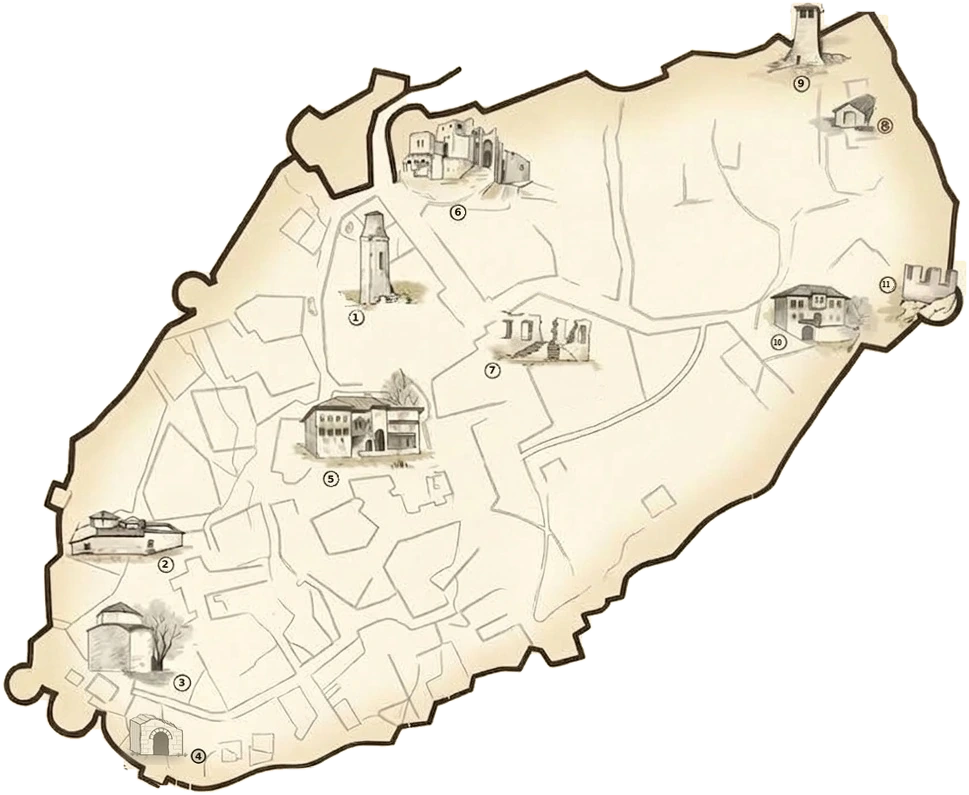
Built into the castle grounds and opened in 1982. Armour, replicas of Skanderbeg's helmet and sword, and the siege maps that explain why this ridge mattered.
 VisitKruja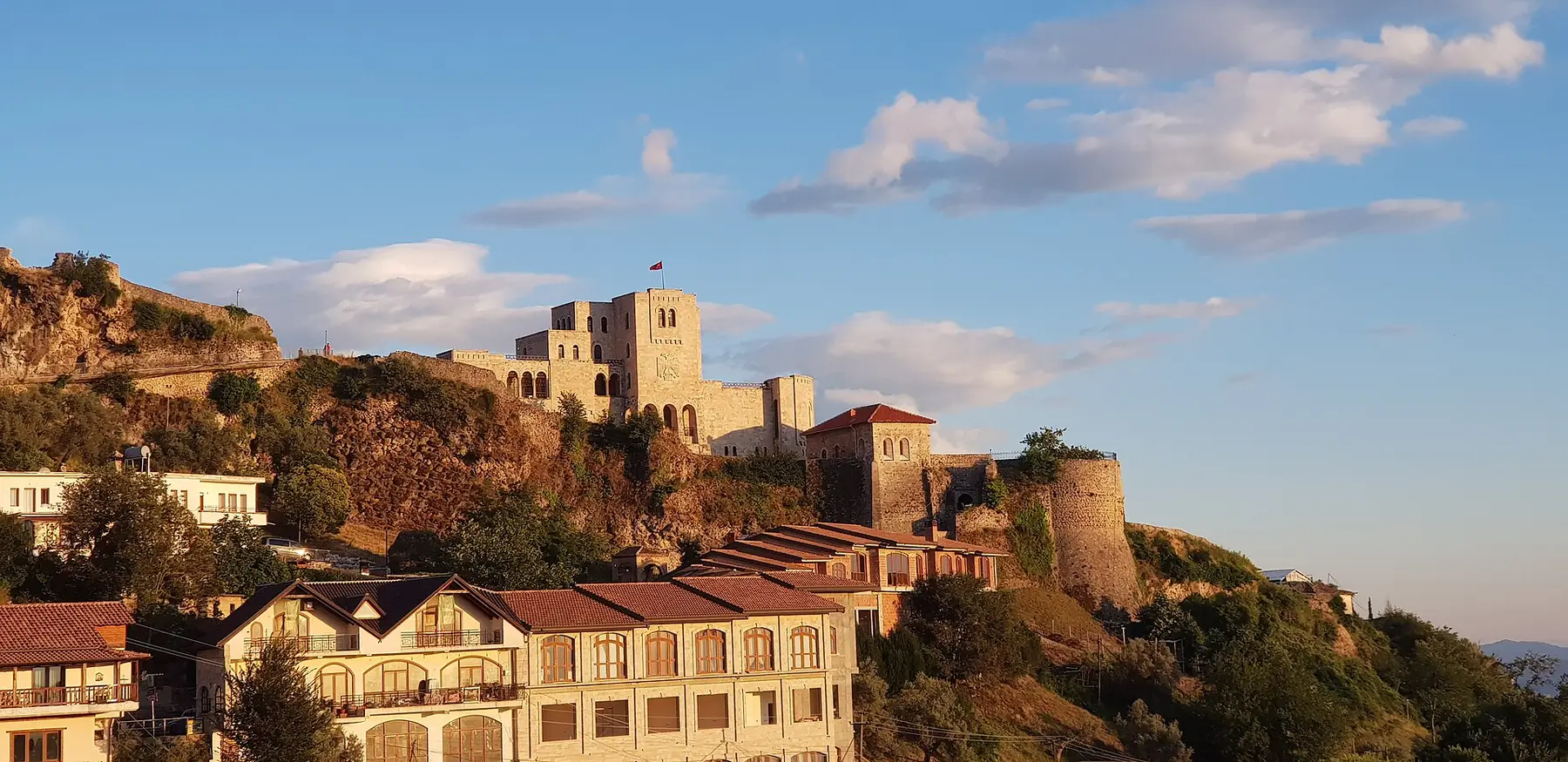
A fortress on a ridge above the Adriatic plain, held by Skanderbeg through three Ottoman sieges.
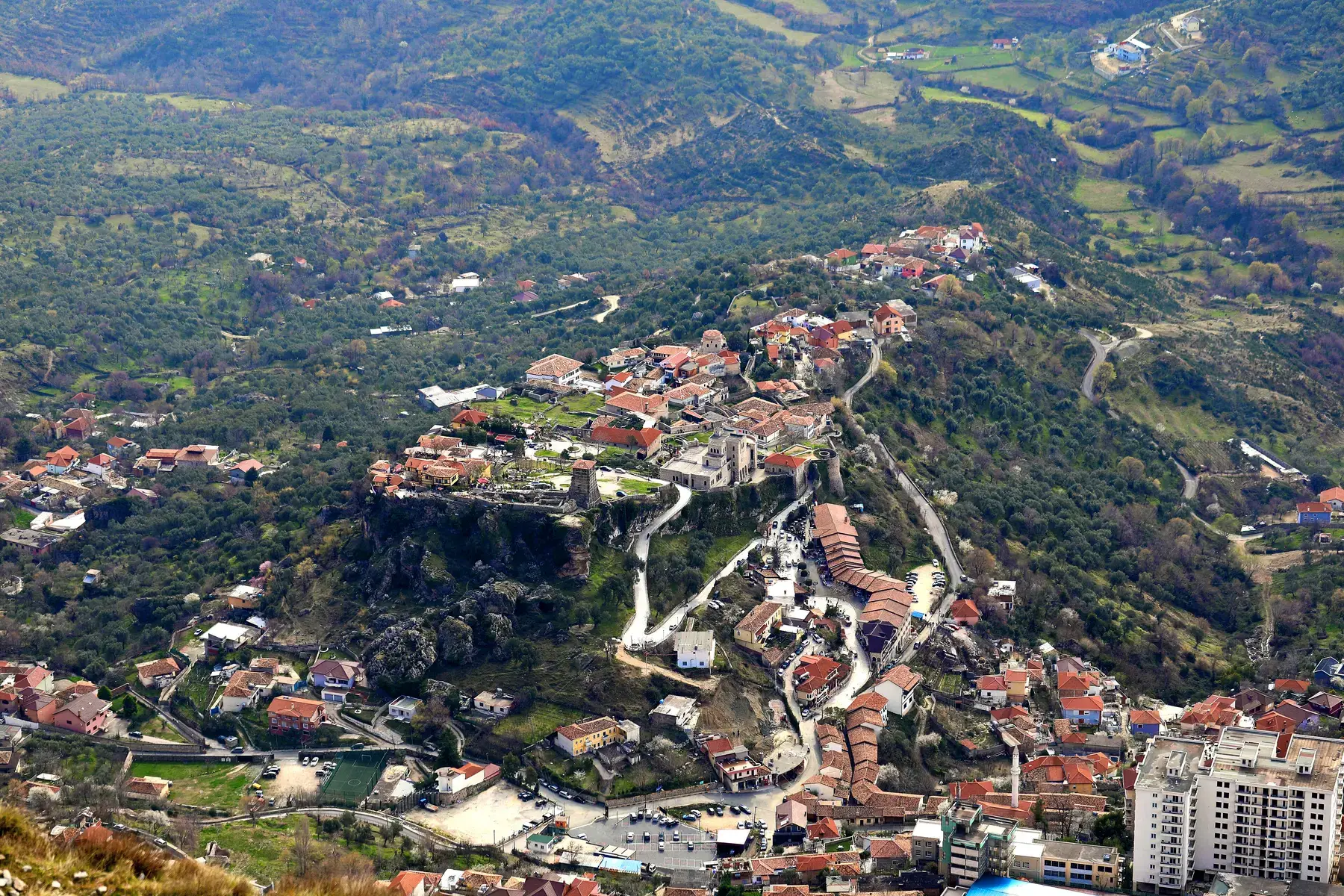
The castle sits on a ridge with the whole Adriatic plain laid out below it, which is exactly why it was built where it was. Fortified from the 5th century and rebuilt many times since, it held out through three Ottoman sieges in the 1450s and 1460s while Skanderbeg commanded the defence.
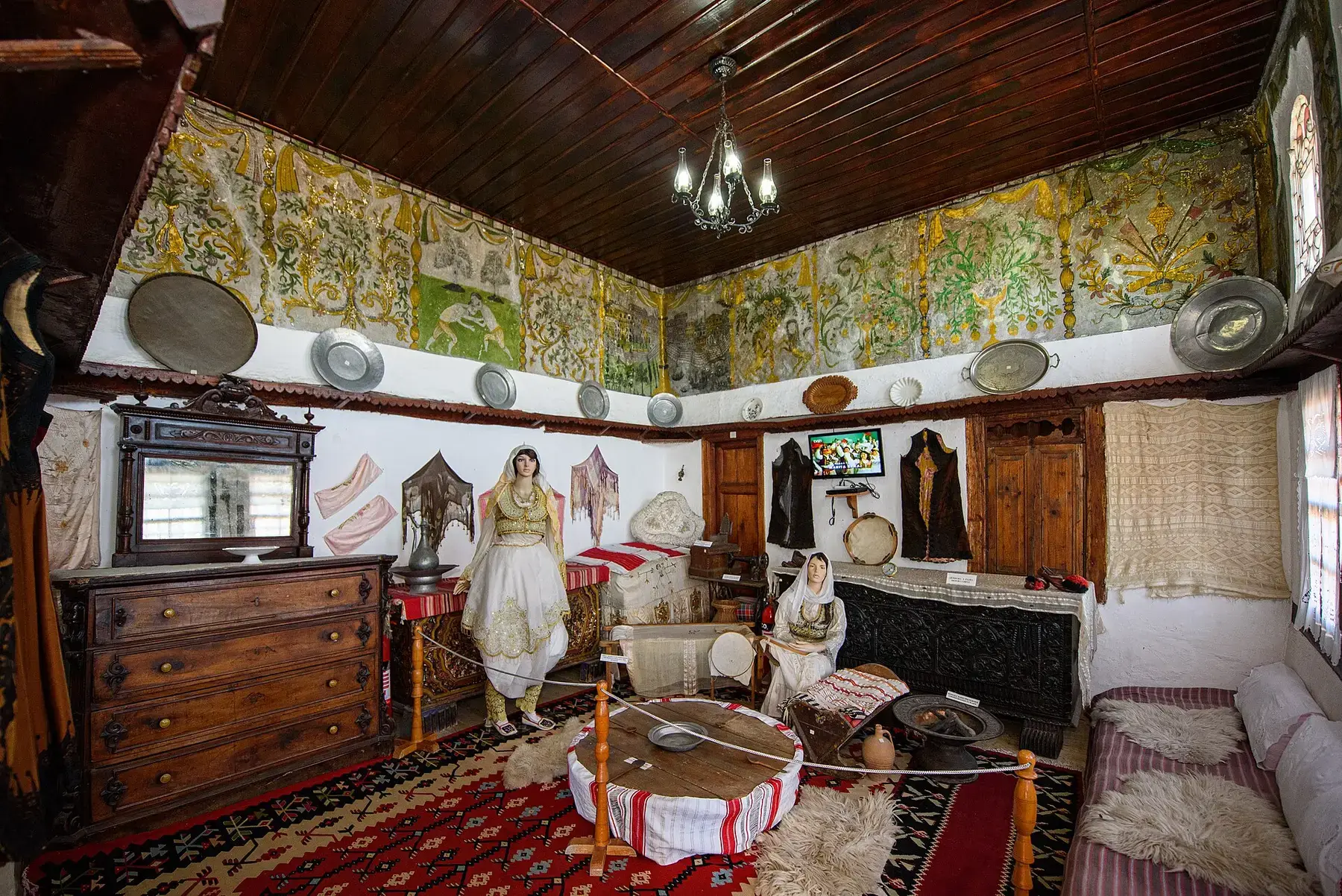
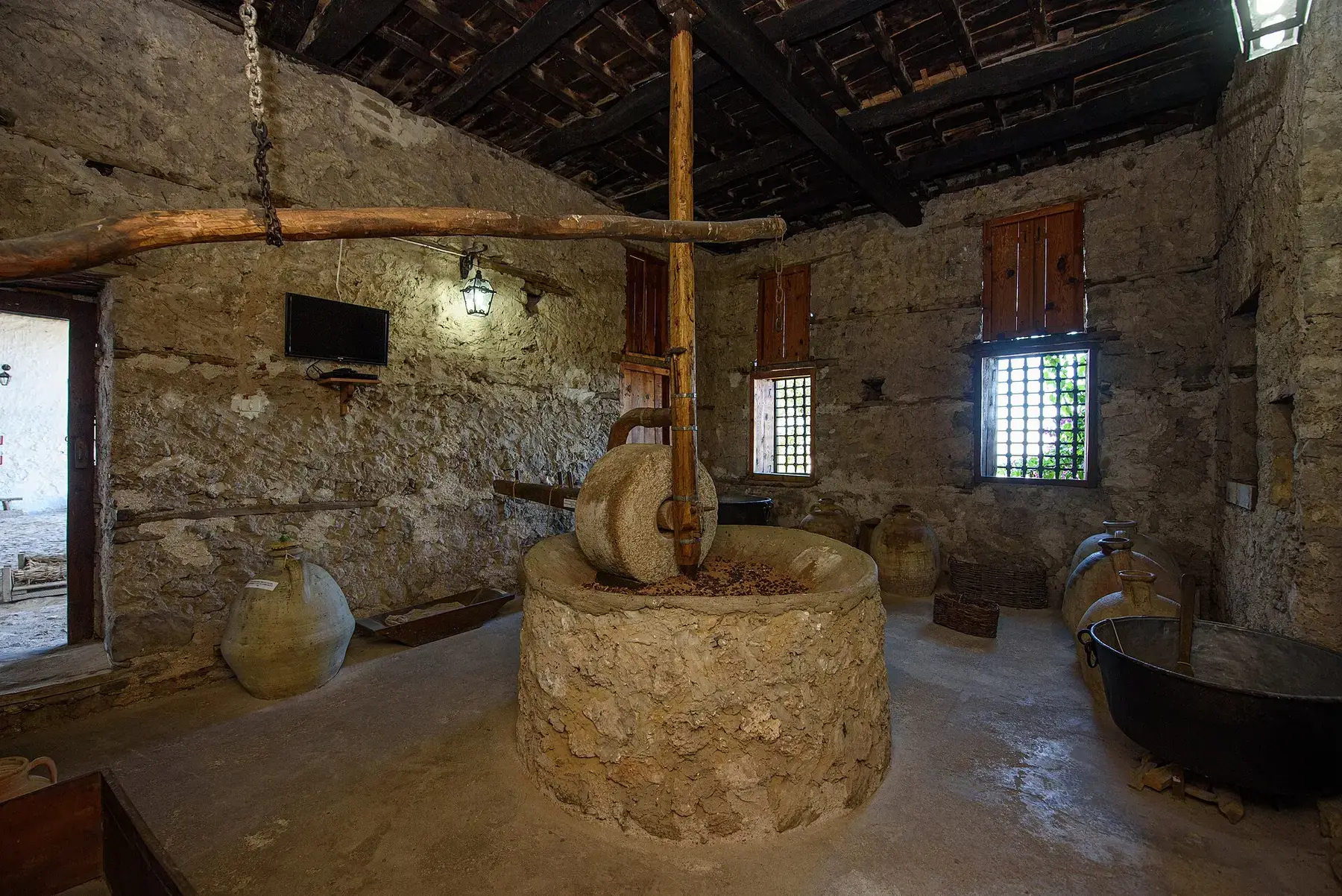
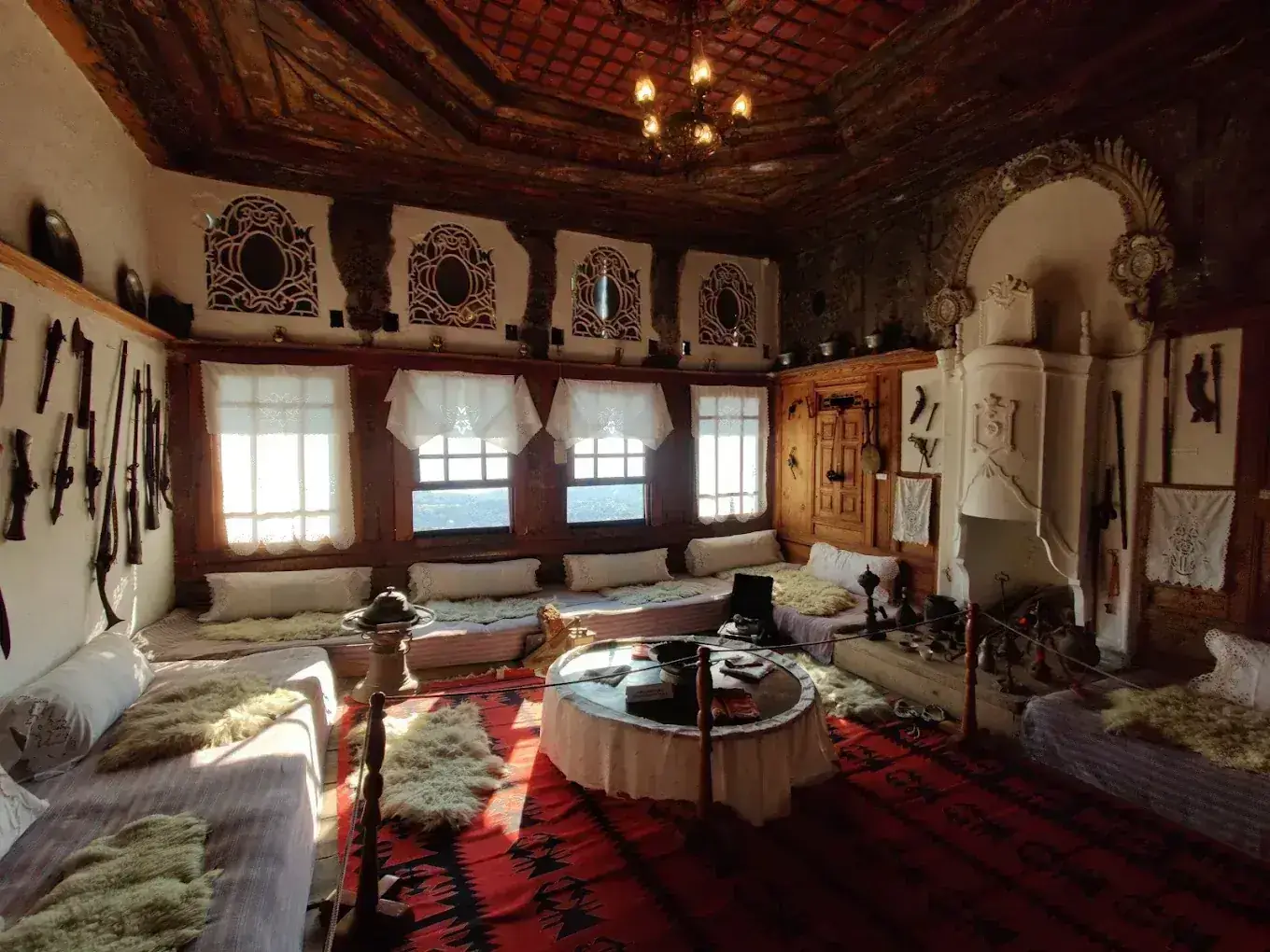
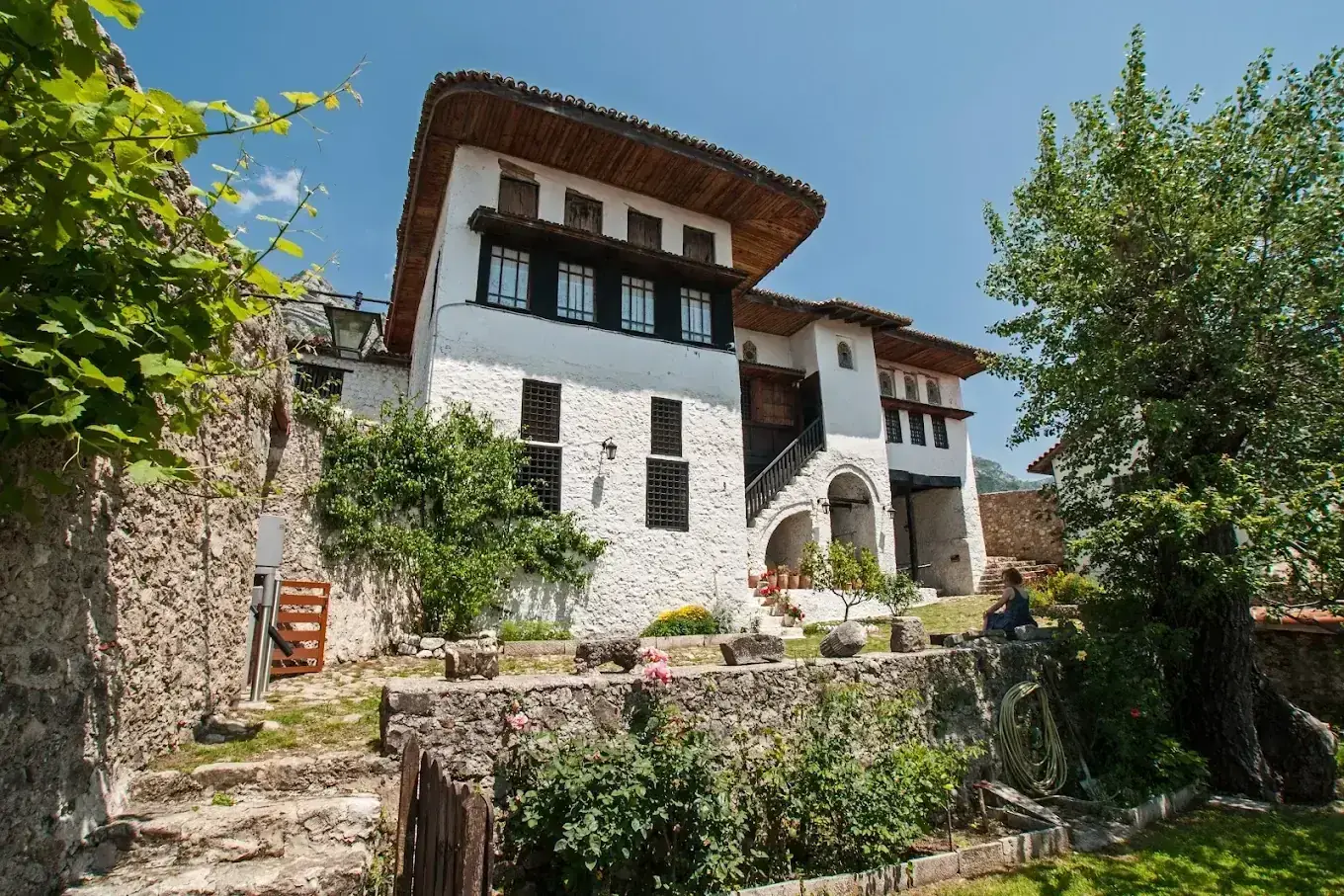
Two museums stand inside the walls. The Skanderbeg Museum tells the story of the sieges; the Ethnographic Museum occupies an Ottoman house and shows how a Kruja family actually lived, room by room, down to the olive press in the basement.
Step back out of the gate and you are at the top of the Old Bazaar, the market lane you walk up to reach the castle.
Everything here is within a few minutes' walk of the castle gate, which is why most people give the whole site half a day rather than an hour.
Built into the castle grounds and opened in 1982. Armour, replicas of Skanderbeg's helmet and sword, and the siege maps that explain why this ridge mattered.
An Ottoman house furnished as it would have been lived in, with the workshops and the olive press still in place downstairs. The best single room in Kruja.
Free to walk at any hour. The clock tower and the surviving curtain wall give the view that the postcards use.
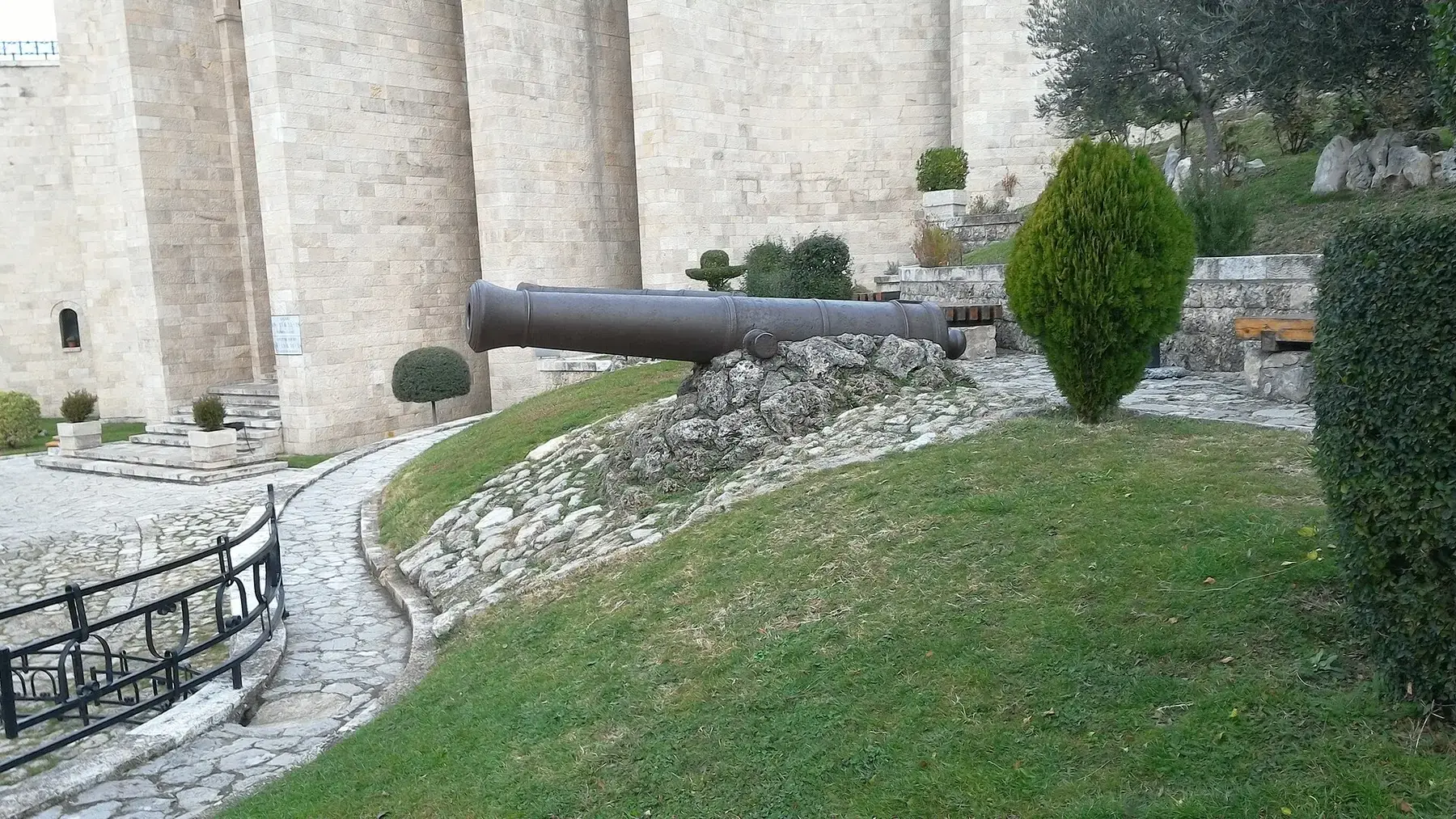
Ruins, a cannon, and grass between them. Nobody charges you to wander, and early morning is when you get it to yourself.
A Bektashi place of worship built in 1779–80 by Adem Aga Toptani, whose marble tomb is inside. It miraculously survived the 1967 communist destruction of religious sites. Inside grows an olive tree believed to have been planted by Skanderbeg himself on his wedding day.
Built shortly after the Ottoman conquest, this thermal bath was inspired by Roman traditions. It featured warm, hot, and cold rooms, serving as a place to both wash with olive-oil soap and socialize.
Completed around 1481 and named after Sultan Mehmed II, who took Kruja in 1478. Its minaret fell in a storm in 1917, the mosque was used to store ammunition in the Second World War, and it was left to ruin afterwards. Only the lower walls and the base of the minaret remain.
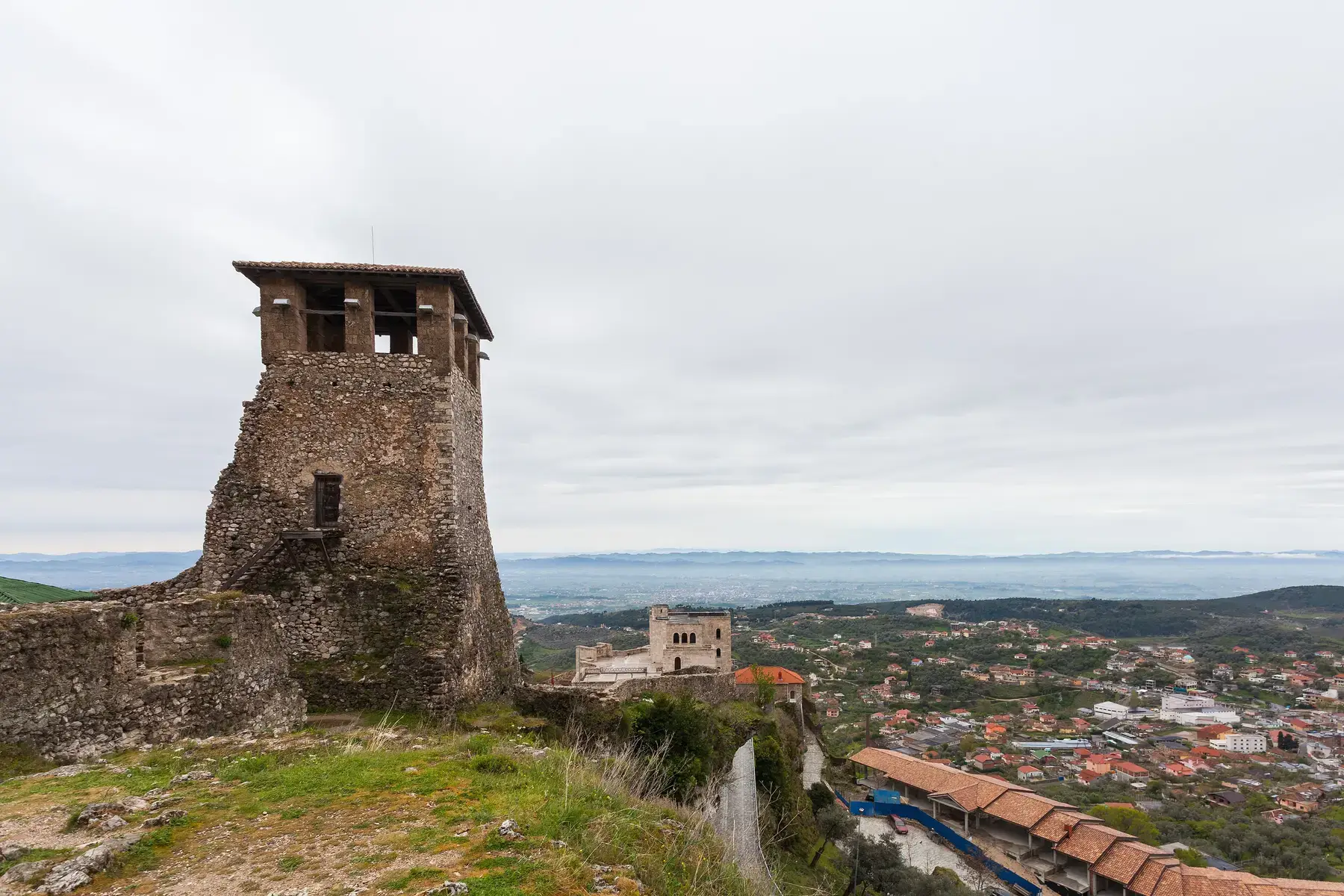
The ruined church was built before the Ottomans arrived. The clock tower nearby is older than it looks: it was built as a watchtower in the 11th or 12th century at the highest point of the castle, and given a clock after the earthquake of 1617.
A hidden passageway that the Ottomans could never find during their sieges. Today it is a great spot for taking photos.
Every place above, where it stands, numbered in the order a guided visit reaches them. Select a number to read about it.
The fortress went up in the 5th or 6th century, on a ridge high enough to watch the whole plain down to the coast. Byzantine documents of the early 9th century already name the town, as Kroai, and in 1190 Kruja became the capital of the Principality of Arbanon, the first Albanian state of the Middle Ages.
The Ottomans took the town in 1415. On 28 November 1443 Skanderbeg took it back by deceiving its Ottoman commander with a forged letter from the sultan, and raised the Albanian flag over the walls the same day.
What followed made the castle famous. In 1450 Sultan Murad II besieged it from 14 May to 26 October with an army put at around 100,000 men, while a garrison of about 4,000 under Vrana Konti held the walls and Skanderbeg harried the Ottoman camps from the mountains outside. The sultan withdrew before winter. Mehmed II, the sultan who had taken Constantinople, came back in 1466 and again in 1467, and failed both times.
Skanderbeg died in 1468. Kruja held out for ten more years, until a blockade that began in the spring of 1477 starved the town into surrender on 16 June 1478.
Under Ottoman rule the castle became a small town inside its walls: the Fatih Mosque around 1481, a hammam in the 15th century, the Toptani family's house in 1764, the Dollma Teqe in 1779–80. The Skanderbeg Museum opened in 1982 and the Ethnographic Museum in 1989, and the fortress has appeared on Albanian banknotes, on the 1,000 lek note of 1992 and the 5,000 lek note since 1996.
The castle is an ellipse of about 2.5 hectares, its walls reinforced by nine towers that once passed signals to the castles of Petrela and Durres. It is not one building from one period: the walls were raised, breached and patched for a thousand years, and what you walk through today is layered, with medieval masonry, Ottoman buildings inside and restorations from recent decades.
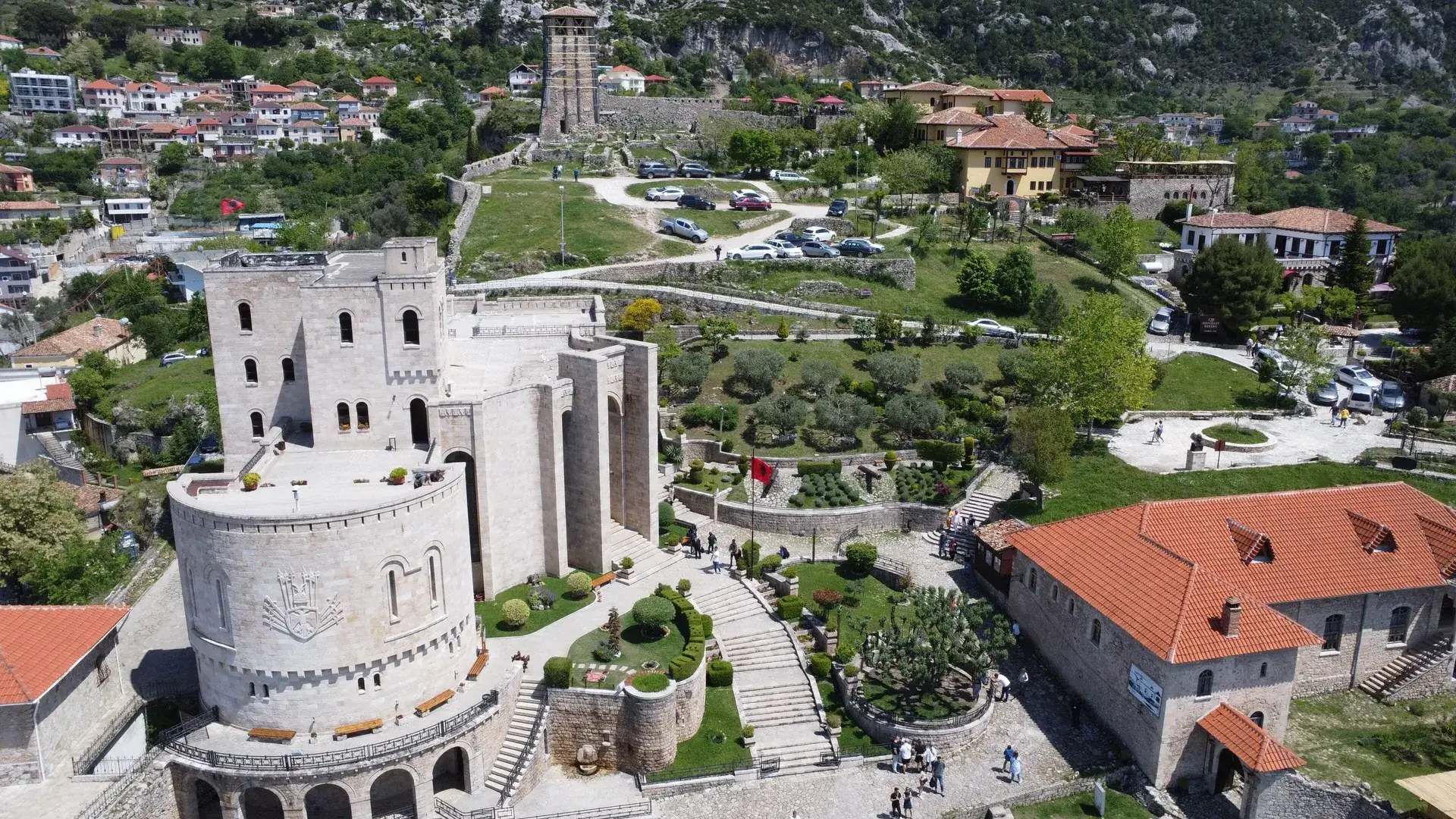
The oldest standing piece is the watchtower at the highest point, built in the 11th or 12th century and possibly earlier as the redoubt and seat of the local lord. It rises between 15.75 and 17.2 metres. After the earthquake of 1617 it lost its military role and was given a clock, which is why it is now called the Clock Tower; a bronze bell dated 1462 that once hung here is kept in the Skanderbeg Museum.
A few houses inside the walls are still lived in, so keep to the paths. The 15th-century hammam was restored between 2013 and 2015 by Cultural Heritage without Borders, with funding from the Government of Sweden.
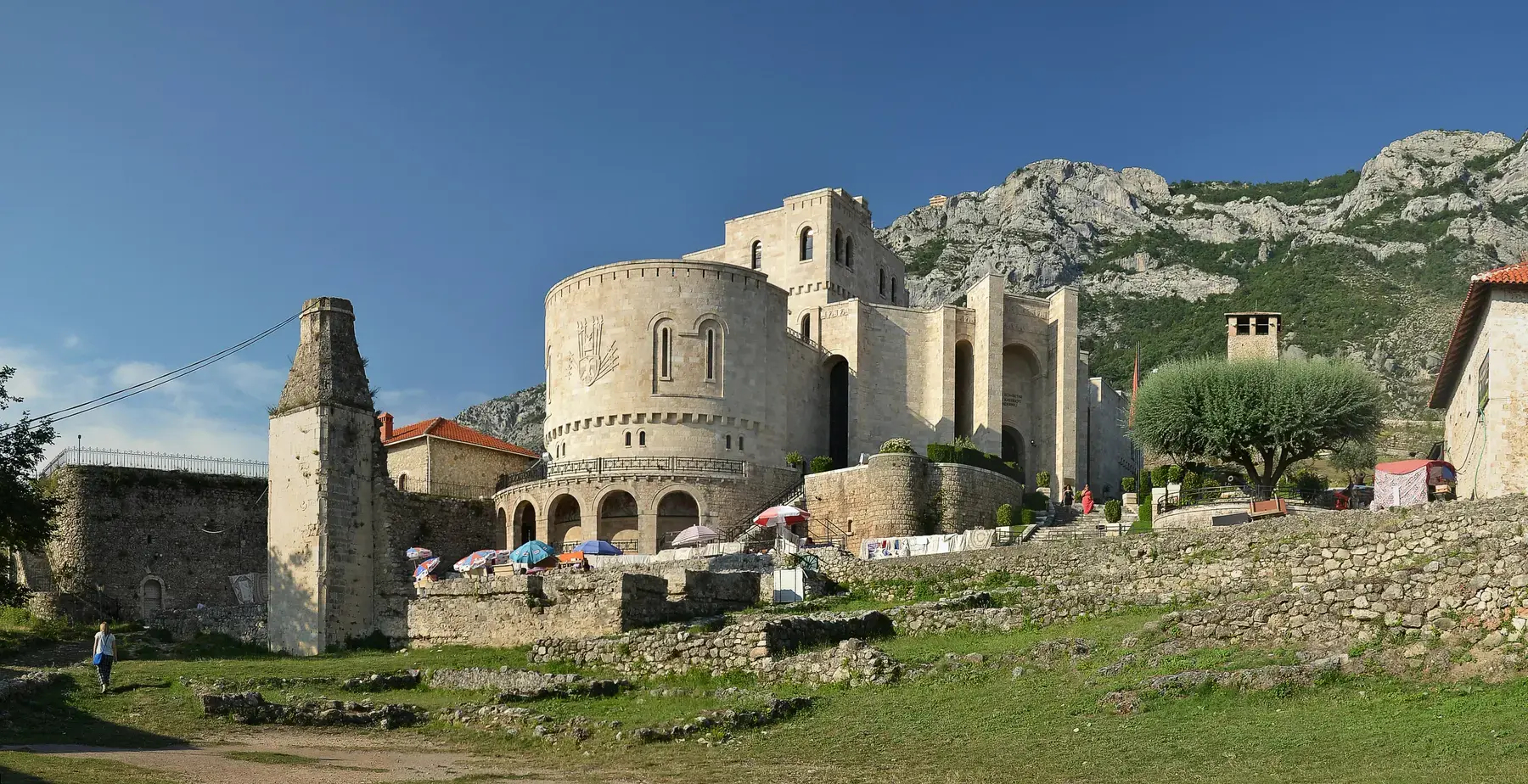
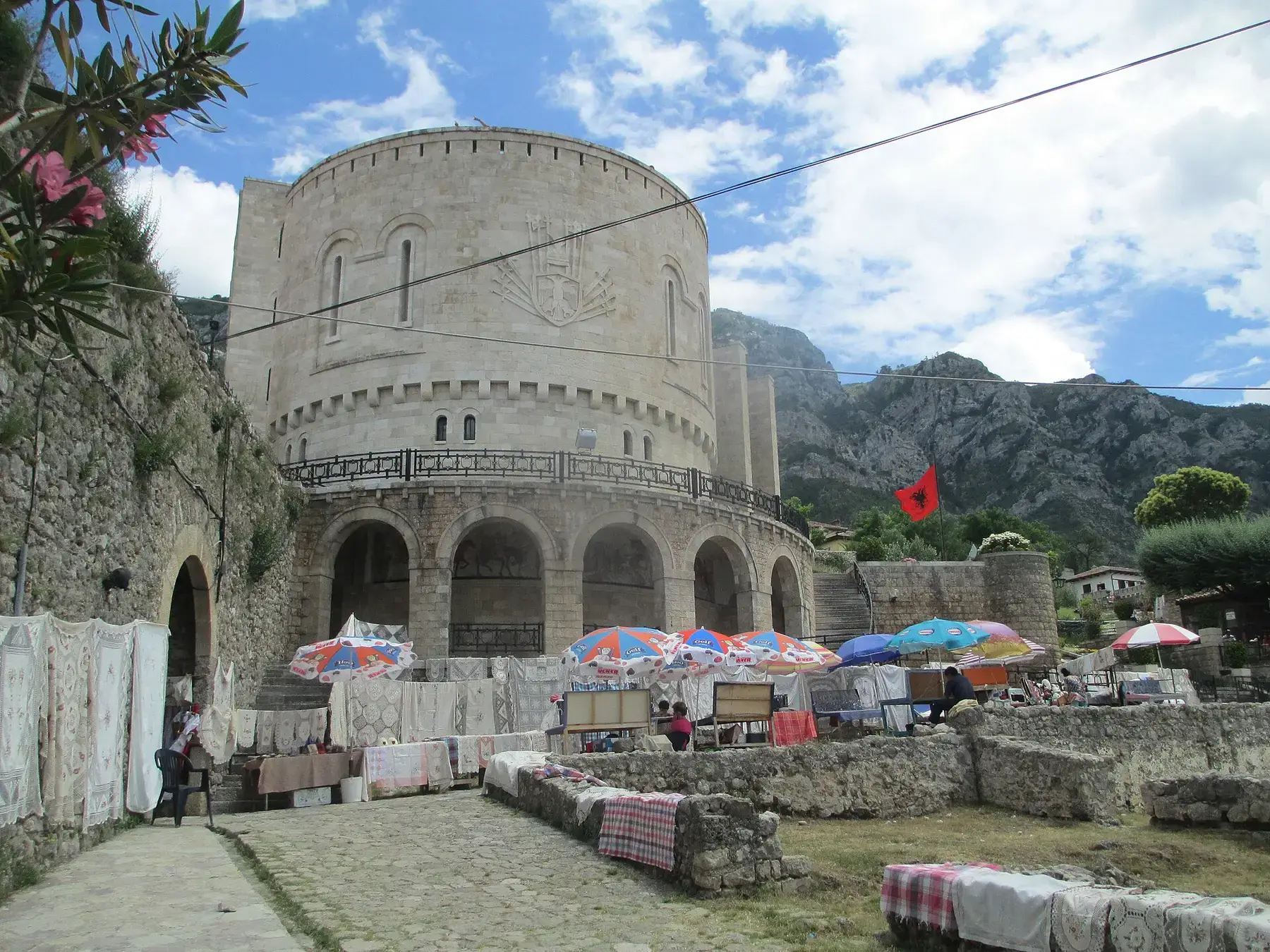
The largest building inside the walls, the Skanderbeg Museum, is also the newest. It was designed in the 1970s to look like a medieval keep, drawing on Albanian stone tower houses, so it is easy to mistake for the original castle. The original fortifications are the walls and towers around it.
The National History Museum "Gjergj Kastrioti Skënderbeu" opened on 1 November 1982. It was designed by the architects Pranvera Hoxha and Pirro Vaso; design work began in 1976 and building in 1978.
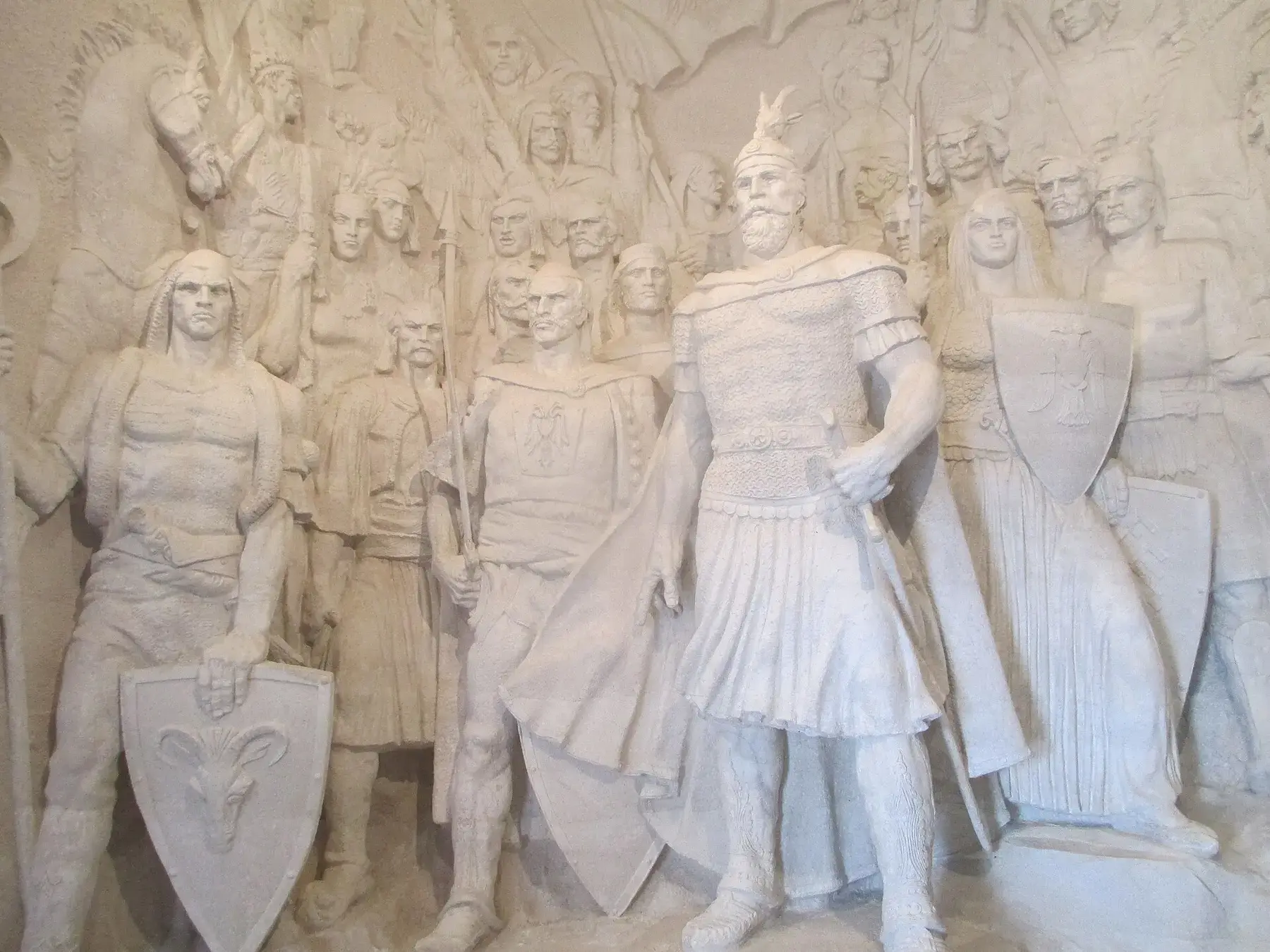
The exhibition follows Skanderbeg's life and wars in order: armour and weapons, paintings and large murals of Skanderbeg and his troops, sculptures, medieval cannons and mosaics. The goat-headed helmet on display is a replica; the original is in the Kunsthistorisches Museum in Vienna. Look out for the bronze bell of 1462 from the watchtower.
Allow about an hour.
The museum fills a house the Toptani family built in 1764 inside the castle walls, and it opened to the public on 20 November 1989. It holds around 1,000 objects, some of them 500 years old: tools, textiles, folk costumes, weapons and household furnishings.
It is the room-by-room picture of how a wealthy Kruja family lived, down to the workshops and the olive press below. The family even had a small hammam of their own inside the house. If you only have time for one museum, make it this one.
Allow 45 minutes to an hour.
Give the two museums an hour and a half between them, walk the walls, and leave time for a coffee with the view.
Go up before the coaches arrive. The light is better and the view over the plain is the thing most people came for.
Skanderbeg for the history, Ethnographic for the daily life. If you only do one, do the Ethnographic Museum.
Several cafes near the gate look straight out over the plain. On a clear day you can see the sea.
| Walls, grounds and viewpoints | About 1 hour |
|---|---|
| Plus one museum | About 2 hours |
| Both museums at an easy pace | 2 to 3 hours |
| With the Old Bazaar and lunch | Half a day |
The castle is open all year, so this is the one destination around Kruja that never really closes.
April to May
Green hillsides, comfortable walking temperatures, and the coach groups have not yet peaked.
June to August
Hot on the cobbles by midday. Come before 10:00 or after 17:00 and the street is a different place.
September to October
The best combination of light, temperature and quiet. September is the pick of the year.
November to March
Cold and sometimes wet, and some bazaar shops keep shorter hours, but you will have the walls to yourself.
Kruja sits about 20 km from Tirana International Airport and roughly 32 km from central Tirana, so it is one of the easiest day trips in the country.
The last stretch up to the castle is steep and the cobbled street is closed to most traffic, so cars stop at the car park below the bazaar and everyone walks the final few minutes.
Wear something with grip. The bazaar cobbles are polished smooth by several centuries of feet and they are genuinely slippery in the rain.
Directions in Google Maps
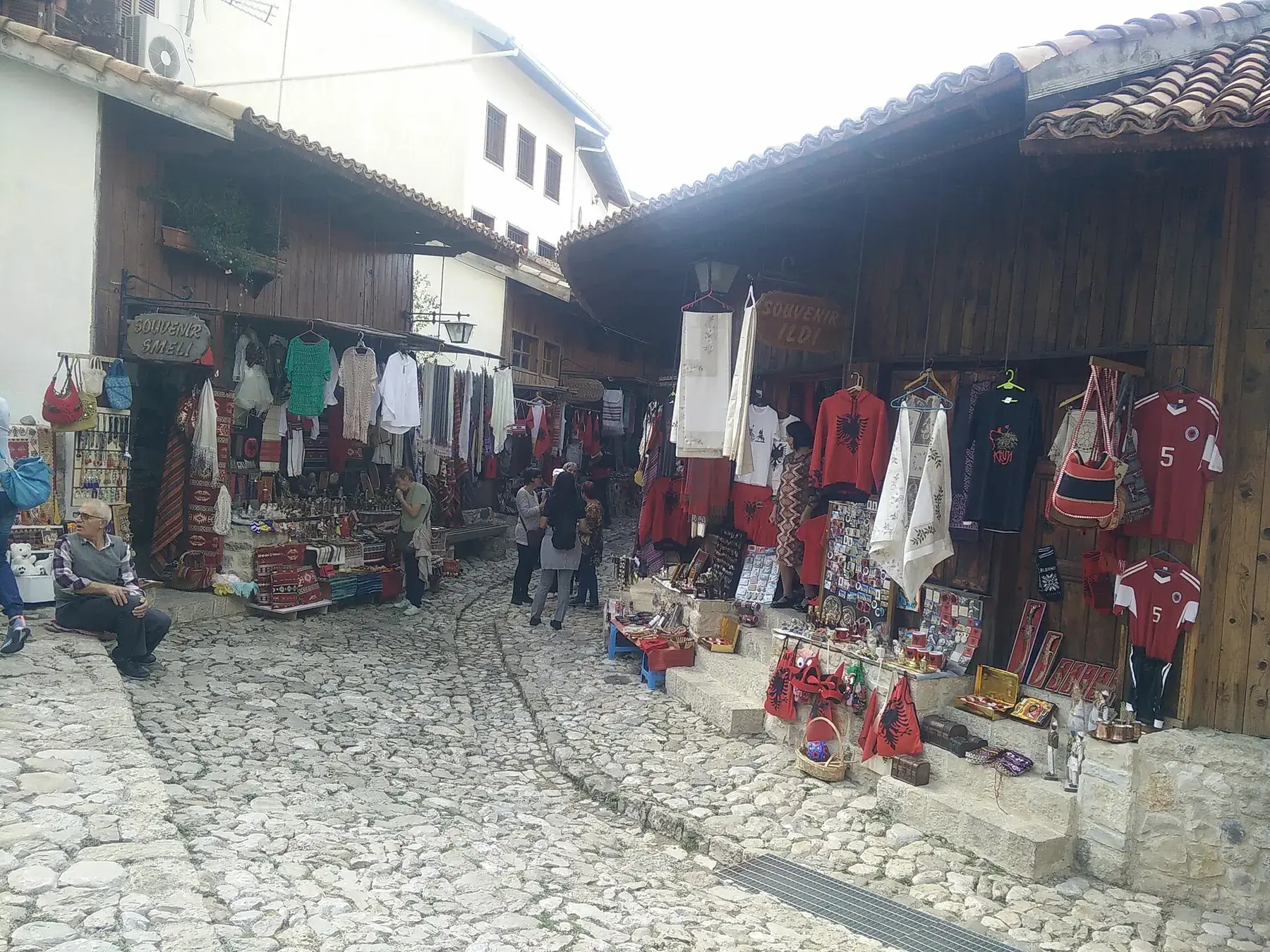
A cobbled Ottoman market lane that still trades below the castle gate.
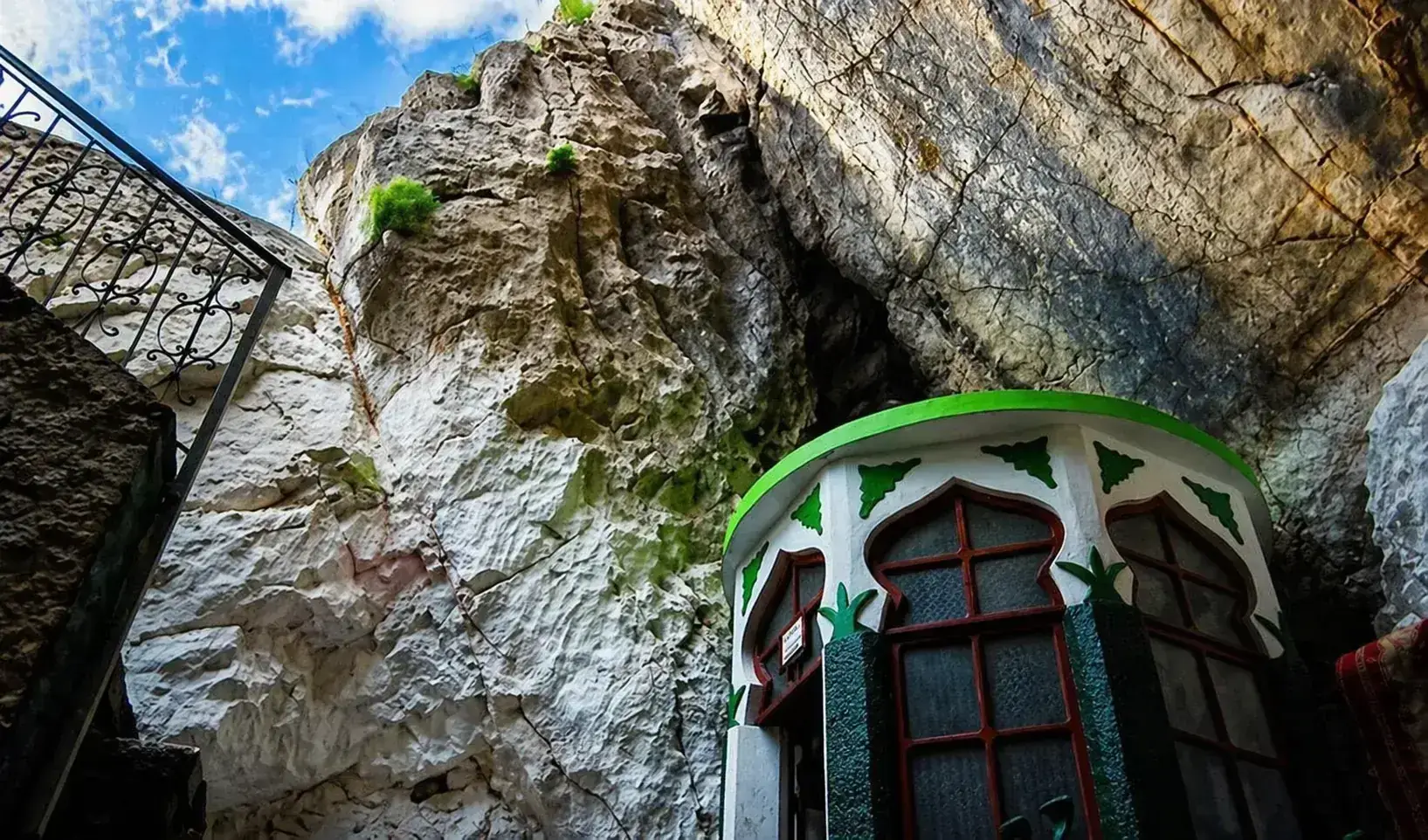
A Bektashi cave shrine at 1,176 m on Mount Kruja, with views over the plain to the Adriatic.
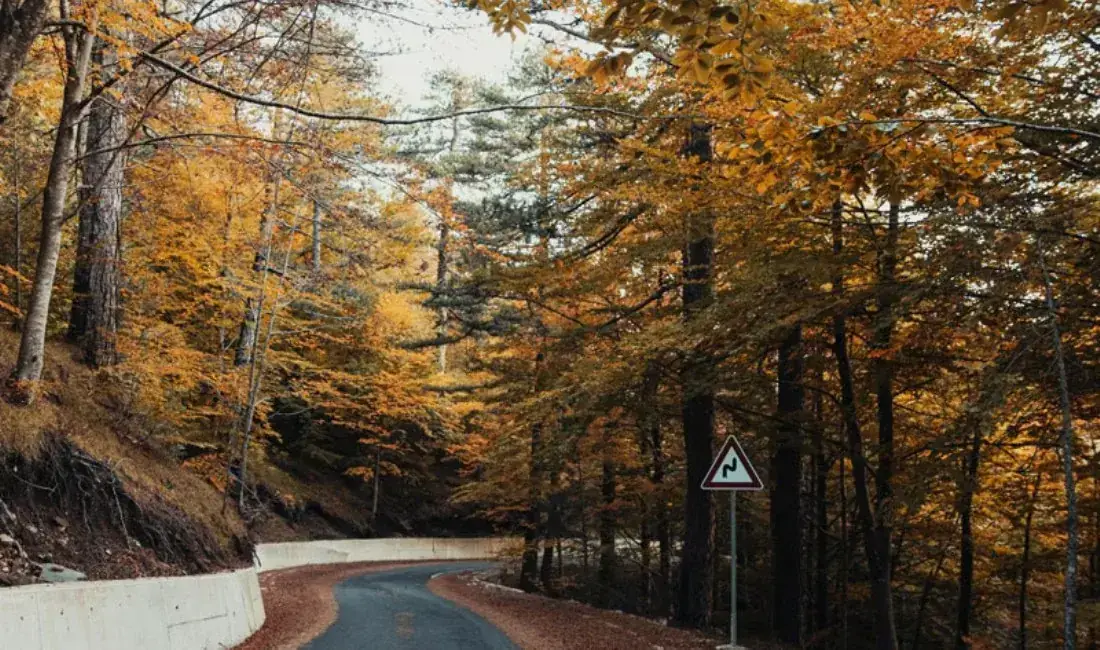
Black pine forest, limestone peaks and the Queen Mother's Spring, 20 km from Kruja on the road to Burrel.
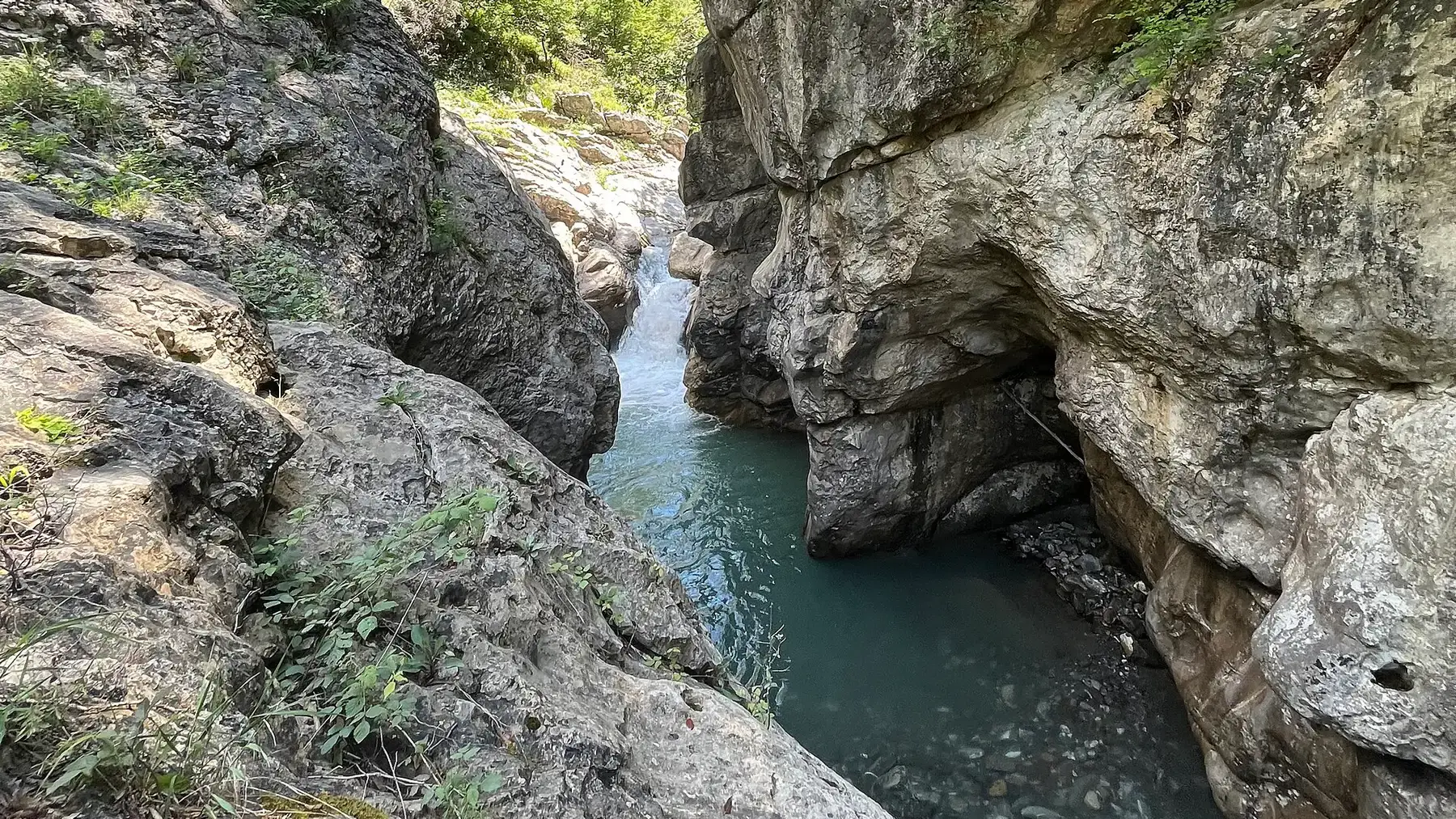
A limestone gorge 4 km north of Kruja, with waterfalls, deep green pools and a stretch protected as a natural monument.
Because it held. Under Skanderbeg the fortress withstood three Ottoman sieges between 1450 and 1467, including two led by Mehmed II, the sultan who had taken Constantinople. It became the symbol of Albanian resistance and remains the country's central national site.
Yes. The fortress is called Kruja Castle, Kruje Castle, Kalaja e Krujes and Skanderbeg Castle interchangeably, after Gjergj Kastrioti Skenderbeu, who held it from 1443 until his death in 1468. The Skanderbeg Museum inside the walls is a separate, ticketed building.
No single builder. Fortifications stood on the rock by the fifth or sixth century under Byzantine control, the site became the seat of the Principality of Arbanon in 1190, and the walls were rebuilt and repaired repeatedly through the Ottoman centuries. What stands today is layered rather than the work of one period.
Inside the walls you will find the Skanderbeg Museum, the Ethnographic Museum, the 18th-century Dollma Teqe, the ruins of the Fatih Mosque and an Ottoman hammam, the old clock tower and St. George's Church, and a secret entrance that survived the sieges.
One hour for the walls and a single museum, two hours for both museums at a comfortable pace. Add the Old Bazaar on the lane below the gate and you have a half day, which is what most visitors coming from Tirana end up spending.
For the history and the view from the western wall, yes. Go in expecting a walled hilltop with two museums and a panorama rather than an intact medieval castle, and arrive before 10:00 or after 16:00 to miss the Tirana day trips and the Durres cruise groups.
Yes. The castle grounds and walls are free to walk at any hour. The Skanderbeg Museum and the Ethnographic Museum each charge their own ticket.
No. The museum was built between 1978 and 1982 to look like a medieval keep. The original fortifications are the walls and towers around it; the oldest standing piece is the 11th or 12th-century watchtower.
Four times between 1450 and 1478. The castle held in 1450, 1466 and 1467; the fourth siege was a blockade that began in 1477 and starved the town into surrender on 16 June 1478.
The history makes far more sense with someone who knows it. We run the castle and bazaar as a guided visit from Kruja or Tirana.