The plaque
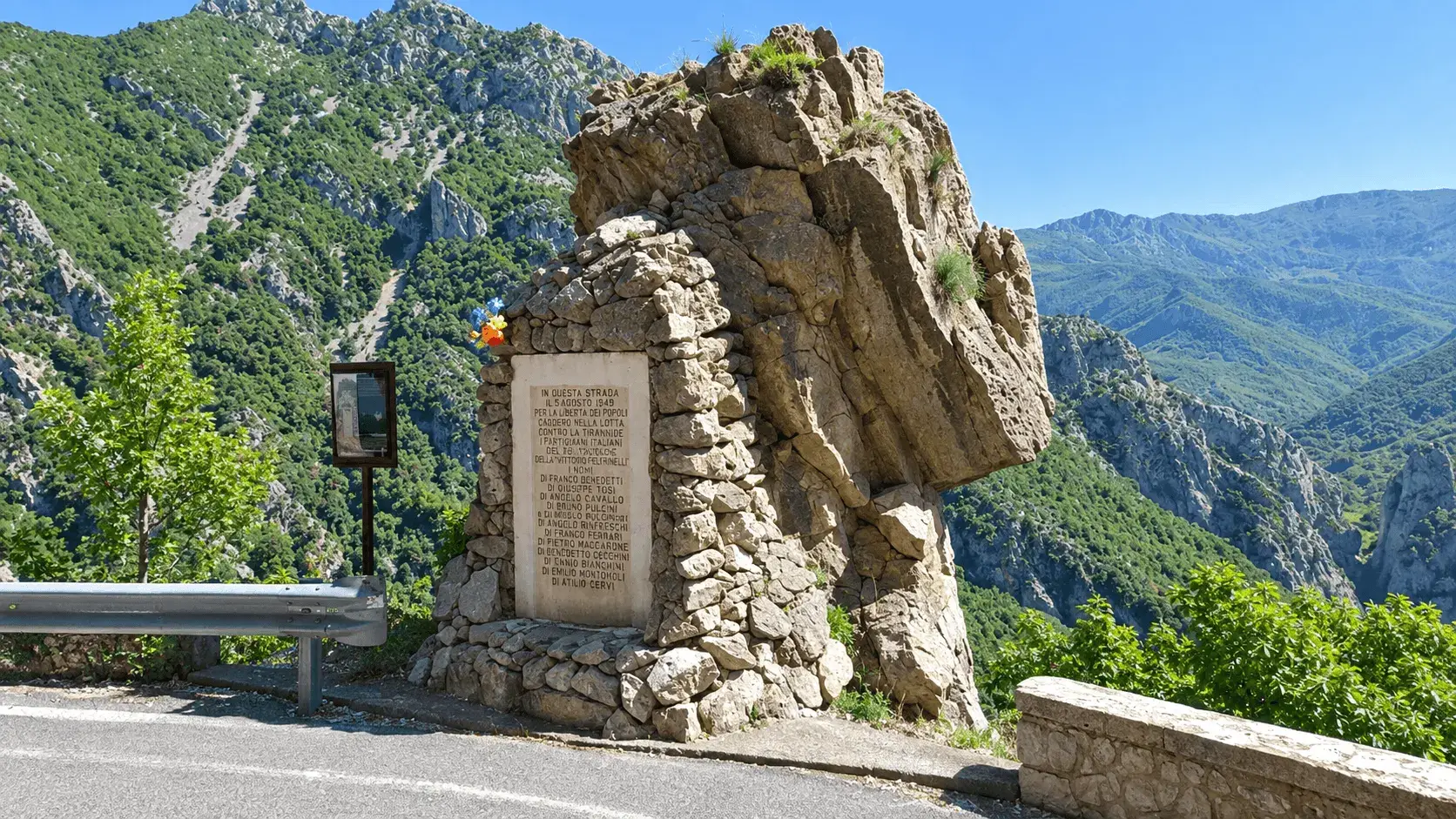
The only marker at the site, and what makes the place findable. Its inscription names the cliff the Rock of Weeping and calls the ninety free, pure and unbowed.
 VisitKruja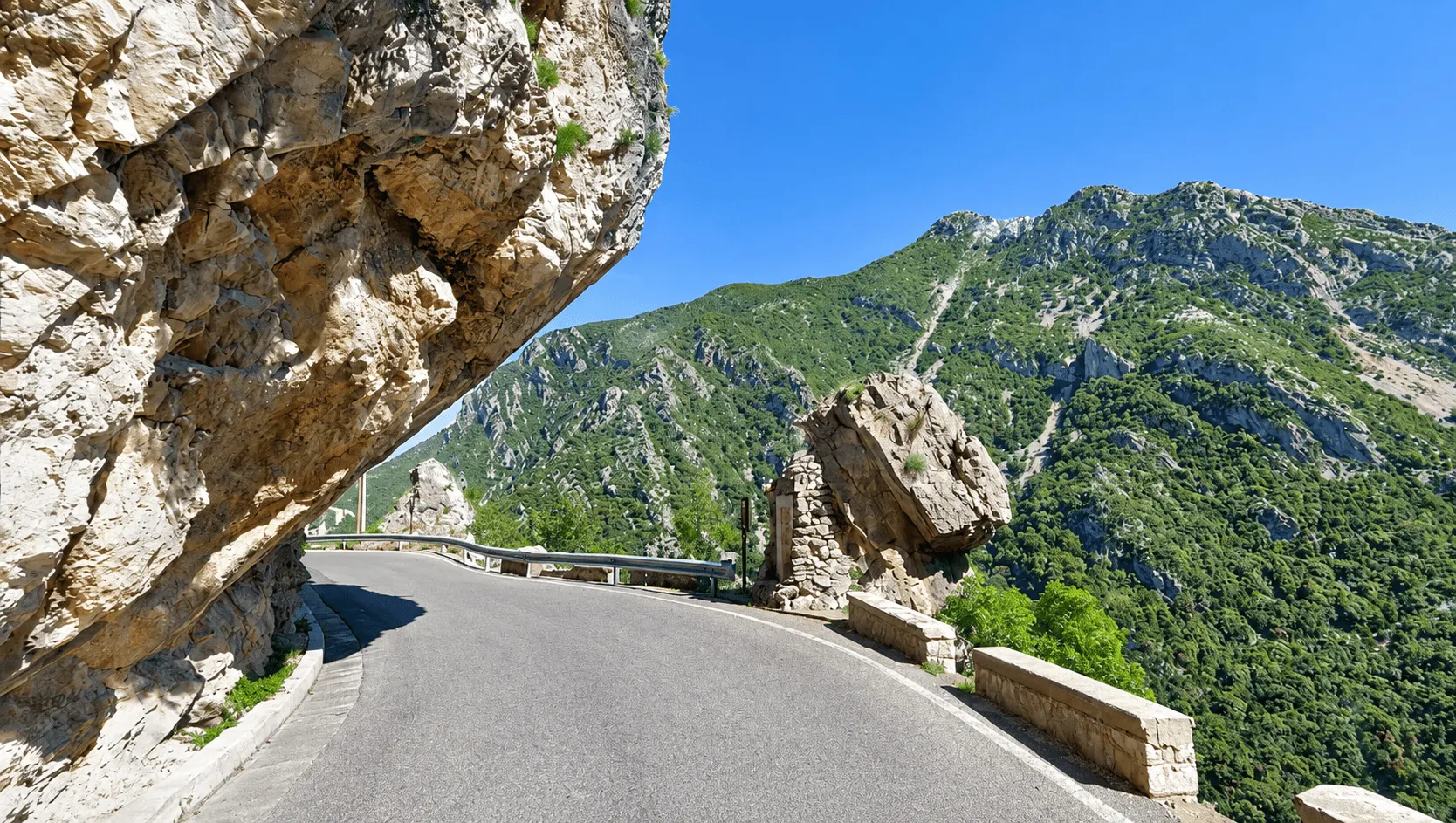
The cliff above Gryka e Vajes, and the story Kruja has carried for more than five centuries.
Five kilometres out of Kruja, the road towards Gryka e Vajes runs along the top of a cliff. There is a plaque at the roadside. This is Shkembi i Vajes.
As Kruja tells it, the Ottoman army had the castle surrounded when ninety young women of the town took each other by the hand and went over the edge rather than be taken. Word reached the castle, and black smoke was sent up from the walls in their honour.
Their mothers came here afterwards to mourn them, day after day, and it is that mourning the name holds. The stream in the gorge far below carries it too: Perroi i Vajes.
The plaque puts it in the town's own words: "From this rock, the Rock of Weeping, ninety girls of Kruja jumped so as not to fall alive into the hands of the Turks, remaining thus forever heroic Albanian women: free, pure and unbowed. Their glory and honour are raised higher still by the daughters and sons of our homeland, who remember them with pride."
This is a viewpoint and a memorial rather than an attraction. Knowing what you are looking at is most of the visit.
The only marker at the site, and what makes the place findable. Its inscription names the cliff the Rock of Weeping and calls the ninety free, pure and unbowed.
Sheer, unfenced and considerable. It is the reason the story is told about this particular cliff and not another.
The gorge the road is named for, opening out below and ahead. The view is the other half of why people stop here.
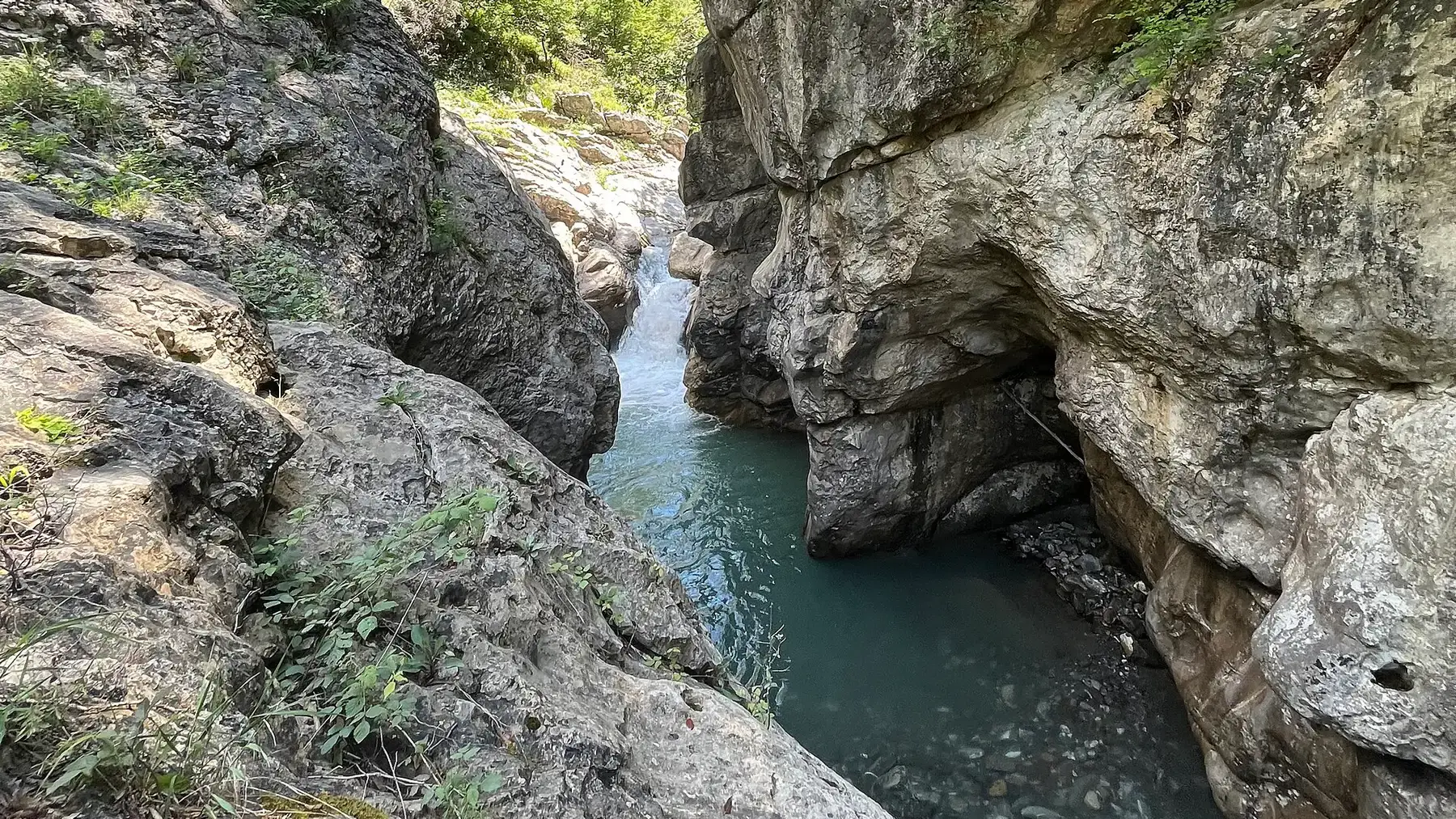
The stream running through the gorge at the bottom, carrying the same name as the cliff above it.
A short stop on the way to somewhere else, and better for a few minutes of attention than a long stay.
Roadside, no climb, no path. Park safely on the verge rather than on the road itself.
The view down the gorge is the reason to linger. Late afternoon light works best along this side.
The road on towards the national park passes this way, so the cliff is an easy addition rather than a detour.
The old plane tree sits on the same road, a kilometre out from the centre. The two together make a sensible short outing.
Open all year. The road is the only thing that changes.
April to May
Clear air and green in the gorge below, with the stream running high.
June to August
Dry and straightforward, though the middle of the day is hot and the light is flat.
September to October
The best of the year here, with low light along the gorge and comfortable temperatures.
November to March
Fine in good weather, but the road can be slick and the edge is unfenced. Take more care.
Five kilometres from the centre of Kruja on the road towards Gryka e Vajes, a few minutes by car. The plaque is at the roadside, so there is no walking involved.
There is no barrier and no charge. Pull off the road properly rather than stopping on it, because sightlines along this stretch are short.
The drop is vertical and there is nothing between the verge and the edge. Keep well back and keep hold of children.
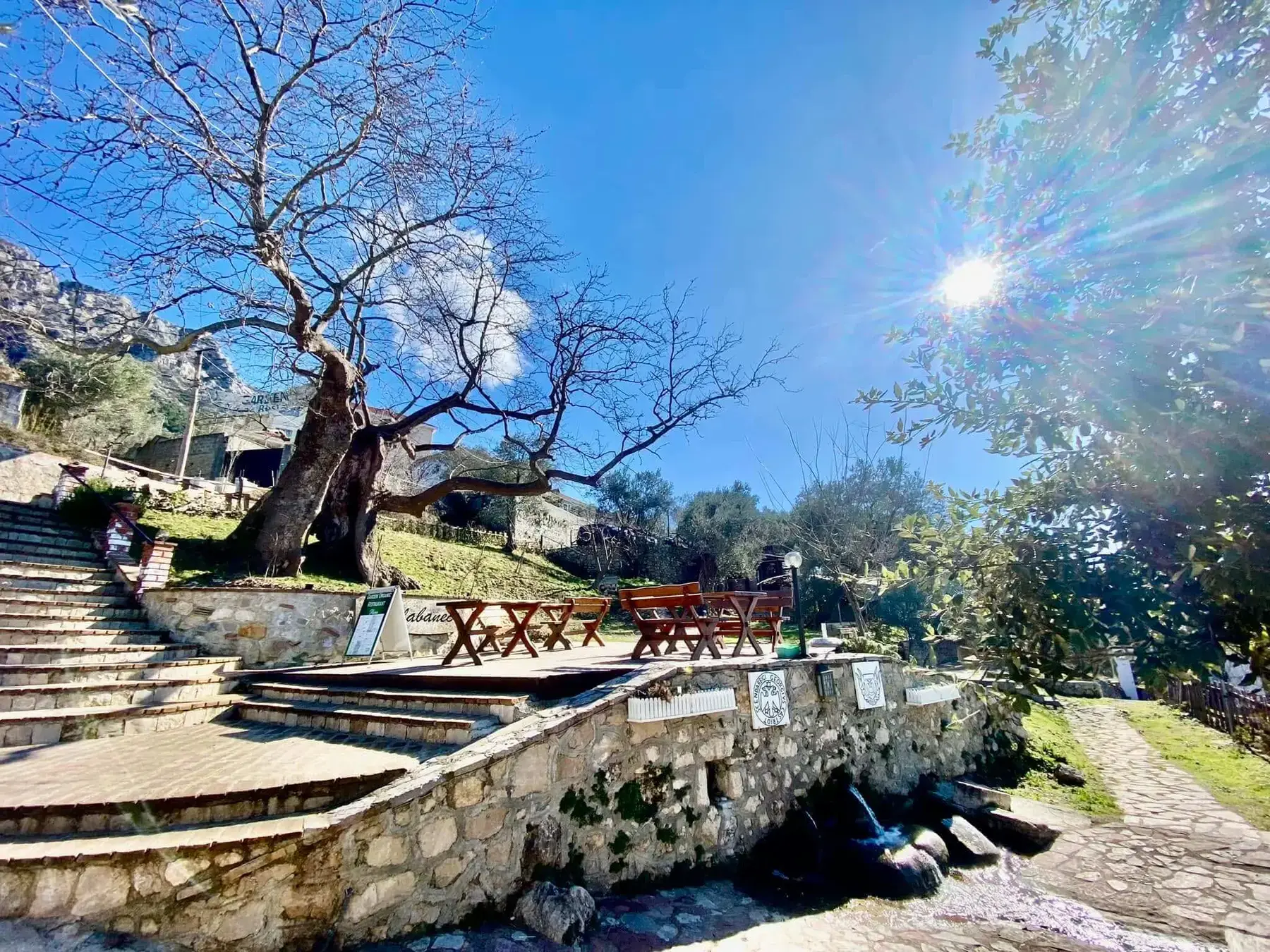
A plane tree of about 550 years and the spring beside it, a kilometre from the centre and protected as a natural monument.
A limestone gorge 4 km north of Kruja, with waterfalls, deep green pools and a stretch protected as a natural monument.
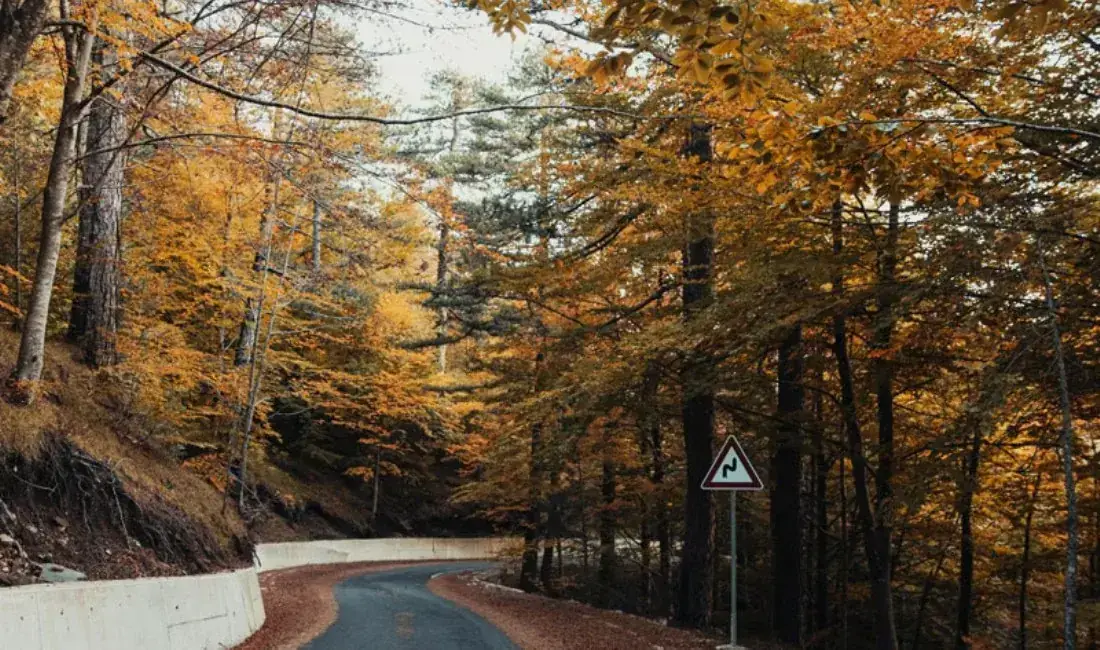
Black pine forest, limestone peaks and the Queen Mother's Spring, 20 km from Kruja on the road to Burrel.
The story is the reason to come, and it lands differently told at the cliff itself. We pass here on the way to Qafshtama and can stop.