Updated September 12, 2026
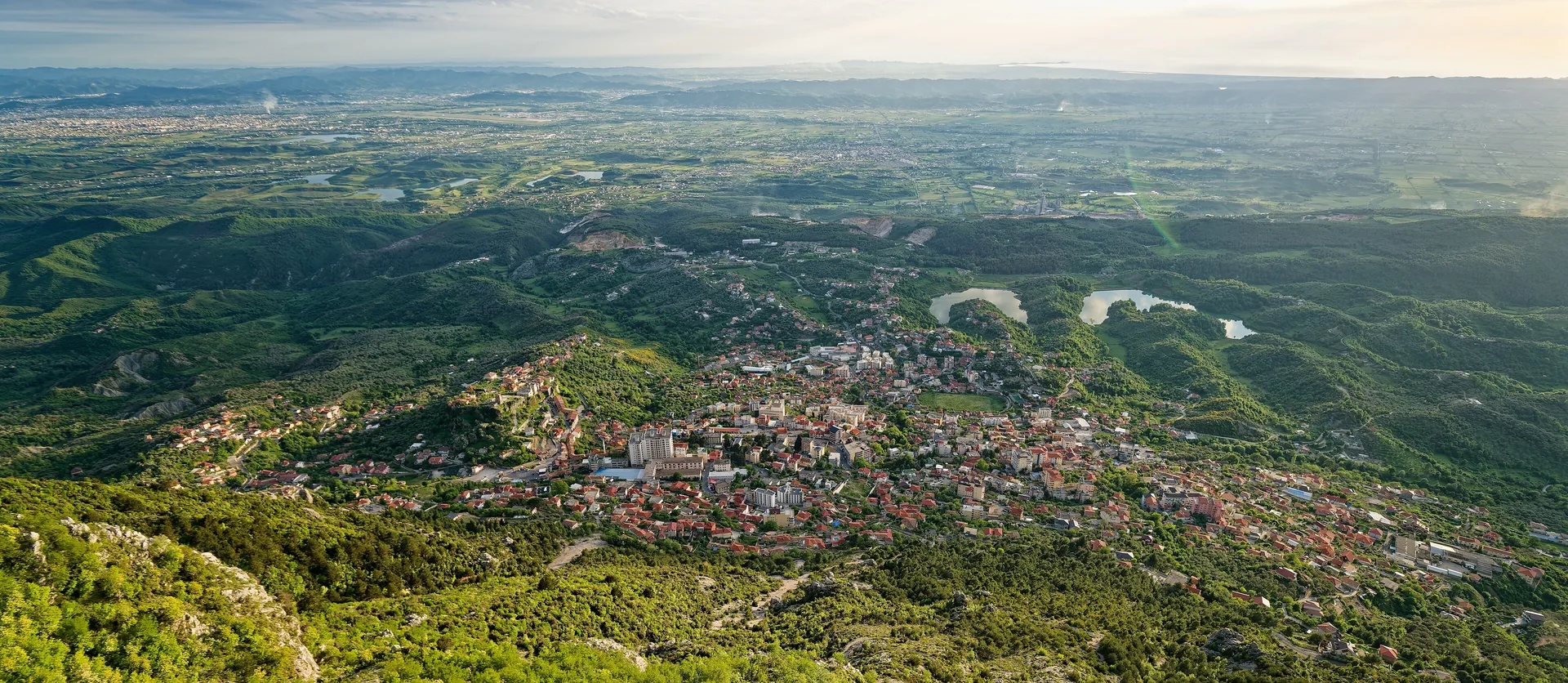
Qafshtama National Park sits on the shoulder of Kruja Mountain, high enough above the town that the air changes on the way up. It is free, open year-round, and most people who go have never heard of it until someone in Kruja mentions it.
There is no bus, no gate and no ticket office. What follows is where the park actually is, how to get up there, what the road is really like, and what is worth your time once you arrive.
Where Qafshtama is
The park lies directly above Kruja, in the mountains that form the town's backdrop. The name refers to the pass itself, Qafe Shtame, and you will see it written both ways: Qafshtama as one word, and Qafe Shtame as two. They are the same place.
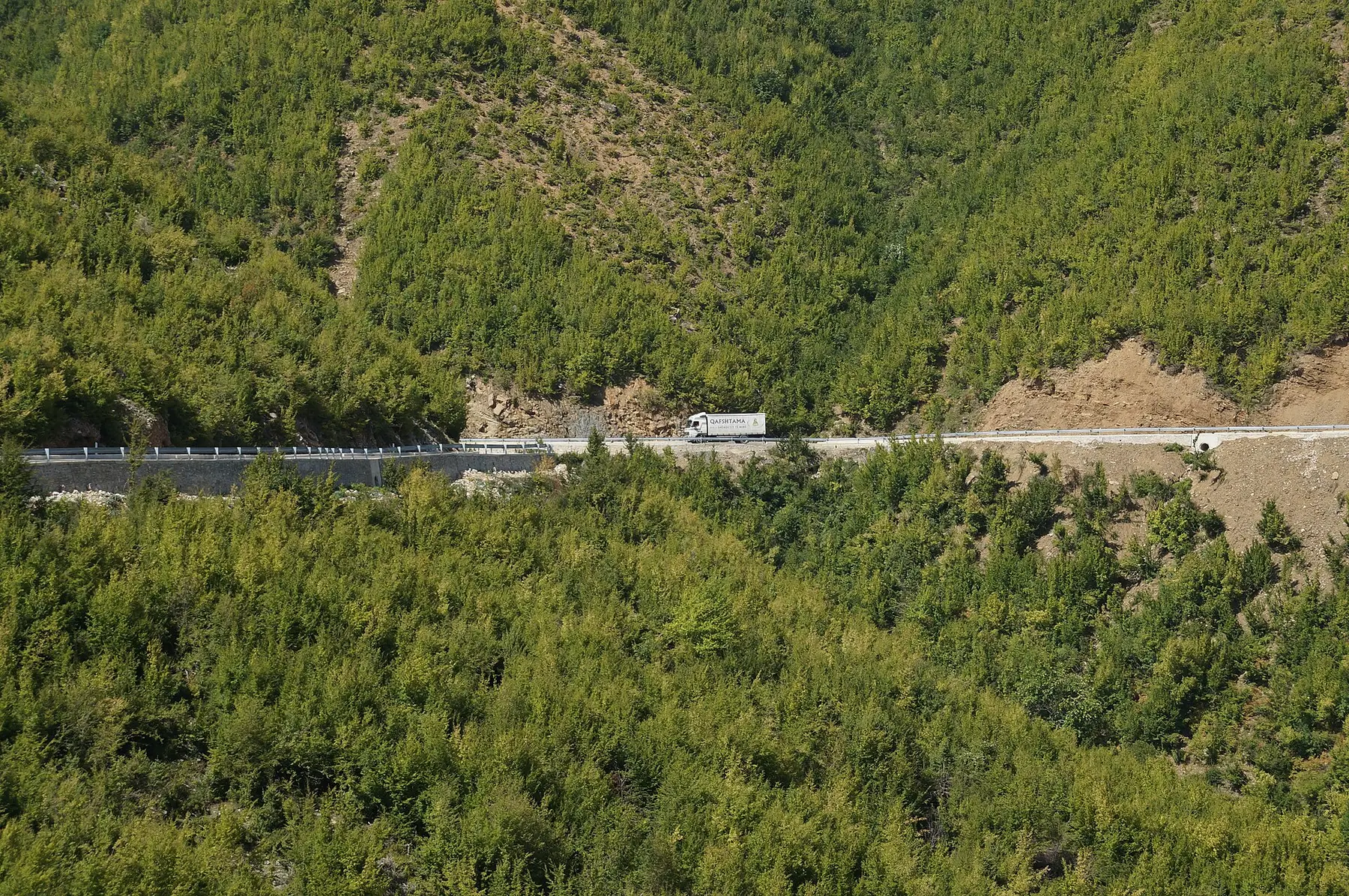
It is roughly 18 to 20 kilometres from the centre of Kruja by road. That is a short distance on a map and a long one in practice, because the route climbs steadily through switchbacks the whole way. Reckon on around forty-five minutes rather than the twenty the distance suggests.
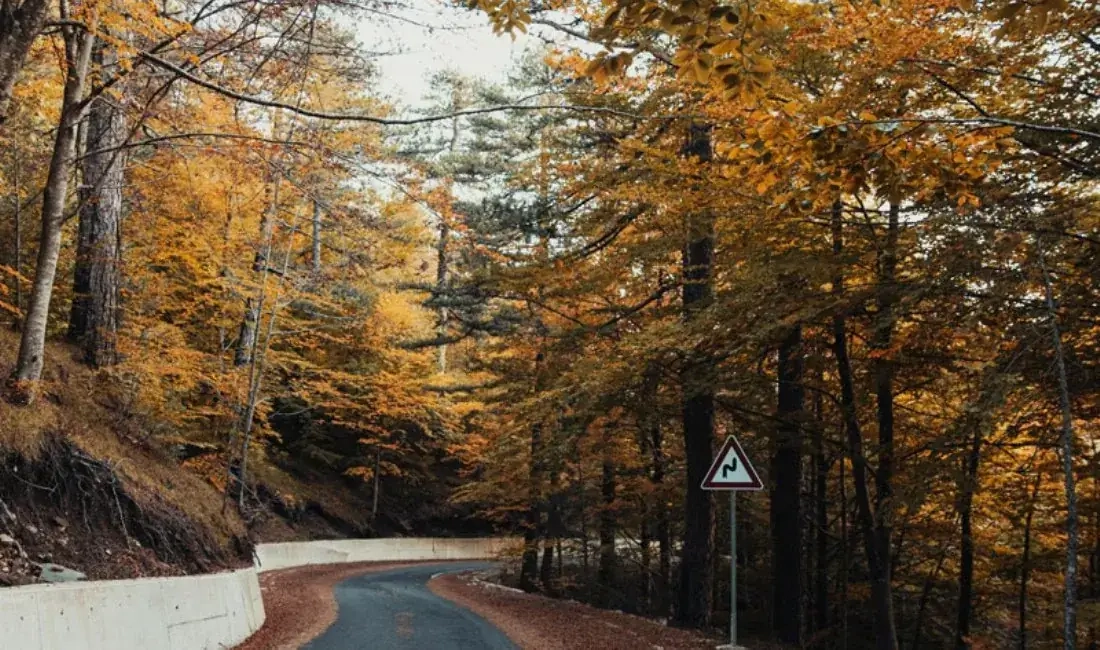
The landscape at the top is not what the coast below prepares you for: dense black pine and oak forest, open highland meadow, and a great deal of sky. It stays noticeably cooler than Kruja all year, which in July and August is the entire point.
One thing worth clearing up: the park and the water
If you searched for Qafshtama and expected bottled water, both answers are correct. The spring inside the park is the source the brand takes its name from, and for most Albanians the word means the bottle before it means the mountain. The park is the place the water comes from.
Getting there from Kruja, Tirana and the airport
There is no public transport to Qafshtama. No bus runs up the mountain, and there is no furgon service to the pass. Your options are your own car, a taxi, or a guided trip that includes the transport.
| From | Journey |
|---|---|
| Kruja town centre | About 18-20 km. Roughly 45 minutes of continuous climbing on switchbacks. |
| Tirana | Around an hour and a half in total, via Kruja. There is no shorter way in. |
| Tirana Airport (Rinas) | About an hour, again through Kruja. Convenient if you are heading north anyway. |
| Durres or Golem | Around an hour and a half. Doable as a half day from the coast. |
What the road is like
The road from Kruja up to the pass is asphalted the whole way, so you do not need a 4x4 and a standard rental car will manage it in normal conditions. That is the good news.
The rest is worth knowing before you set off. It is narrow in long stretches, the surface is uneven where winter has broken it up, and there are sections with tight blind corners and no barrier on the drop side. You will meet oncoming traffic, livestock and the occasional rockfall, usually on the bend where you would least choose to.
In winter the top of the road holds snow and ice, and it is not always cleared promptly. If you are going between roughly November and March, ask in Kruja what the pass is doing before committing to the drive.
What to see on the way up
The drive is half the visit. The obvious stop is Shkembi i Vajes, the Rock of the Maidens, a cliff of around two hundred metres standing above the road. When Kruja fell to the Ottomans in June 1478, the story holds that some ninety young women joined hands and went over the edge rather than be taken captive. Kruja has kept their memory for over five centuries, and the pull-in is signed.
Past the rock, the road runs through an abandoned military base left over from the communist years, now being taken back by the forest. Further up, the views open out behind you over Kruja and the whole coastal plain, until the black pine closes in and you know you have arrived.
What there is to do in the park
Once you are up there, everything is done on foot. The park is not laid out with marked trails and numbered viewpoints; it is forest and meadow that you walk into.
The one place everyone stops is Kroi i Nene Mbretereshes, the Spring of the Queen Mother, where cold water comes straight out of the rock and you can fill your bottles. Locals hold that it has healing properties. Whether or not you believe that, it is very good water and it is free.
Above the spring are the ruins of King Zog's royal villa, a walk rather than a climb and the obvious objective if you want somewhere to aim for. Beyond that it is meadows, pine forest and as much or as little walking as you feel like. A handful of small restaurants near the park serve coffee and simple mountain food, and that is the whole of the infrastructure.
When to go
Late spring to autumn, roughly May through October, is the straightforward answer. The meadows are open, the road is reliable, and the restaurants are running.
July and August are when Qafshtama earns its reputation, because it is the nearest cool air to a coast that is by then uncomfortable. It is also when Albanian families come up at weekends, so a weekday is quieter.
Bring a layer whatever the month. The altitude means it runs colder than the town below all year, and spring and autumn mornings up there are genuinely cold even when Kruja is warm. In winter the park is beautiful and the road is the problem, not the park.
What it costs
Nothing. There is no entrance fee, no gate and no ticket for Qafshtama National Park, and it is open all year. Your only costs are getting up there and whatever you spend at the restaurants.
There is no hotel inside the park. Almost everyone visits as a half day and sleeps in Kruja or in Tirana, both comfortably within reach.
Getting up the mountain
If you are not driving yourself, a taxi from Kruja is the simplest way up, and the fare is worth agreeing before you leave rather than at the pass. Fixed prices for the Kruja, Tirana, Rinas and Durres routes are listed on our taxi page.
See taxi routes and fixed prices →
Rather not drive that road yourself?
The switchbacks, the blind corners and the unfenced drops are the part of Qafshtama most visitors would happily skip. Our half-day trip covers the whole route by car, stops at the Rock of the Maidens on the way, and leaves you free time in the park itself rather than a schedule to keep.
While you are in Kruja
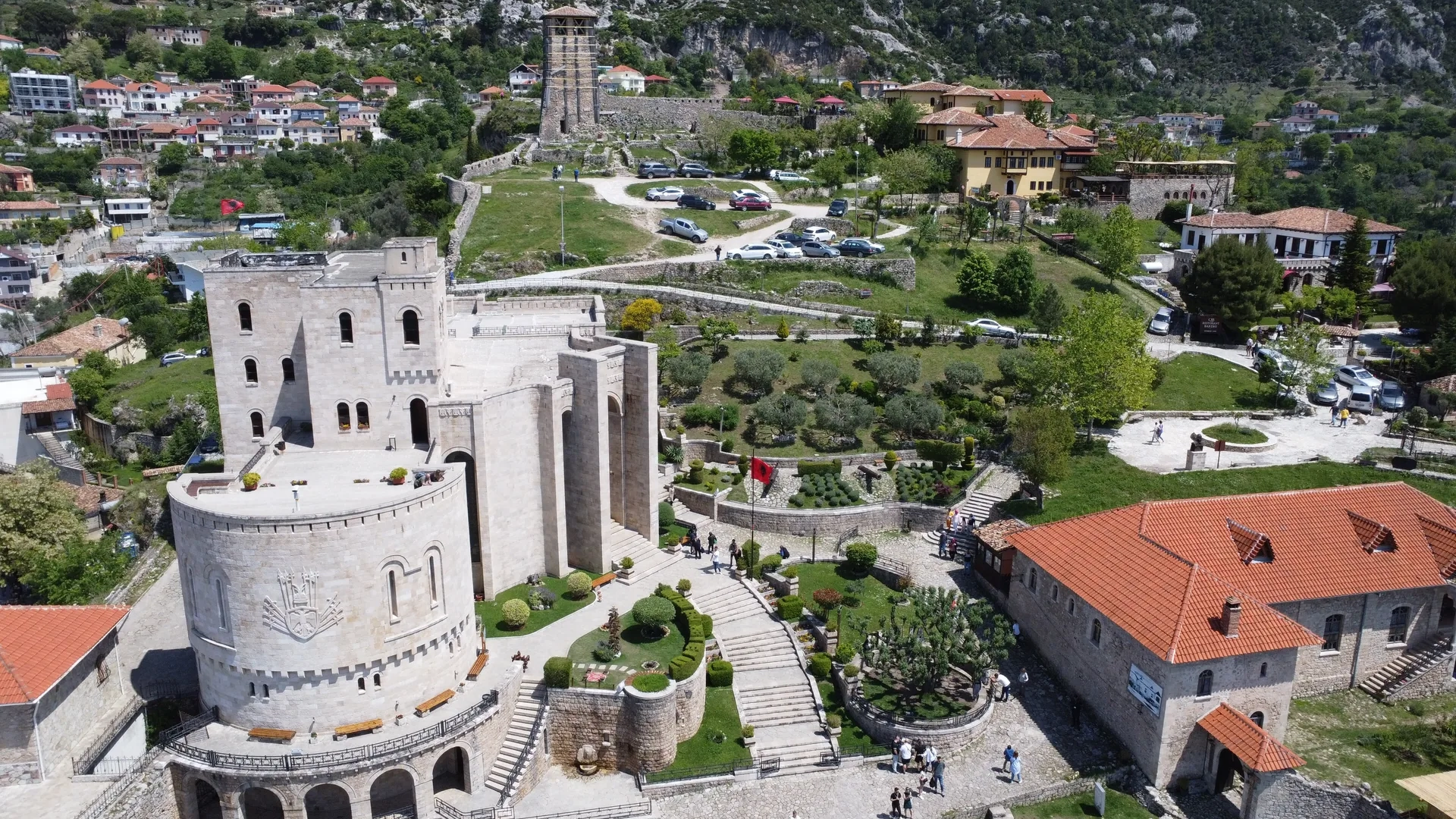
If you want the drive broken down in more detail, there is a separate guide to the drive from Kruja to Qafshtama. And most people pair the mountain with the town below it: the castle and the Old Bazaar are a comfortable half day on their own, and the fees and opening hours for the two museums inside the walls are set out in the Kruja Castle entrance fee and opening hours guide.
Qafshtama National Park: common questions
Where is Qafshtama National Park?
In the mountains directly above Kruja, in central Albania, about 18 to 20 km from the town centre by road. The name refers to the pass, Qafe Shtame, and it is written both as one word and as two. Tirana is roughly an hour and a half away, all of it through Kruja.
Is Qafshtama National Park free to visit?
Yes. There is no entrance fee, no gate and no ticket, and the park is open year-round. The only things you pay for are transport up the mountain and anything you eat at the small restaurants near the park.
How do you get to Qafshtama National Park?
By car, by taxi, or on a guided trip. There is no bus, no furgon and no public transport of any kind to the pass. From Kruja the drive takes around 45 minutes; from Tirana or Tirana Airport, closer to an hour and a half via Kruja.
How long is the drive from Kruja to Qafshtama?
About 45 minutes for 18 to 20 kilometres. The distance is short but the road climbs continuously through tight switchbacks, so it takes far longer than the map suggests. Allow extra in winter or in poor weather.
Can you drive to Qafshtama in a normal car?
Yes. The road is asphalted the whole way from Kruja to the pass and a standard rental car will do it in normal conditions; you do not need a 4x4. It is narrow in places, the surface is uneven in sections, and some bends have no barrier on the drop side, so it rewards careful driving. In winter the top can hold snow and ice.
How high is Qafshtama and how cold does it get?
The park sits on the shoulder of Kruja Mountain, high enough that it stays noticeably cooler than the town below in every season. In midsummer that is precisely why people go. It also means an extra layer is worth carrying even in August, and spring and autumn mornings up there are properly cold.
What is there to see in Qafshtama National Park?
Black pine and oak forest, open highland meadows, and Kroi i Nene Mbretereshes, the Spring of the Queen Mother, where you can fill your bottles with cold water straight from the rock. Above the spring are the ruins of King Zog's royal villa. On the road up you pass Shkembi i Vajes, the Rock of the Maidens, and an abandoned communist-era military base.
Is Qafshtama the same as the bottled water?
The spring in the park is the source the water brand is named after, so yes, they are connected. If you searched for Qafshtama meaning the water, the park is where it comes from.
When is the best time to visit Qafshtama?
May to October is the reliable window, with July and August the most popular because the mountain air is a relief from the coast. Weekdays are quieter than weekends, when Albanian families come up. Winter is beautiful but the road, not the park, is the limiting factor.
Is there anywhere to eat or stay at Qafshtama?
A few small restaurants near the park serve coffee and simple mountain food, and that is the extent of it. There is no hotel inside the park. Nearly everyone visits as a half-day trip and stays in Kruja or Tirana.