Handwoven kilims and rugs
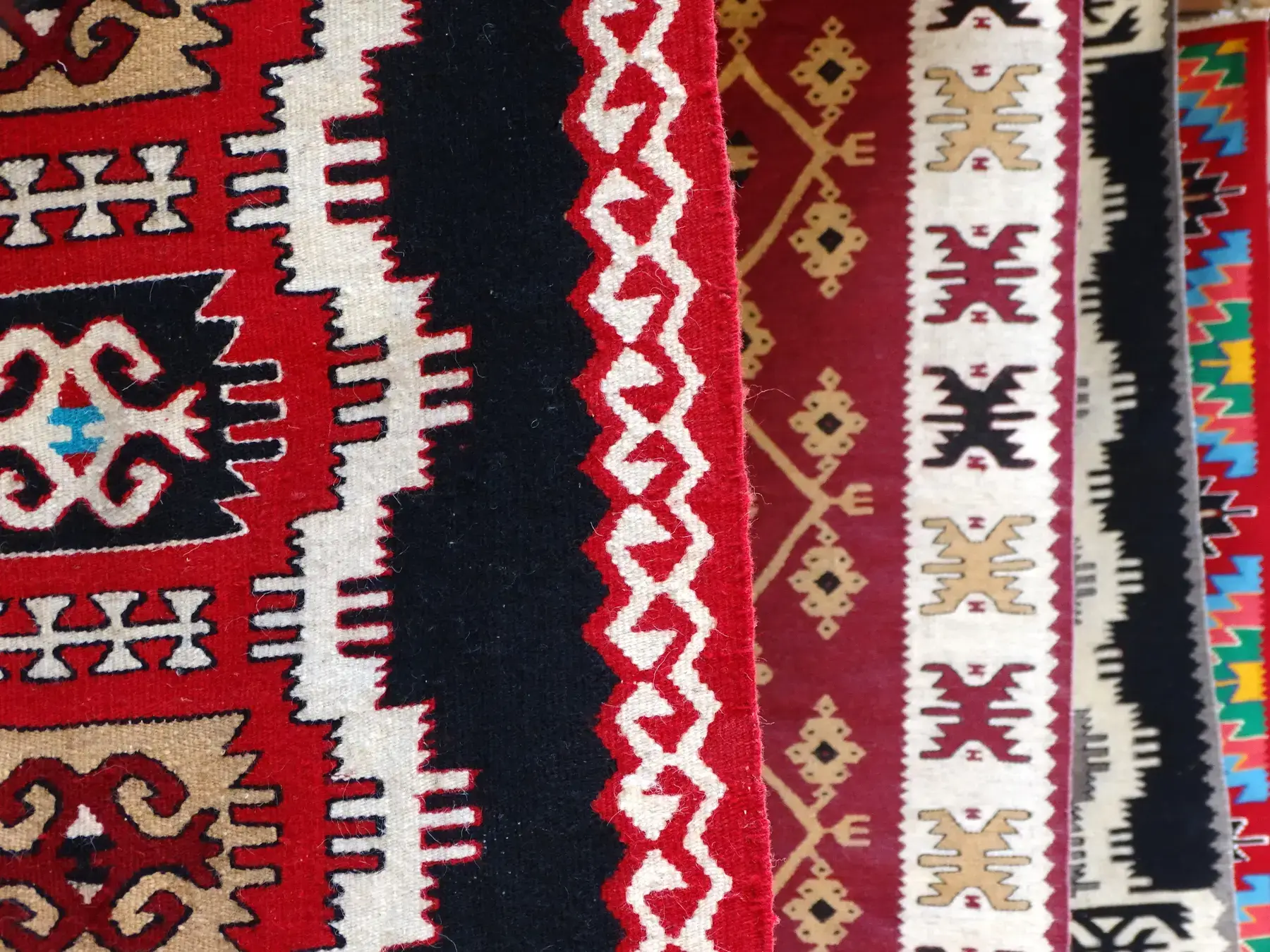
The genuine local article. Wool, geometric patterns, made on looms in the region. The heaviest thing you will be tempted by.
 VisitKruja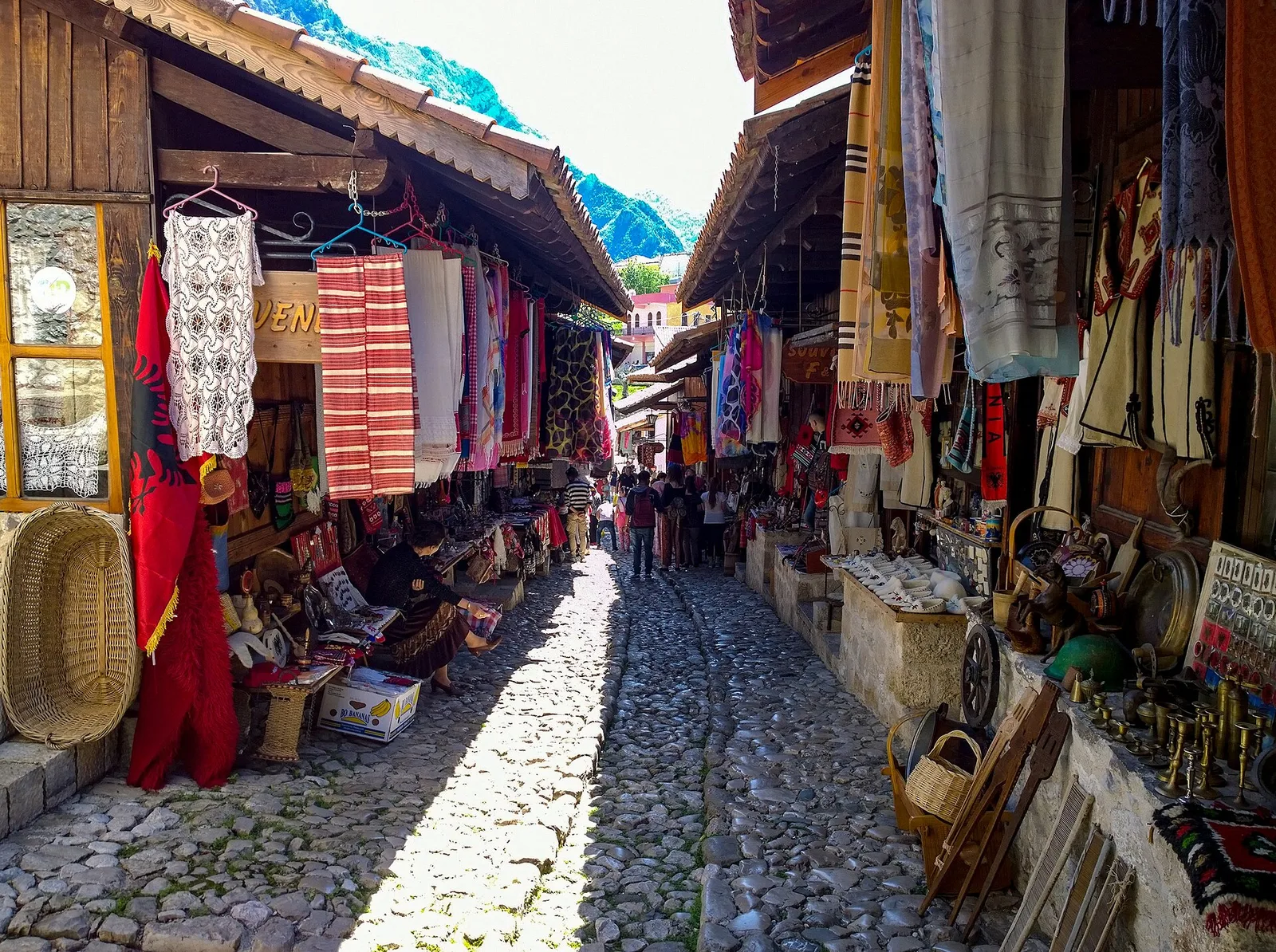
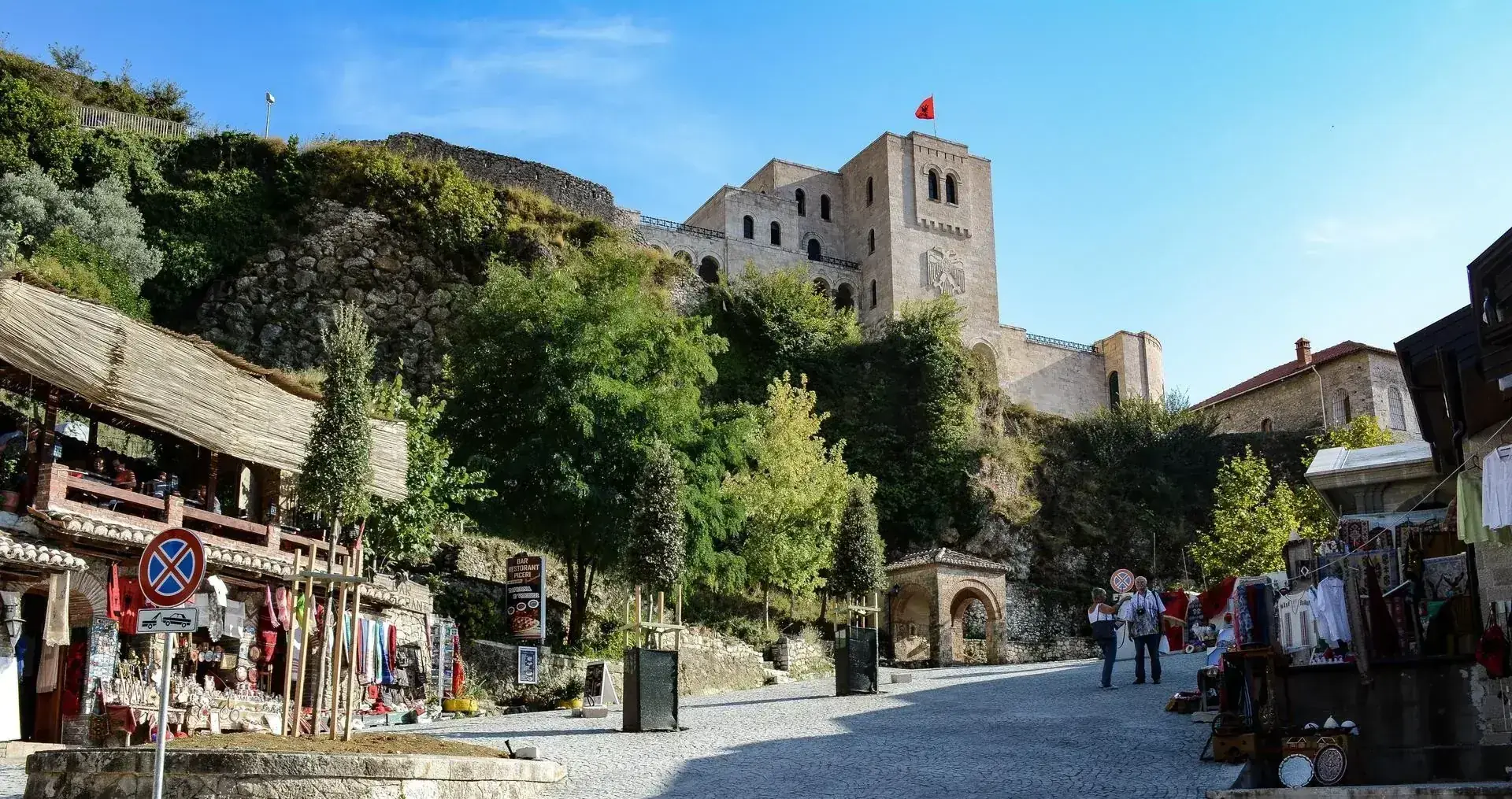
One cobbled lane below the castle gate, rebuilt in its Ottoman form and still trading.
The Old Bazaar is a single cobbled lane, a few hundred metres long, running up to the gate of Kruja Castle between two rows of low wooden shopfronts. It is the most photographed street in Albania and, unusually for a place with that reputation, it is still a working market rather than a reconstruction with a ticket booth.
A market street that grew up to serve the castle above it. Trading has gone on along this lane since roughly the fifteenth century, in the period when Kruja was the centre of Skanderbeg's resistance, and the bazaar's job was to supply the fortress and the town around it.
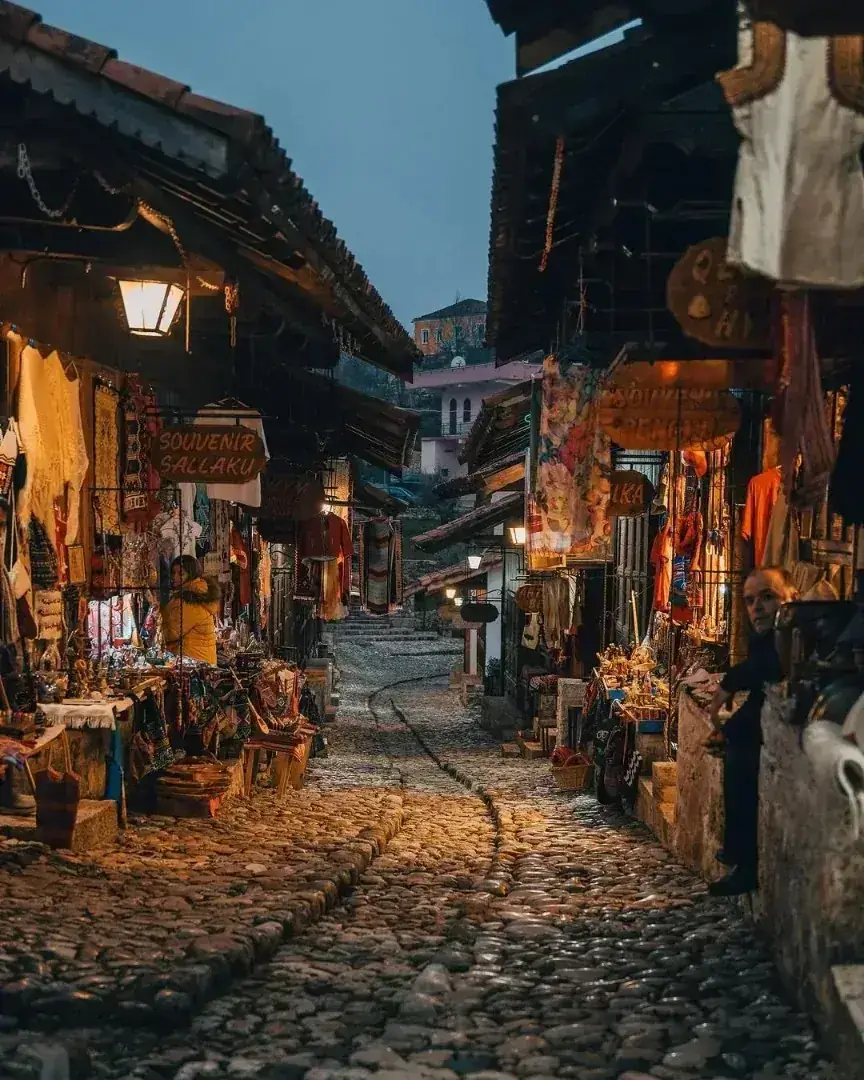
The form is Ottoman and has not changed much: narrow lane, uneven cobbles, shops opening directly onto the street with wooden shutters that fold down to become display counters, low tiled roofs overhanging on both sides. It is dark, close and steep, and that is the point.
By the middle of the 20th century the bazaar had nearly gone. Early in the 1900s it had about 150 shops; by around 1966 it was a muddy alley with a couple of shops selling basic goods. That is when the communist government rebuilt it, as a showpiece of Ottoman town life, following the old layout rather than replacing it with something modern.
This is worth knowing because it changes what you are seeing. The lane is genuinely old in plan, in trade and in atmosphere. Most of the woodwork you see dates from that 1960s rebuilding.
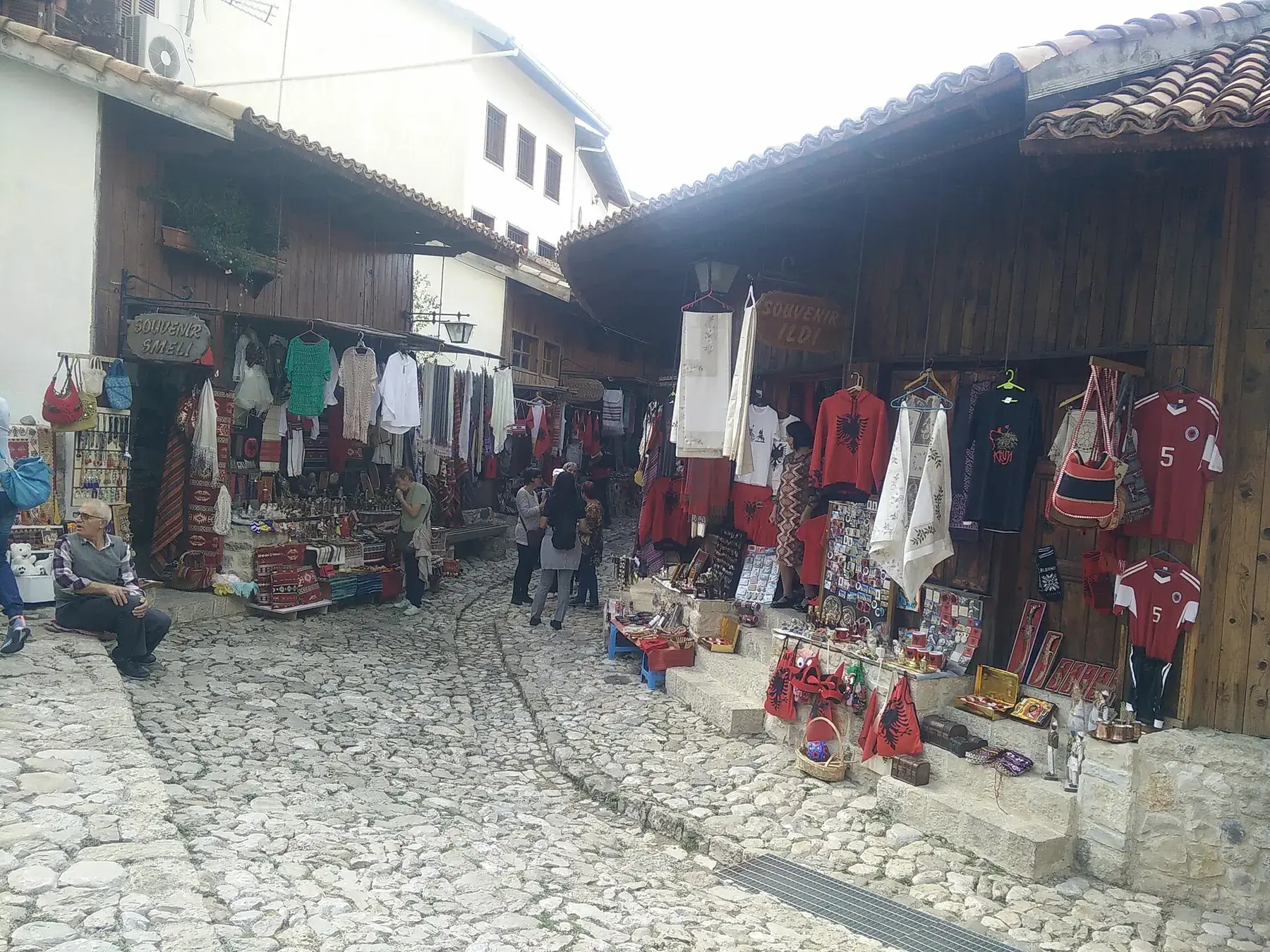
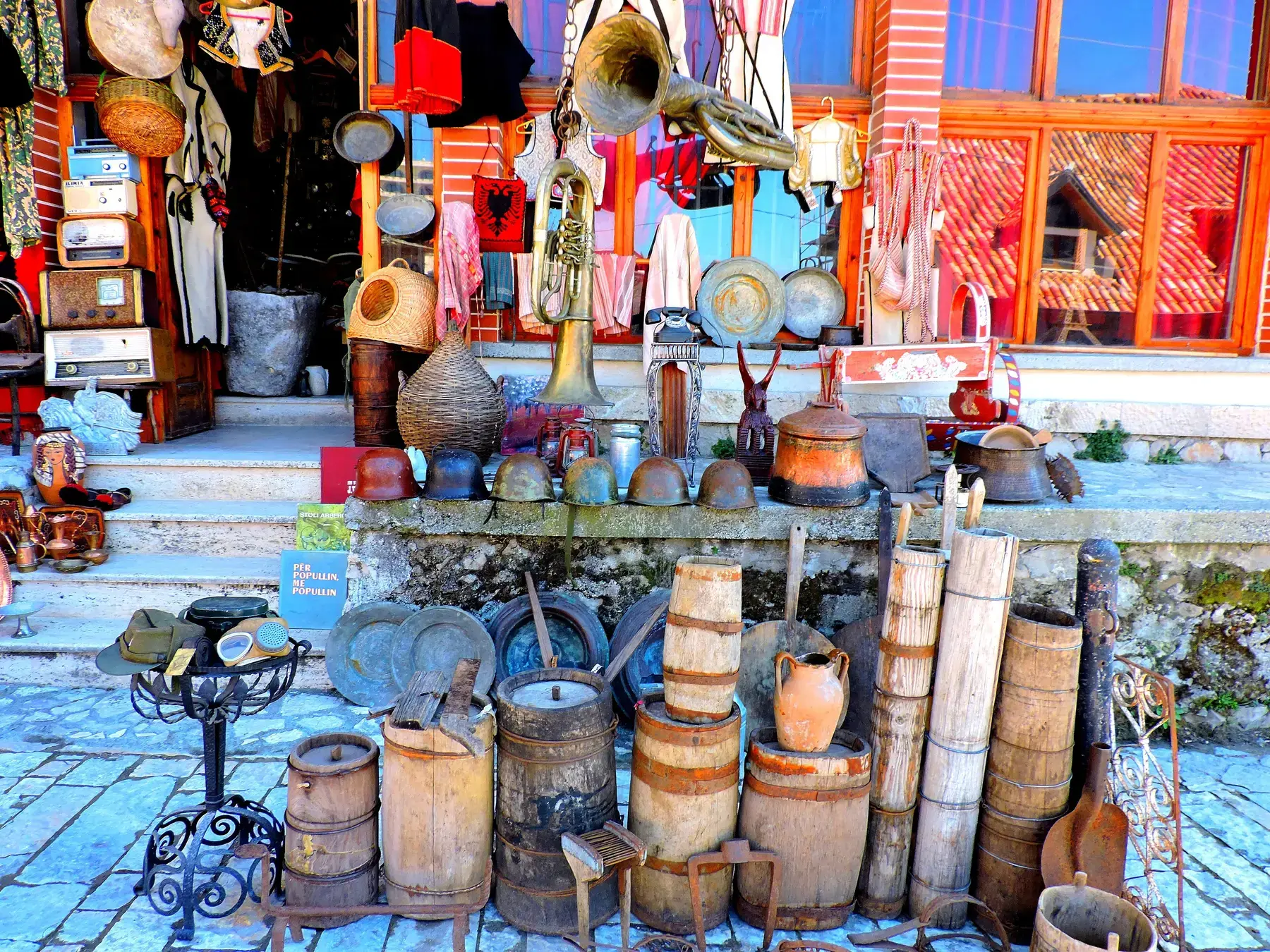
Roughly half of the lane sells to visitors and roughly half still sells to Albanians, and the difference is easy to see once you know to look for it.
The genuine local article. Wool, geometric patterns, made on looms in the region. The heaviest thing you will be tempted by.
Fine twisted silverwork, a real Albanian craft tradition. Quality and price vary enormously along the lane.
Coffee pots, trays, plates. Some antique, much of it new work in old forms.
Lamps, weapons, chests, textiles. Genuine pieces exist here alongside convincing reproductions.
Badges, medals, bunker models, propaganda posters. Almost entirely made for the tourist trade.
Qeleshe caps, embroidered waistcoats, felt slippers. Still worn at weddings, not only sold as souvenirs.
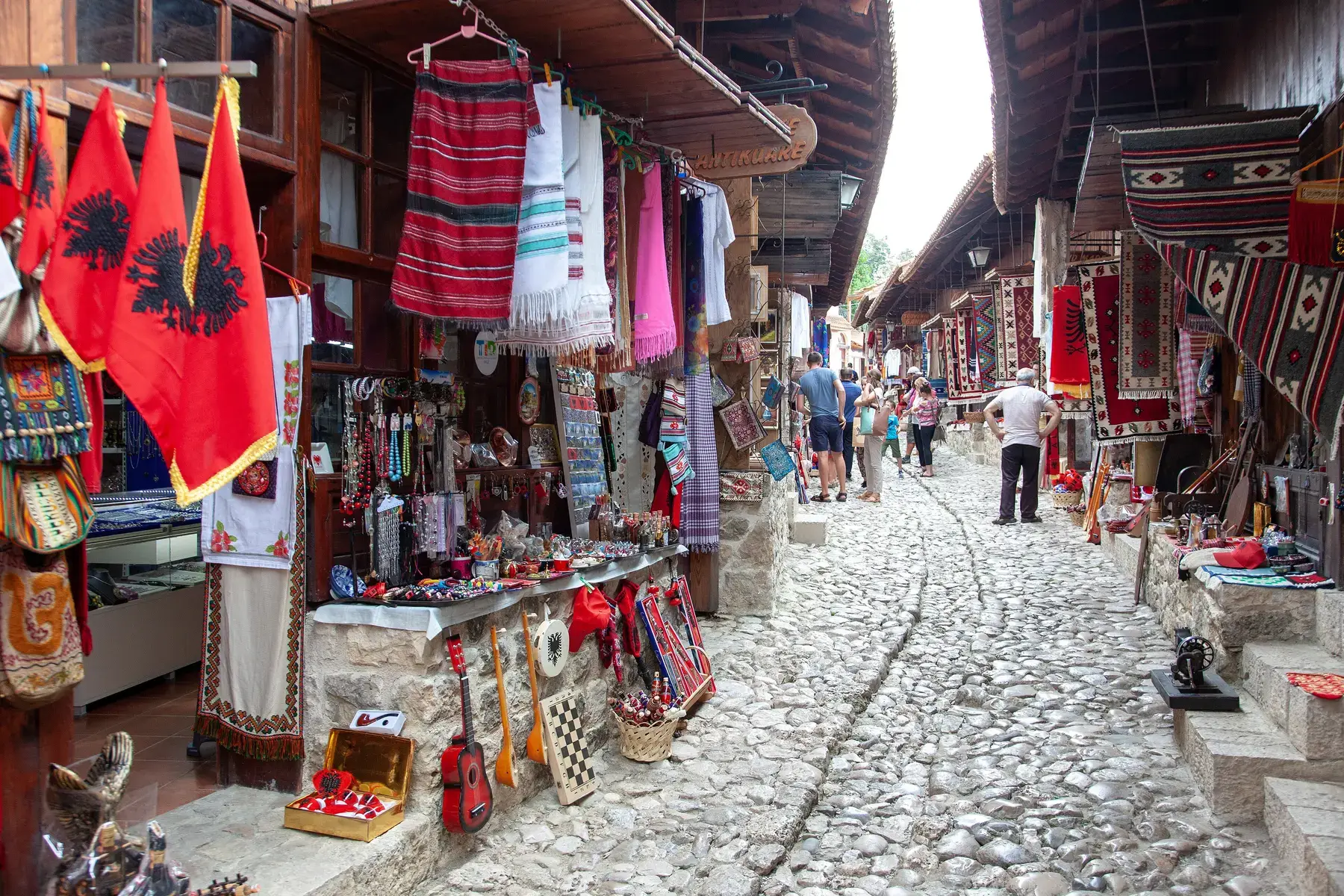
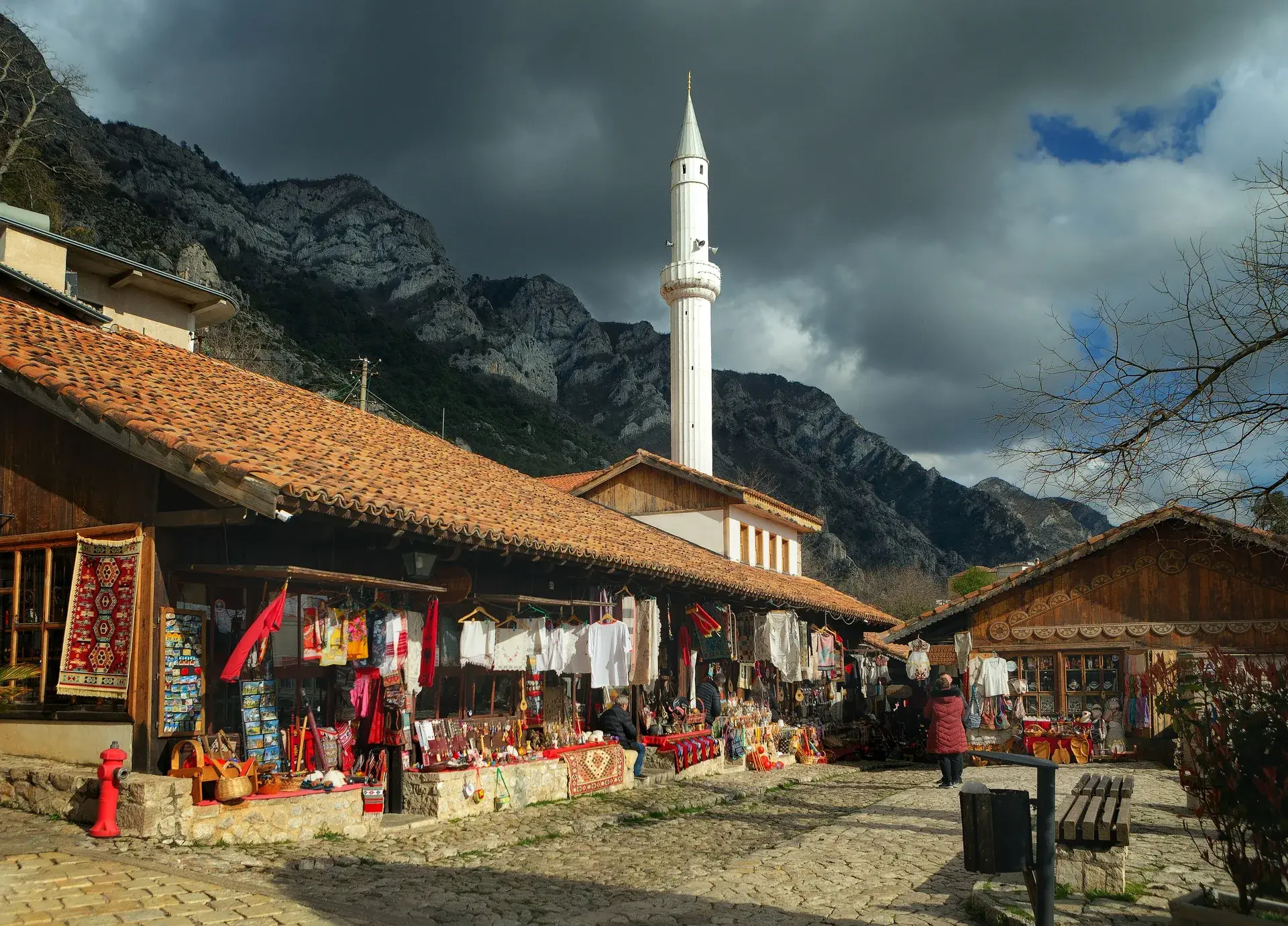
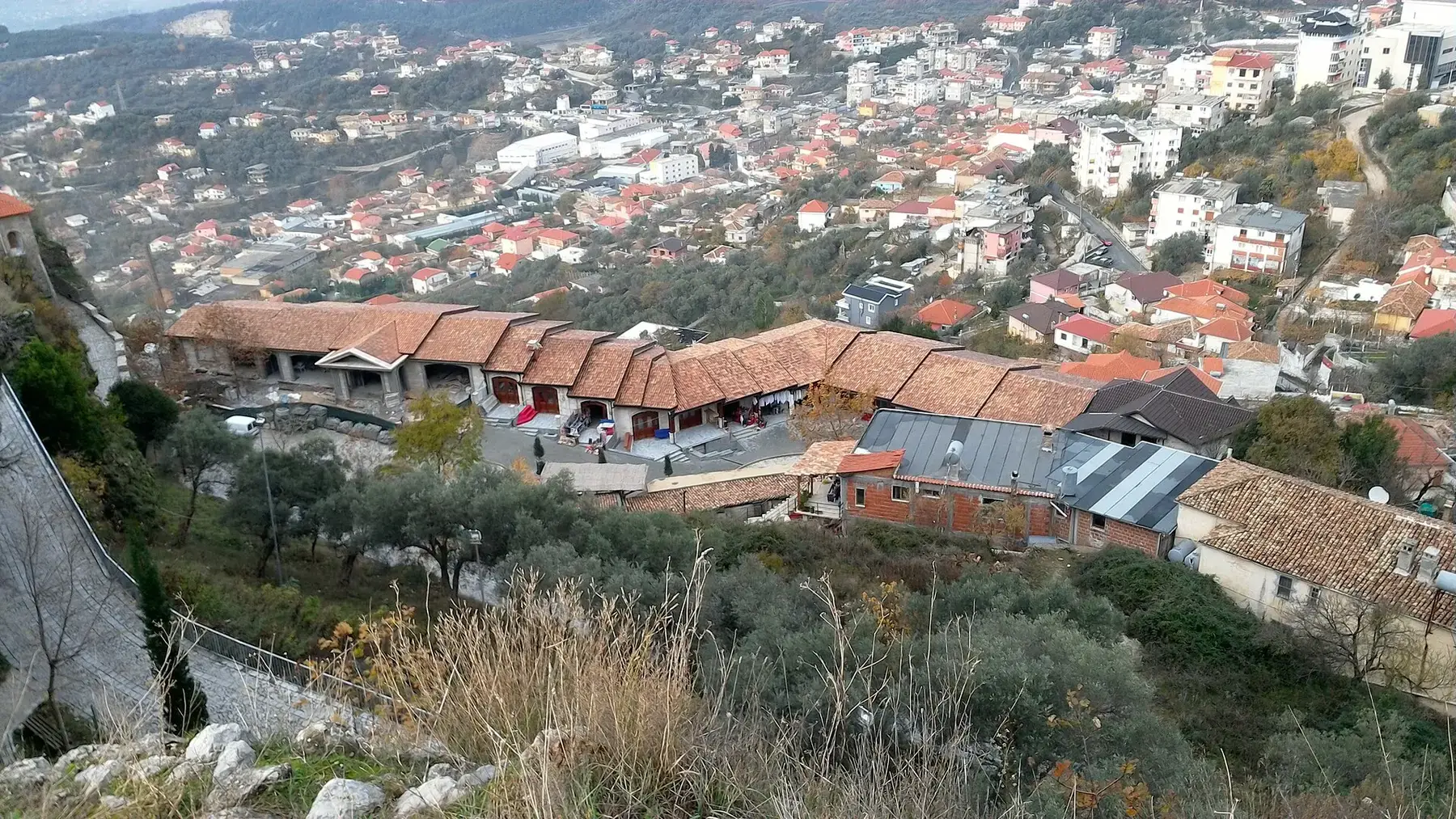
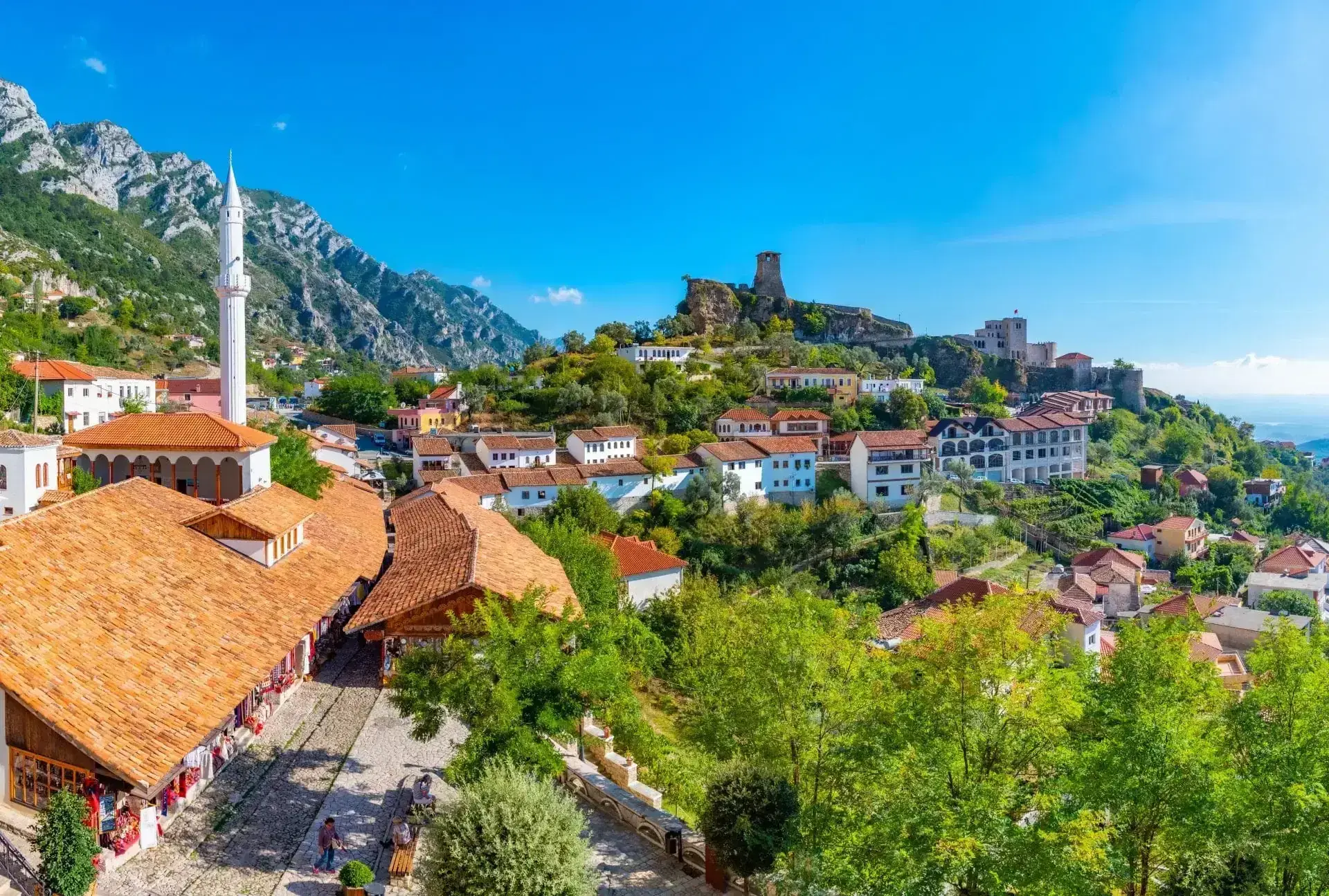
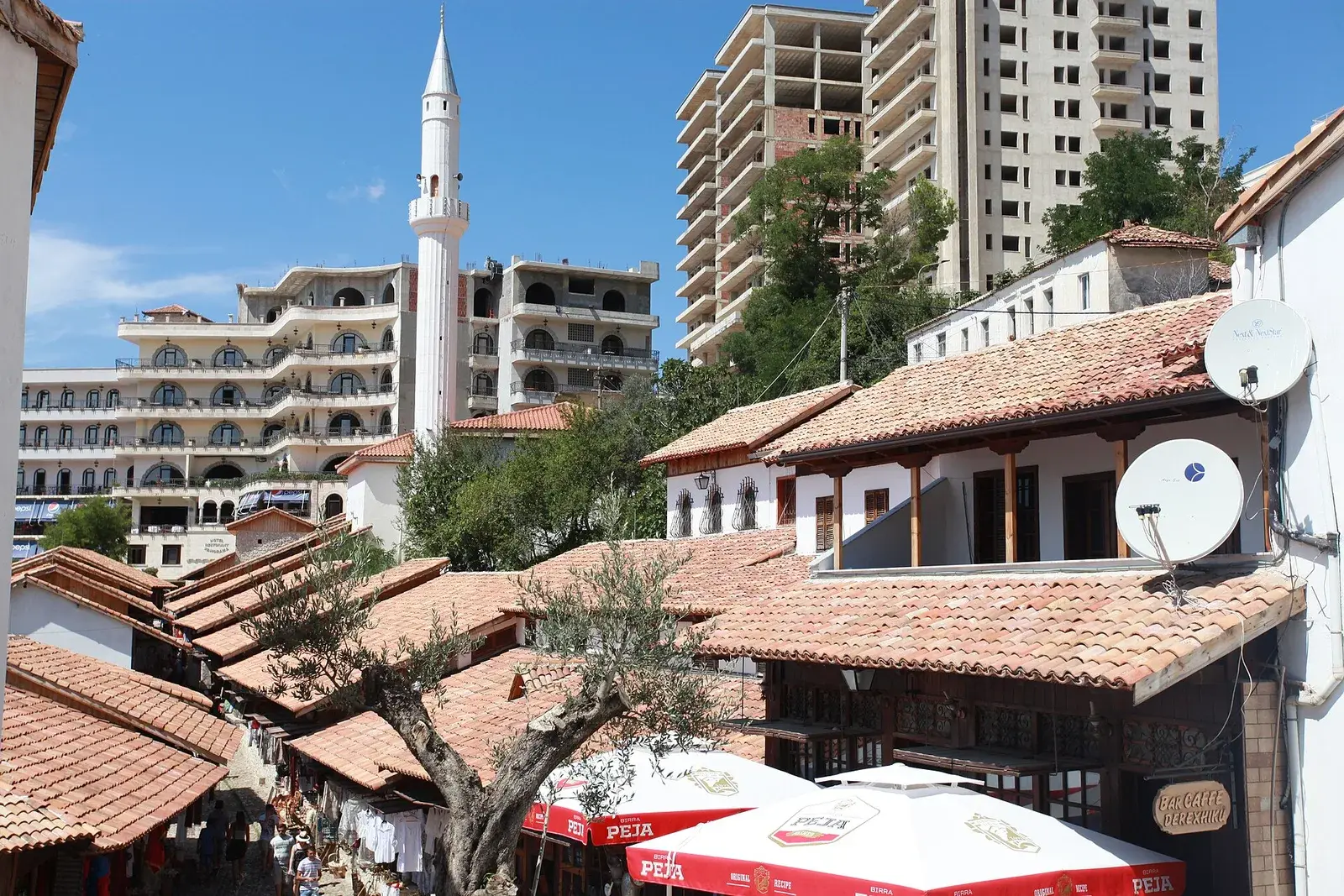
Locals call it the Derexhik bazaar, Pazari i Derexhikut, from the Turkish for "the stream". It grew up as the market of Ottoman Kruja, on the road up to the castle gate, and its oldest dated building is the Bazaar Mosque, completed in 1533.
The bazaar's size has swung a long way. Accounts from the early 1900s count about 150 shops. By around 1966 the lane had shrunk to a muddy alley with a couple of shops selling basic goods.
That year the communist government began rebuilding it, choosing Kruja as an example of Ottoman town life to save and promote for culture and tourism. The shops were rebuilt along the old line of the street, and the lane was relaid as kaldrëm, the stone paving of Ottoman roads.
After 1990 the state-run shops were sold to private owners, and the lane turned towards visitors. Today the bazaar is a listed Cultural Monument of Albania.
The Bazaar Mosque, also known as the Murad Bey Mosque, was closed under the communist ban on religion and its stone minaret was pulled down. It reopened in 1991, a new minaret was built, and it is again a working mosque and a listed Cultural Monument.
Most shutters go up around 09:00 and the lane stays open through the afternoon. Late morning is the busiest stretch, because that is when the day trips from Tirana and the cruise groups up from Durres arrive, roughly between 11:00 and 15:00.
Before 10:00 the bazaar is quiet and half the shops are still opening, which is the better experience if you want photographs without crowds. The hour before sunset is the other good window: the light comes down the lane from the west and hits the wooden fronts directly, and it is the only time of day the street photographs warm rather than dim.
Some shops close earlier in winter and on quiet weekdays. Nothing is ticketed and the lane itself is a public street, so there is no closing time to work around.
Pay in lek if you can. Shops will take euros and most will do it at a rounded rate that favours the shop, which on a rug costs you more than the haggling saved you. There is no ATM inside the castle walls but there are several in the town below.
On a kilim, ask whether it is wool or a wool blend and where it was woven. On silver, ask whether it is filigree work or plated. Shopkeepers who make their own answer these questions straight away, and that answer tells you which kind of shop you are standing in.
| Walking the lane | About 20 minutes |
|---|---|
| Looking in the shops | About an hour |
| Buying a rug | Allow longer |
| With Kruja Castle | Half a day |
The bazaar is the approach to the castle, so anything that gets you to Kruja Castle gets you here first. Kruja is about 32 km from Tirana and 20 km from Rinas airport. From the parking area the lane climbs steeply on worn cobbles, which are slippery in rain and hard going in smooth-soled shoes.
Walking the bazaar is free and there is no gate. The museums up inside the castle are the only ticketed part of the visit; the Kruja Castle page covers what is inside them.
Directions in Google Maps
Built in the 5th century, surviving multiple sieges, housing the spirit of a nation.
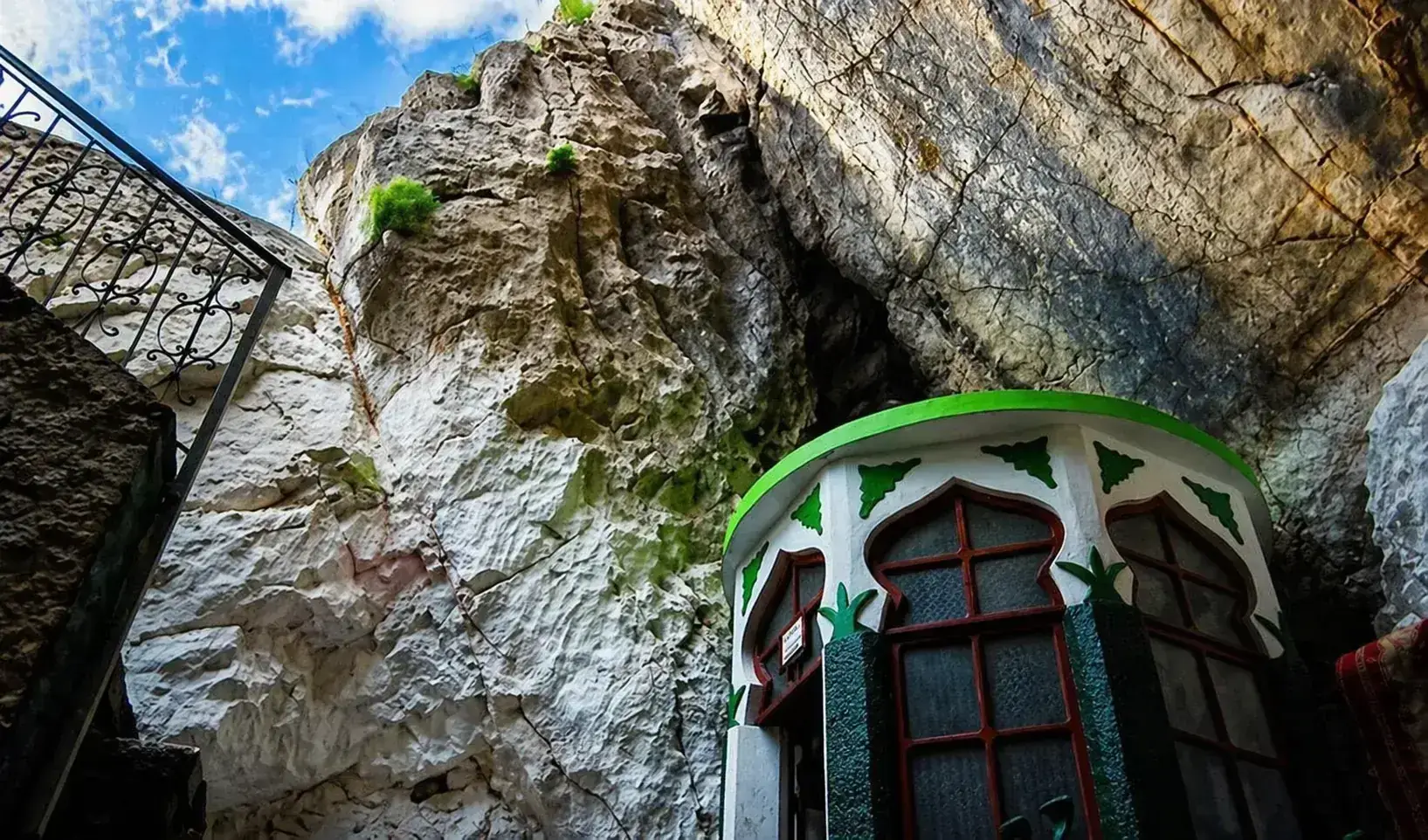
A Bektashi cave shrine at 1,176 m on Mount Kruja, with views over the plain to the Adriatic.
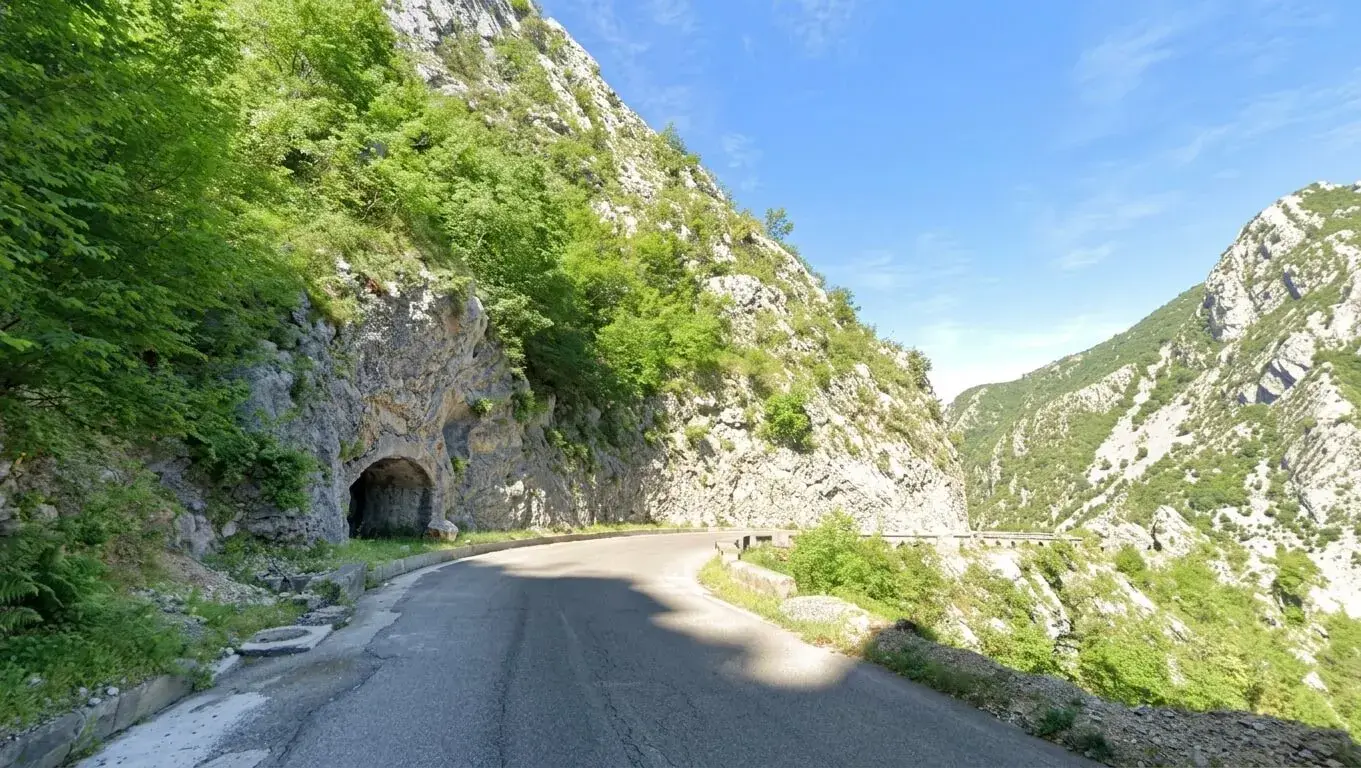
Cold War tunnels in the cliffs of the gorge road and an abandoned military base, 10 minutes north of Kruje.
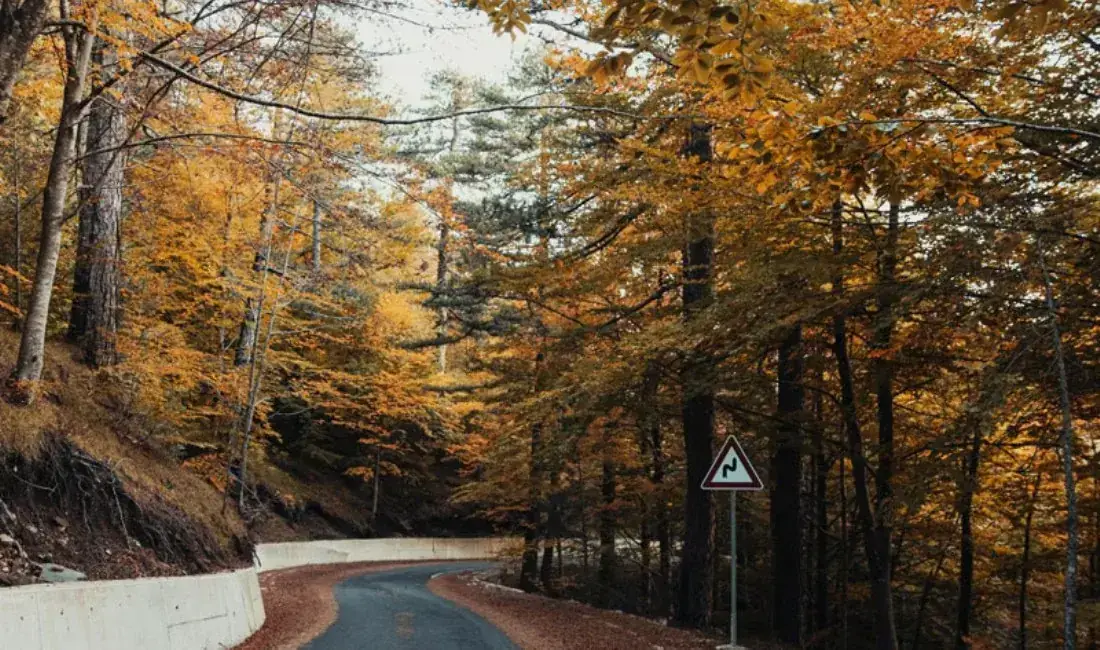
Black pine forest, limestone peaks and the Queen Mother's Spring, 20 km from Kruja on the road to Burrel.
Most shops open around 09:00 and stay open through the afternoon, with late morning the busiest period. The bazaar is a public street with no gate and no ticket, so the lane itself can be walked at any hour. Individual shopkeepers set their own hours and some close earlier in winter.
Yes. There is no entrance fee, no gate and no ticket. The bazaar is an ordinary public street, and a listed Cultural Monument of Albania. Only the two museums inside the castle above it charge admission.
Trading on the lane dates to roughly the fifteenth century, and the Bazaar Mosque was completed in 1533. By the 1960s the street had decayed to a muddy alley, and from about 1966 the state rebuilt the shops and the cobbles to the old layout, so the plan and the trade are old even where the timber is not.
The genuinely local crafts are handwoven wool kilims, filigree silver and copperwork. Antiques and Ottoman-era objects are here too, mixed in with good reproductions. Communist-era badges and bunker models are made for the tourist trade, which does not make them bad souvenirs, only not old.
Yes, and it is expected on anything above a small souvenir. Keep it quiet and brief: ask the price, make one lower offer, settle in between. Paying in lek rather than euros will usually save you more than the haggling does, because euro prices are rounded in the shop's favour.
Twenty minutes to walk it, an hour to actually look in the shops, longer if you are buying a rug. Nearly everyone combines it with Kruja Castle at the top of the lane, and the two together make a comfortable half day.
Pazari i Derexhikut means the bazaar of the stream; the name comes from Turkish. It is what people in Kruja call the lane.
Yes, the Bazaar Mosque, completed in 1533. It was closed and lost its minaret under communism, reopened in 1991 with a new minaret, and is a working mosque today.
The lane looks uniform on a first pass and it is not. Some of these families have worked the same trade in the same doorway for generations, and a few of the shops are essentially museums that happen to sell things. Knowing which door to go through is most of the value of walking it with someone local.