Updated November 14, 2026
The Skanderbeg massif behind Kruja has summer pastures on its peaks, according to Wikipedia's article on it, and our guides say shepherds still roam the mountain with their flocks. This guide covers the pastoral side of walking here: what Albanian transhumance is, what sources say about the massif, what our guides say and how to behave around flocks and their dogs.
Transhumance, the seasonal movement of livestock between pastures, was added to UNESCO's Representative List of the Intangible Cultural Heritage of Humanity in 2023 as a joint element of ten countries, Albania among them. We found no published survey of Kruja's own flocks or grazing routes, so each Kruja-specific statement below either names its source or is marked as what our guides say. Trail distances and times are in our other hiking guides, linked at the end.
Where to look for the pastoral landscape
Three places to start from. The table gives what a source says about each, and the guide to read for the trail itself.
| Place | What a source says | Trail detail and getting there |
|---|---|---|
| Skanderbeg massif (Path of Skanderbeg) | Maquis (Mediterranean scrub) and oaks in the lower section, conifers and heather above, summer pastures on the peaks (Wikipedia, citing a 1991 Albanian geography textbook) | Our guide to hiking trails near Tirana airport. The trailhead is about an hour's drive from Kruja. |
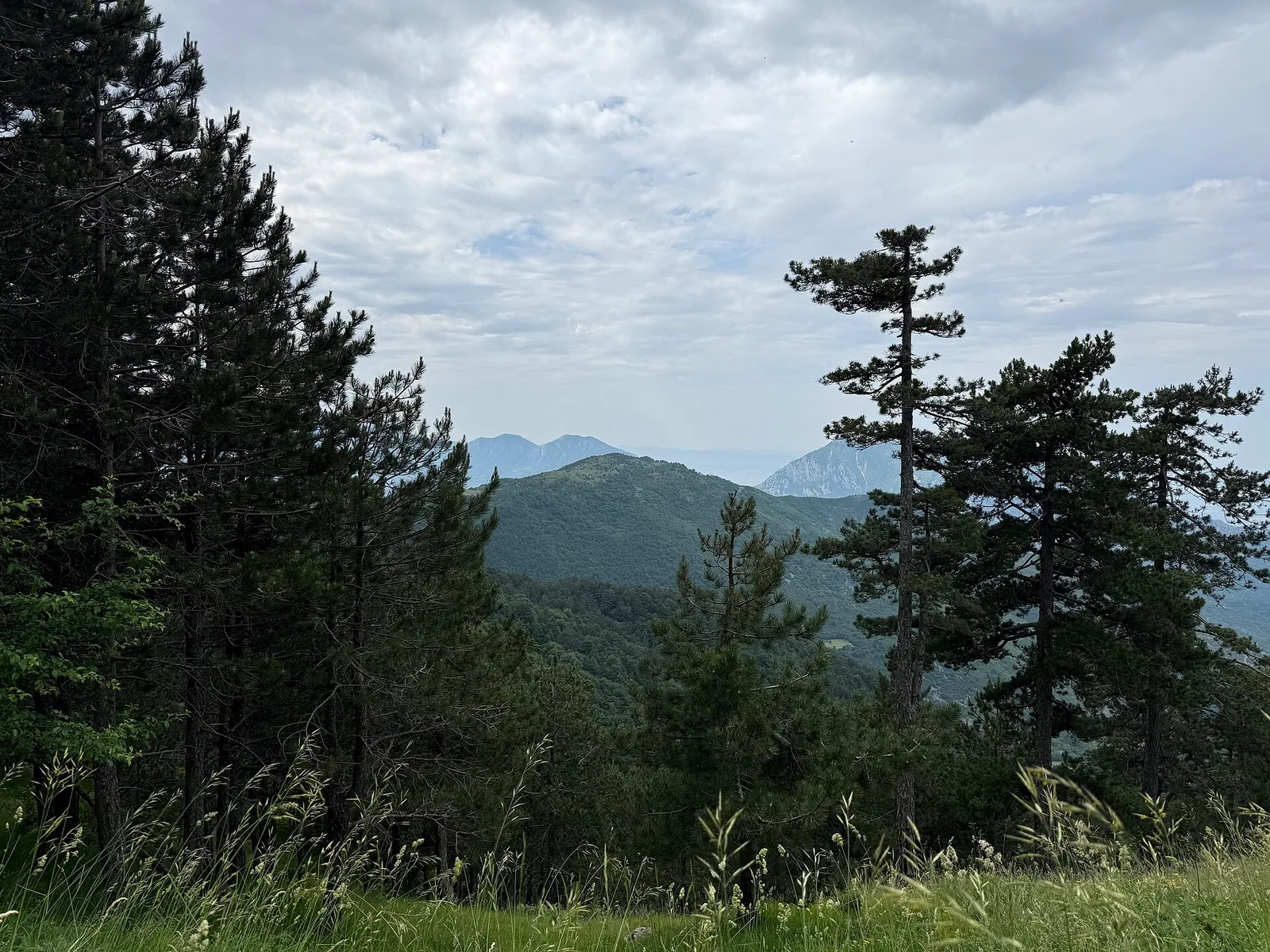
| Qafshtama pass and park | Forests of black pine, beech and oak, alpine meadows and deep valleys, with altitudes above 1,700 m (Albanian Tourism Agency) | Our two Qafshtama guides. Taxi from Kruja €35, round trip, driver waits. |
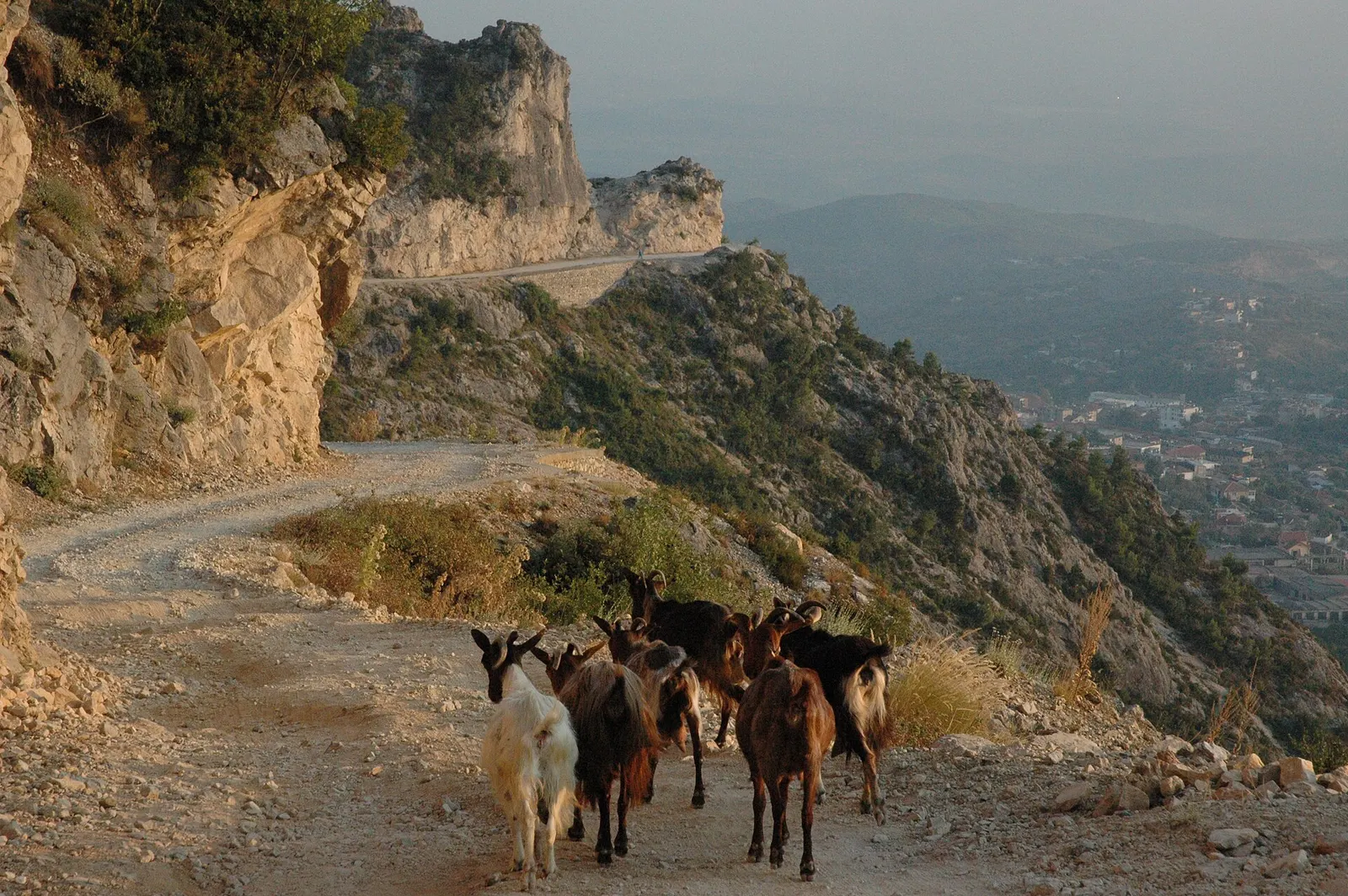
| Mali i Krujës, the mountain above the town | Goats on the mountain road in the photo at the top of this page, taken in August 2007 (Wikimedia Commons). Our guides say shepherds still roam the mountain with their flocks. | Our guide to hikes near Kruja, which covers the Sari Salltik climb. Taxi to Sari Salltik €15, round trip, driver waits. |
What transhumance is
UNESCO defines transhumance as the seasonal movement of people with their livestock between geographical or climatic regions. Its entry says herders move animals along traditional pastoral paths in spring and autumn, on foot or on horseback and with dogs, and that families have passed it on by observation and practice for many generations. Albania is one of ten countries named in the 2023 inscription, with Andorra, Austria, Croatia, France, Greece, Italy, Luxembourg, Romania and Spain.
Albania's own register of intangible heritage, maintained by the Ministry of Culture, describes two forms. In upward, or vertical, transhumance, herders drive animals from Mediterranean landscapes to the mountains in May or June. In horizontal transhumance, herds move across lowland or hilly areas between summer and winter pastures. Families use established settlements at the pastures, called stan, and follow established routes the register calls shtigje. It names goats and sheep as the main livestock, with dogs, horses and mules alongside, and lists milk, cheese, butter, meat, wool and leather goods among the products. It also records two celebrations: the Pan Festival in Nivica in June and Te Dunmet in Kukës around the end of September.
A January 2026 CHARM EU policy brief, produced as a master's-thesis project in collaboration with the FAO's regional office for Europe and Central Asia, says youth disengagement threatens Albanian transhumance. It gives a figure of 400 farms practising transhumance, mainly with herds of more than 100 sheep or goats, and says young people are leaving pastoralism. It also argues that pastoral mobility helps maintain biodiversity and prevent land degradation. Its research focuses on northern Albania, so it does not describe Kruja.
What sources say about the mountains above Kruja
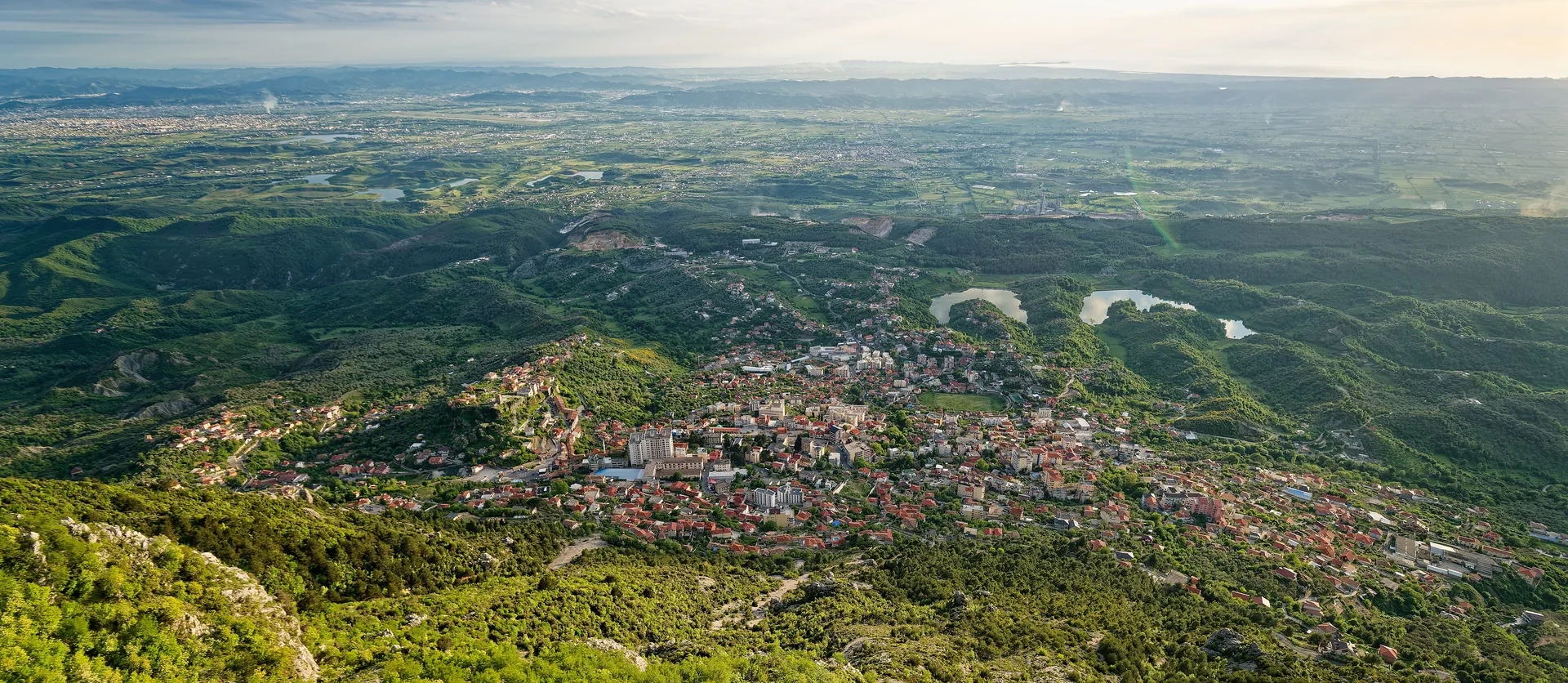
The Kruja municipality describes its mountain zone as two parallel ranges, the Kruja-Dajti range and the Skanderbeg range, and names Maja e Liqenit as the highest point in the Kruja district. It gives the climate as mountain Mediterranean with cold winters and cool summers, and counts two towns and 50 villages in the municipality.
Wikipedia's article on the Skanderbeg massif, Mali i Skënderbeut, places it on the border of the Kruja and Mat municipalities and gives its length as about 22 km. It lists Maja e Liqenit at 1,724 m (the municipality's trail page gives 1,723 m for the summit) and describes maquis and oaks in the lower section, conifers and heather in the middle and upper sections, and summer pastures on the peaks. For this it cites a 1991 Albanian physical-geography textbook by Nasip Meçaj. The same article names wild boar, foxes and mountain partridges.
For Qafshtama, the Albanian Tourism Agency lists forests of black pine, beech and oak, alpine meadows and deep valleys. It says the fauna includes bears, wolves, foxes, wild boar and many species of mountain birds.
The paths are old as well. The municipality's page on the Zeza canyon says the Kurcaj bridge served as a short road for Tirana to Kruja caravans, and describes a stone path between the village of Barkanesh and the Abdyl Agha bridge that it dates to before the Middle Ages. The page describes caravan and trade routes and does not mention shepherds.
What our guides say they see
Our guides say the old paths on the mountain above Kruja were used by shepherds for generations, and that shepherds still roam the mountain with their flocks. We have not found a public count of Kruja's flocks or a map of its grazing routes, so this is local observation and not a statistic.
The photo at the top of this page shows goats on a mountain road above the town. Jason Rogers took it in August 2007, and Wikimedia Commons files it under Mali i Krujës and Goats in Albania. We cannot promise that you will meet a flock on the day you walk.
Wool and the Old Bazaar
The Kruja municipality says the Old Bazaar was known for copper work, wool work, silversmithing and the making of qeleshe. It adds that working wool was known long ago, with rugs, carpets and qeleshe singled out. The page does not say where the wool came from, so we do not link it to the flocks on the mountain.
Walking through working pasture
The national register lists milk, cheese, butter, meat, wool and leather goods among the products of transhumance, so a flock on the path is someone's work. UNESCO's entry says herders work with dogs, so a flock may come with one.
We found no Albanian guidance on meeting livestock guard dogs. The Parc naturel régional Gruyère Pays-d'Enhaut in Switzerland publishes advice for walkers, written for dogs guarding cattle: stay calm and do not frighten the animals, walk at a slow and steady pace and do not run, give the dog time to assess you, avoid provoking it with a stick or a sudden movement, do not feed or pet it, keep your own dog on its lead and do not try to pass a herd with it, and turn back when in doubt.
The mountain paths around Kruja are unmarked, so go with a guide the first time.
Climb the Skanderbeg massif with a guide
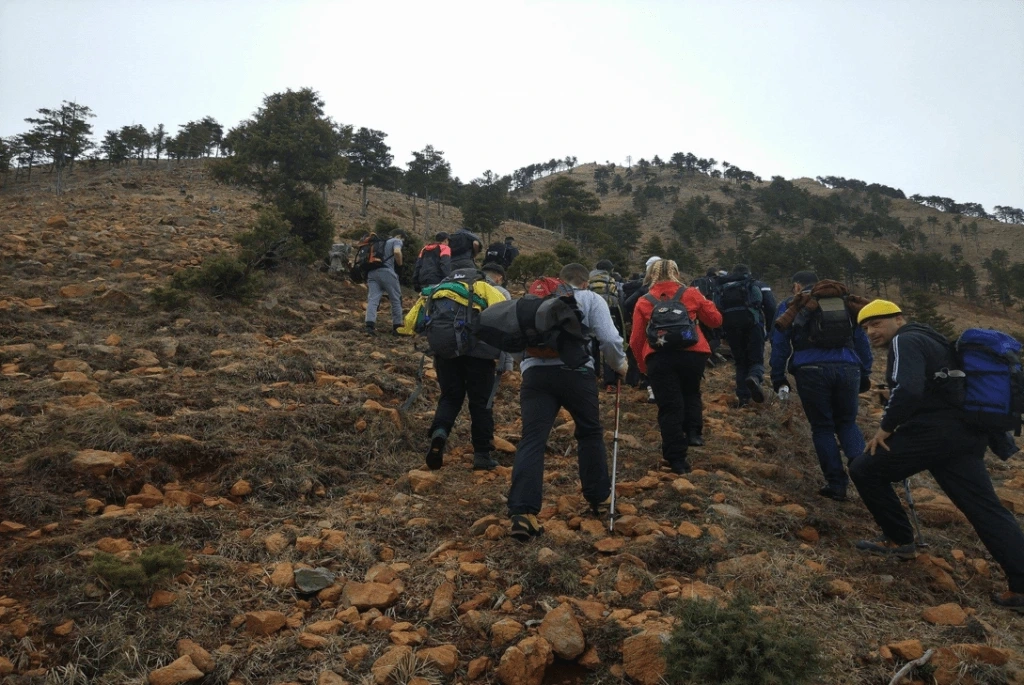
The Path of Skanderbeg Hiking Tour is a guided climb of Skanderbeg Mountain: about 7 hours, €35 per person, maximum 8 people, with pickup from Kruja, Tirana, Durres or Golem. Whether a flock is on the mountain that day is not something we can promise.
Trail detail and planning
The trails themselves are covered in hiking trails near Tirana airport and the best hikes near Kruja. For the pass and its meadows, see Qafshtama National Park and things to do in Qafshtama. For an old stone path and its bridges, see the Zeza River canyon, and for wool crafts the Kruja Old Bazaar. Airport arrivals are covered in Kruja, Tirana and the airport, and every option is listed under tours.
Shepherd trails and hiking in Kruja: common questions
Are there shepherd trails near Kruja?
We found no published map or survey of shepherd routes around Kruja. Our guides say shepherds have used the mountain paths for generations and still roam the mountain with their flocks. Wikipedia lists summer pastures on the peaks of the Skanderbeg massif, and the hiking routes themselves are in our trail guides.
What is transhumance?
UNESCO defines it as the seasonal movement of people with their livestock between geographical or climatic regions. Albania is one of ten countries named in its 2023 inscription on the Representative List of the Intangible Cultural Heritage of Humanity.
Will I meet shepherds or flocks on a hike near Kruja?
Our guides say shepherds still roam the mountain with their flocks, but we cannot promise a meeting on a given day. We found no source that counts Kruja's flocks or gives their calendar.
When are flocks in the mountains?
For the upward form of transhumance, Albania's register of intangible heritage says herders drive animals from Mediterranean landscapes to the mountains in May or June. We found no calendar for Kruja's own flocks. For the Qafshtama road and its restaurants, our guide gives May to October as the reliable window.
What should I do if I meet a livestock guard dog?
We found no Albanian guidance. A Swiss regional park advises walkers to stay calm, keep walking at a slow and steady pace, give the dog time to assess them, avoid provoking it with a stick or a sudden movement, not feed or pet it, keep their own dog on its lead and turn back when in doubt. Its advice is written for dogs guarding cattle in Switzerland.
What wildlife lives in the mountains above Kruja?
The Albanian Tourism Agency says the fauna at Qafshtama includes bears, wolves, foxes, wild boar and many species of mountain birds. Wikipedia's article on the Skanderbeg massif names wild boar, foxes and mountain partridges.
How do I reach the trailheads without a car?
By private taxi. Tirana Airport to Kruja is a fixed €25 per car, about 30 minutes. From Kruja, Sari Salltik is €15 and Qafshtama €35, round trip with the driver waiting. No bus runs to Qafshtama.