Updated November 14, 2026
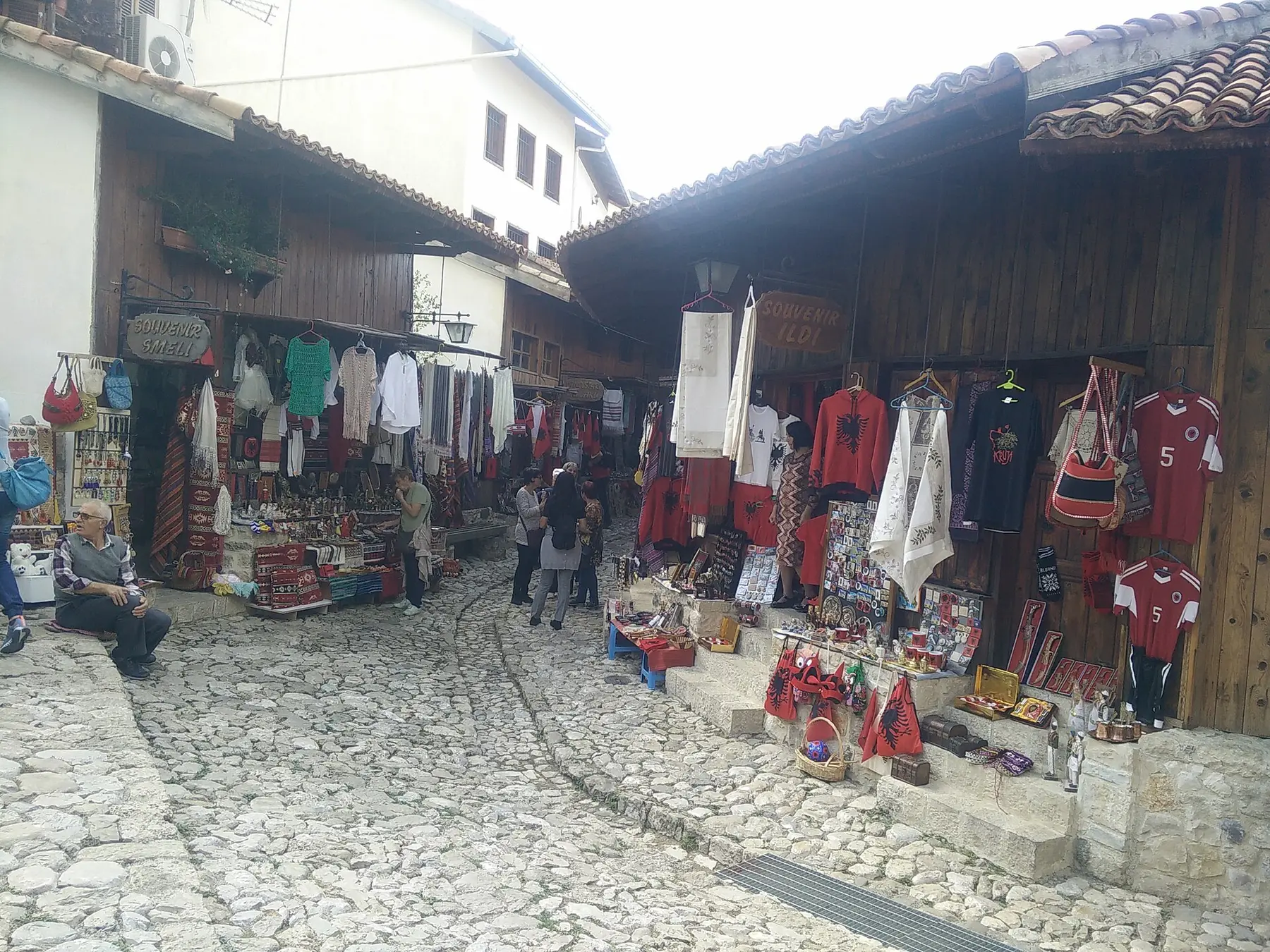
Most visitors see Kruja's Old Bazaar as the cobbled lane they climb on the way to the castle. We wanted to know what the people who work there know about it. So we walked it from the entrance to the castle gate, stopped in the shops and workshops, introduced ourselves and asked the shopkeepers and artisans about their businesses, the history of the bazaar and its traditions. Several of them run shops their families have run before them.
These were informal conversations, not an archive. Below is what we were told: about the age of the bazaar, the cobbles, how many shops it once had, an inn that stood at its entrance, the crafts, the antique shops and the visitors. What comes from a shopkeeper is attributed to them. Where published sources say something different, we say so. For opening hours, what to buy and how to get there, see our Old Bazaar page.
How old the shopkeepers say it is
The first thing we asked was how old the bazaar is. The shopkeepers we spoke to date it to the Middle Ages, to about the 15th century, the time of Skanderbeg. One of them put it at 500 to 600 years old.
That matches the tradition in Albanian sources. Albania 360 and a 2018 article on shqiperia.com both say the bazaar has traded since Skanderbeg's time in the 15th century. Other accounts are more cautious: the Albanian Tourism Agency describes it as built in the 17th century, and GeldTrade dates the construction of today's bazaar to about 400 years ago. The oldest dated building on the lane is the Bazaar Mosque, completed in 1533. The two views fit together if trading on the lane is older than the buildings that line it now.
The cobbles under your feet
We asked one shopkeeper about the stone paving and its restoration. His answer was that the cobbles are original and have kept their historic character, and that restoration work was mainly on the wooden shopfronts and the roofs. If he is right, the stones you walk on are the oldest part of the street you can touch.
The written record is less clear. The account we follow on our Old Bazaar page describes the lane being relaid as kaldrëm, the stone paving of Ottoman roads, when the state rebuilt the bazaar from about 1966. A 2015 Anadolu Agency report on a later restoration of all the shops lists the facades, the roofs and the cobbles among the work done. Neither says whether the stones were replaced or reset. What everyone agrees on is the line of the street: the shops were rebuilt along the old one.
From about 170 shops to about 80
The shopkeepers told us the bazaar once had about 170 shops and that about 80 remain today. That is a lot of shops for a town the size of Kruja. Their explanation was that the bazaar never served Kruja alone: people came in from the surrounding villages and settlements to trade, to buy what they needed and to find goods made by the town's craftsmen.
Published counts are lower, and they differ from each other. The account on our Old Bazaar page gives about 150 shops in the early 1900s and "60 or so" in its own day, and the Kruja municipality's culture page gives about 130 at the peak and about 70 now. The figures depend on when the count was made and on where each count says the bazaar began and ended.
| Who counted | At its largest | Today |
|---|---|---|
| Shopkeepers we interviewed (2026) | About 170 | About 80 |
| Kruja municipality | About 130, in the 19th and 20th centuries | About 70 |
| Osservatorio Balcani e Caucaso (OBCT) | About 150, early 1900s | "60 or so" |
The inn that burned
One shopkeeper told us that the bazaar once included a han, a traditional inn of the kind where travelling traders stayed, near the entrance to the market. According to him it was destroyed by fire during the reign of King Zog, who was king of Albania from 1928 to 1939, and its loss changed the look and the size of the bazaar.
We have not found this fire in a published source, so we give it as the shopkeeper's account. It is a different story from the "1967 fire" that some travel sites repeat about the whole bazaar, for which we found no source either. What it does show is that the bazaar was once a larger complex than the lane you see today, with buildings at its lower end that are gone.
The crafts, and the families behind them
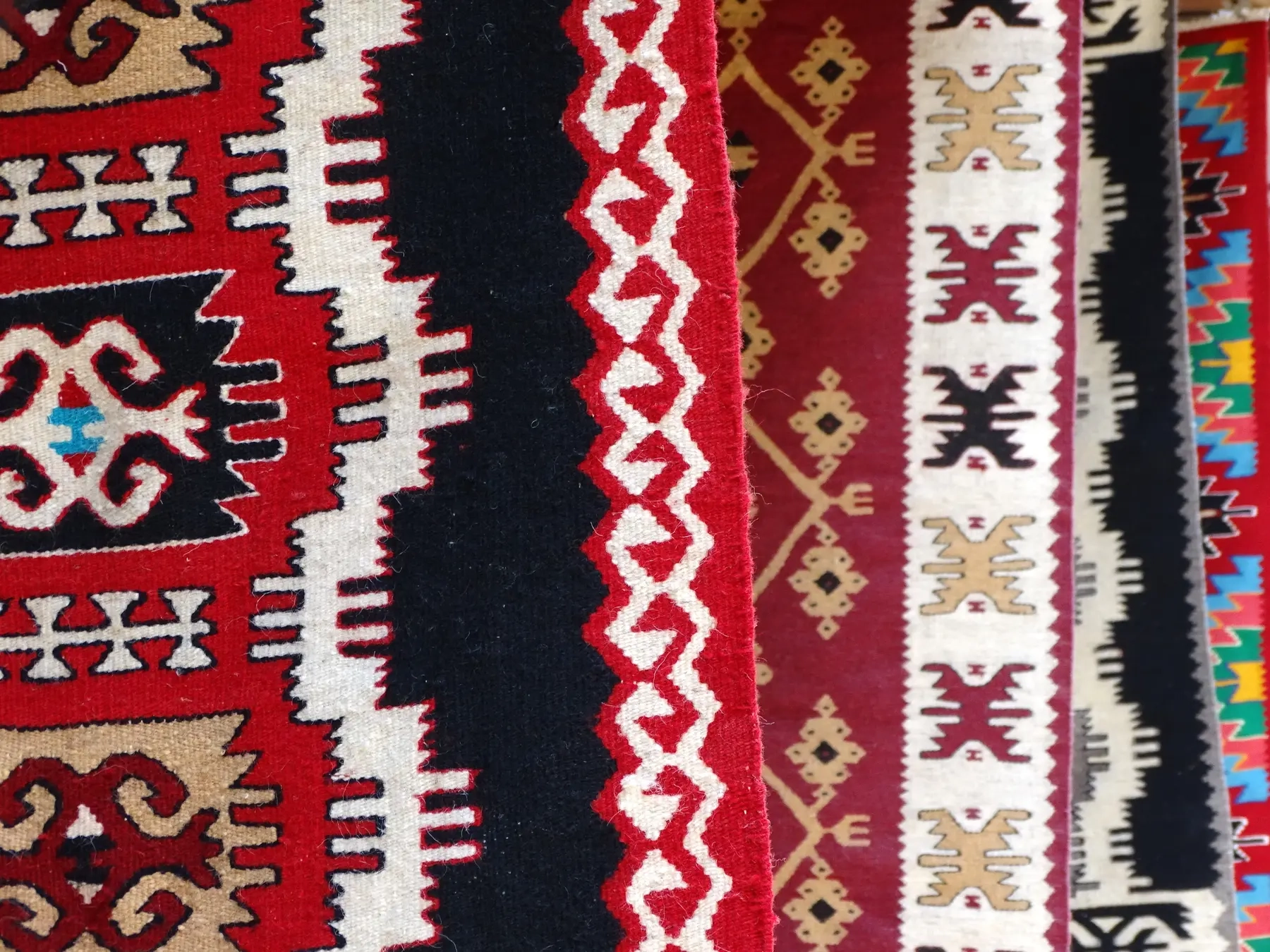
We asked which crafts were practised here. The shopkeepers listed ironwork and metalwork, woodwork and copperwork, along with other handmade goods. The Kruja municipality's culture page names copper, wool and silver and the making of the qeleshe, the white felt cap, among the bazaar's old trades.
Several shopkeepers stressed that these were family skills more than businesses. Some trades, they told us, have stayed in the same family for about a century. One of them pointed out that Kruja has products of its own that set its bazaar apart from other old markets in Albania. Our guide to the qeleshe, linked at the end of this page, follows one of those family crafts.
Today the lane serves two markets at once. Much of what is sold goes to visitors, and handmade goods and traditional crafts are still made and sold alongside the souvenirs.
The antique shops
Several shops on the lane deal in antiques and old objects. What they hold is less about castles and battles than about how ordinary Albanian families lived: things from traditional households, tools, objects of everyday life from earlier decades and things tied to local customs.
That makes them worth slowing down for even if you are not buying. They show a side of Albanian history that the castle museums cover less, the life of ordinary families rather than of famous names. Our Old Bazaar page explains how to tell genuine old pieces from reproductions.
The people who work here
The most useful part of the day was talking to the people themselves. One of the shopkeepers we interviewed had worked as a teacher before he came to work in the bazaar. He told us that Kruja draws visitors from all over the world, from Europe, Asia, America and Australia, and he described the castle and the bazaar as the town's two main attractions.
The lane sits between the main approach to the town and the castle gate, so almost every visitor passes through it. Talking to the shopkeepers changed how we see it. Behind the wooden fronts are businesses with histories of their own, family crafts and collections, and details you do not find by walking past or by reading a general history.
What we learned
In short, this is what the shopkeepers and artisans told us, set against what we found in print.
| What we were told | What published sources say |
|---|---|
| The bazaar dates to about the 15th century, 500 to 600 years ago | Albanian sources say the same; the Albanian Tourism Agency says 17th century |
| The cobbles are original; restorations were mainly the shopfronts and roofs | Accounts describe the lane being relaid around 1966, and the cobbles were part of a later restoration |
| About 170 shops at the peak, about 80 today | About 130 to 150 at the peak and about 60 to 70 more recently |
| An inn near the entrance burned down under King Zog (1928 to 1939) | Not found in a published source |
| Iron, wood and copper were among the crafts; some trades have stayed in one family for about a century | The municipality lists copper, wool, silver and cap-making |
| Visitors come from Europe, Asia, America and Australia | Not something we could check |
Meet the bazaar with someone local
The Kruje Castle, Old Bazaar & Hidden Paths Tour begins in the Old Bazaar, where our guide knows which shops are family workshops and which sell imports, and then goes up to the castle. It takes about 1h 15min – 2h 45min and costs €20 per person. Guided in English, Italian or French.
Keep reading
For hours, what to buy and how to get there, see the Old Bazaar page. One of the bazaar's family crafts is in our qeleshe guide. The castle at the top of the lane is on the Kruja Castle page, and museum fees and hours are in the castle tickets and hours guide. The wider story is in why Kruja matters in Albanian history.
Kruja's Old Bazaar: what we asked
How old is Kruja's Old Bazaar?
The shopkeepers we interviewed date it to about the 15th century, 500 to 600 years ago, and Albanian sources such as Albania 360 say it has traded since Skanderbeg's time. The Albanian Tourism Agency gives the 17th century. The oldest dated building on the lane is the Bazaar Mosque, completed in 1533.
Are the cobblestones in Kruja's bazaar original?
A shopkeeper told us they are, and that restorations worked mainly on the wooden shopfronts and roofs. Published accounts describe the lane being relaid when the state rebuilt the bazaar from about 1966, and a 2015 report lists the cobbles in a later restoration. Neither says whether the stones were replaced or reset.
How many shops are in Kruja's Old Bazaar?
The shopkeepers we spoke to count about 80 today and say there were once about 170. The Kruja municipality gives about 130 at the peak and about 70 now, and another published account gives about 150 in the early 1900s.
Why was the bazaar so big for a small town?
According to the shopkeepers, it served the villages around Kruja as well as the town. People came in from the surrounding area to trade, to buy what they needed and to buy goods made by Kruja's craftsmen.
What crafts were made in the bazaar?
The shopkeepers named ironwork and metalwork, woodwork and copperwork. The Kruja municipality lists copper, wool, silver and the making of the qeleshe, the white felt cap. Some of these trades have stayed in the same family for about a century, they told us.
Was there an inn in Kruja's bazaar?
One shopkeeper told us an inn, a han, stood near the entrance to the bazaar and was destroyed by fire during King Zog's reign, between 1928 and 1939. We have not found it in a published source.